;

How to Train a Siamese Cat?
10 Easy Tips for Quick Success

How to train a Siamese cat

Cleo, come here,” I called out, a hopeful lilt in my voice.

But my Siamese cat flicked her tail dismissively before returning to her ritualistic grooming.

Classic Siamese cat.

As a veteran cat owner, I’ve learned that trying to train a Siamese cat is an experience like no other.

These sleek felines are smart cats, fiercely independent, and undeniably sassy – the divas of the cat world.

If you’ve welcomed one of these stunning blue-eyed beauties into your home, you’ve likely already discovered what a unique challenge training can be. From stubbornly ignoring commands to deliberately testing your patience, Siamese cats will put your skills and sanity to the test.

However, whether your goal is to teach basic obedience, curb bad behaviors, or have your Siamese cat master impressive new tricks, it’s undoubtedly possible with the right approach.

Be warned, though – this journey of learning how to train a Siamese cat is an adventure filled with unexpected turns, frustrating moments, and lots of laughter as you navigate that famous Siamese attitude.

But fear not! After years of working with these strong-willed felines, I’ve gathered some invaluable tips to share.

Follow this ultimate guide on how to train a Siamese cat, and you’ll be well on your way to a happy, rewarding relationship with your intelligent feline companion

Table of Contents

The Trainability of Siamese Cats:
A Deeper Understanding

First off, are all Siamese cats trainable?

Yes, absolutely!

Siamese cats are well known for their intelligence and affectionate personalities, making them excellent candidates for training.

However, while their intelligence is a significant asset, Siamese can sometimes be willful or stubborn during training sessions.

Here are some of their well-known personality traits that contribute to their high trainability:

Intelligence

Siamese cats rank among the most intelligent cat breeds, capable of understanding complex commands and mastering new tricks.

This sharp intellect means they can engage in training sessions that are mentally challenging for them. For example, my Siamese Cleo quickly learned simple tricks like high-five and ringing a bell for treats.

Social Nature

Often referred to as “people cats,” Siamese have a strong bond with their human companions. This deep connection makes them more willing to engage in training processes as part of their social interaction, eager to please and spend quality time together.

Curiosity

Their innate curiosity drives them to explore and learn. By tapping into this trait, training sessions can become a thrilling adventure for them, filled with new things to discover and learn.

Vocal Communication

Their well-known vocalizations offer a unique advantage in training. Siamese cats use a range of sounds to communicate, making them more responsive to verbal cues and able to express their needs and desires effectively.

Affectionate Disposition

Siamese like all cats, thrive on positive reinforcement, responding well to praise, affection, or treats. This encourages desired behavior and reinforces the special bond between the cats and the cat owners.

The Importance of Tailored Siamese Cat Training

A point to note is that although Siamese cats’ distinctive traits make them endearing, they need to be properly trained to ensure they lead happy, balanced, and well-adjusted lives as household members.

Without appropriate behavior training, Siamese owners may face several potential issues, which include: 

Undesirable Behavior

Siamese cats are among the most intelligent cat breeds. They have a remarkable capacity for learning and a strong desire for mental stimulation.

Without sufficient challenges, boredom can lead to undesirable behaviors such as mischief, excessive vocalization, or even destructive behavior.

Proper training that stimulates their intellect and curiosity is crucial to avoid these consequences of mental under-stimulation, enabling you to enjoy the rewarding experience of an actively engaged, well-behaved companion.

Anxiety

Known for their affectionate personalities, Siamese crave social interaction and form strong bonds with their owners.

A lack of human interaction and quality time together can lead to separation anxiety, stress, or depressive behaviors in these people-oriented cats.

Early socialization training helps them adapt to various settings and people, ensuring they remain well-adjusted even in their owner’s temporary absence.

This provides peace of mind and prevents separation-related stress.

Excessive Meowing

One defining Siamese trait is their legendary vocal nature.

However, without guidance and training, such as learning a “quiet” command, their talkative tendencies can escalate into excessive, disruptive vocalization, posing challenges in maintaining a peaceful household.

With appropriate training, you can share those precious quiet moments without incessant meowing disrupting the serenity.

Hyperactivity

Siamese cats are known for their lively and spirited nature, characterized by high energy levels that set them apart from many other breeds.

Without proper outlets for their energy, Siamese cats may become hyperactive. This can manifest as excessively zooming around the house, climbing on furniture, or engaging in other frantic activities.

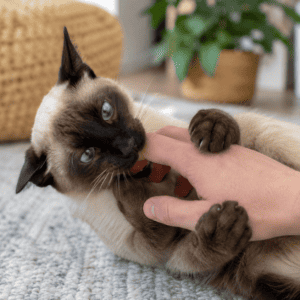
They may become more prone to nipping, biting, or behaving aggressively toward other pets or owners.

Regular enrichment allows that energy to be positively channeled so you can enjoy a calmer, happier cat.

How to Train A Siamese Cat: The Essentials

With a better understanding of these traits, we can now recommend a focused training regimen that addresses the specific needs of Siamese cats.

1. Basic Obedience Training

Establishing a solid foundation of obedience is crucial for effective communication and a harmonious relationship with your Siamese cat. This includes “name recognition” and “come when called”

a) Name Recognition Training

Siamese cats are highly attuned to their environment, so teaching them to respond to their name reliably is a game-changer.

As Cleo, my sassy Siamese, demonstrated early on, getting their attention can be challenging without this essential skill.

Here is how you can get started with this training

Step 1

Choose a Distraction-Free Area

Start in a quiet room where your cat feels comfortable, minimizing distractions that could divert their attention.

Step 2

Get Their Attention

Have your cat’s favorite treats ready. Say their name in a clear, consistent manner. 

The moment they look at you, reward them with a treat. This forms the initial association between their name and positive outcomes.

Step 3

Reinforce with Repetition

Repeat this process several times in short, focused training sessions. 

Consistency is key, so aim for multiple short sessions spread throughout the day rather than one long session.

Step 4

Gradually Increase Distractions

As your cat becomes more responsive to their name in a quiet setting, gradually introduce mild distractions to test and strengthen their response.

Step 5

Practice in Different Environments

Practice in various rooms and settings within your home to reinforce their name recognition across different contexts

Once your Siamese recognizes their name, teaching them to “come when called” becomes much easier.


b) Come when Called

To get on with this training, ensure your cat can reliably respond to their name first.

This recognition forms the basis for teaching them to come when called.

Step 1

Introduce a Cue

Once they respond consistently to their name, introduce a specific cue for coming when called, such as “come” or “here.” Use a happy, encouraging tone

Step 2

Pair the Cue with a Reward

Say your cue word with a treat in hand, then immediately reward them when they come to you.

If they come, show them the treat to encourage movement towards you.

Step 3

Increase Distance Gradually

Start by calling them from a short distance away.

As they become more consistent, increase the distance gradually, calling them from different locations within your home.

Step 4

Practice Regularly with Positive Reinforcement

Consistent practice and positive reinforcement like treats or affection solidify this behavior.

Always ensure the experience is positive and rewarding for your cat.

Step 5

Add Variability and Challenges

Once mastered in a controlled environment, practice in areas with more distractions and different contexts to ensure reliability.


2) Vocal Training

man training his Siamese cat

While their vocal nature is one of the many charms that make them irresistible, there comes a time when every Siamese cat owner wishes for a “mute” button, if only to enjoy a cup of coffee in peace or make it through a phone call.

As someone who’s navigated the vocal stylings of a Siamese diva, I’ve found the “quiet” command a necessity and a path to a more harmonious coexistence.

Here’s how to gently teach your furry orator the beauty of silence

Quiet Command Training

Step 1

Identify and Address the Cause of Vocalization

The first step in tackling excessive meowing is understanding why your Siamese is vocalizing.

Seeking Attention: Ensure you’re dedicating enough quality time and interaction, fulfilling their need for social engagement.

Hunger: Establish a consistent feeding schedule that meets their dietary needs, preventing hunger-related vocalizations.

Environmental Stimuli: Sometimes, changes in their environment or boredom can lead to increased vocalization. Providing interactive toys, scratching posts, or a comfortable perch by the window can offer mental stimulation and reduce meows.

**After addressing these needs, if your Siamese continues to vocalize excessively, it’s time to introduce the quiet command as a part of their behavioral training.

Step 2

Choose a Cue Word

Select a cue word for silence, like “quiet” or “hush,” and use it consistently.

The tone should be calm yet firm, contrasting to their melodious monologues.

Step 3

Wait for a Natural Pause

Capitalize on the brief moments of silence between their solos. These natural pauses are your golden opportunities to introduce the cue word.

Step 4

Use the Cue Word and Reward Immediately

The second they pause, even briefly, say your cue word and follow with an immediate reward.

This positive reinforcement is crucial, as it helps them associate quiet moments with pleasant outcomes.

Step 5

Gradually Extend the Quiet Period

Start rewarding for longer stretches of silence as they begin to understand the command.

Your patience will be tested, but the payoff is a peaceful household

Step 6

Practice Consistently in Varied Contexts

Taking Consistent training sessions across different settings reinforces the command.

Your Siamese will soon learn that the “quiet” cue applies everywhere, not just in the kitchen.

With patience and positive reinforcement, your furry orator will learn the beauty of occasional silence (and your sanity will be preserved).


3) Socialization Training

Socialising a Siamese cat

Proper socialization training is essential for nurturing a well-adjusted, sociable Siamese cat.

Given their affectionate nature and intelligence, they are often called “people cats.” They would benefit significantly from early and consistent exposure to various people, pets, and environments

Here’s a focused guide on implementing effective socialization training:

Step 1

Early and Gentle Introduction to Family Members

Start socializing your Siamese cat by introducing them to all family members in a calm and controlled manner.

Adult cats may take longer to get comfortable with socializing than Siamese kittens, so a little bit of patience is recommended.

Use positive reinforcement, such as treats or gentle praise, to encourage good behavior.

Step 2

Gradual Exposure to Visitors

Once comfortable with the immediate family, gradually introduce your cat to visitors.

This helps them adjust to new faces and voices, reinforcing that new people are not a threat. Reward them for calm and curious behavior to reinforce appropriate behavior.

Step 3

Controlled Meetings with Other Pets

Introduce your Siamese cat to other pets in the household or familiar animals outside, always under supervision.

Initial interactions should be short and positive. To prevent territorial disputes, each animal should have its own space, such as separate litter boxes and feeding areas.

Step 4

Reinforce Positive Interactions

A reward-consequence system of treats, affection, and interactive toys can help build a strong bond and promote a loving household.

Proper socialization nurtures a confident, well-adjusted Siamese cat who can seamlessly adapt to new situations


4) Leash Training

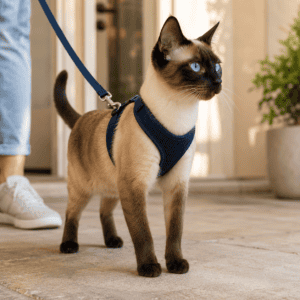
Siamese cat on leashWith their adventurous spirits and high energy, leash training can be a game-changer for Siamese cats, providing safe outdoor exploration and exercise


Step 1

Choose the Right Harness and Leash

Select a comfortable, well-fitting cat harness. A lightweight leash is preferable to avoid overwhelming your cat.

Introduce the harness and leash to your Siamese by allowing them to sniff and investigate them, providing treats as positive reinforcement for this initial curiosity.

Step 2

Introduce the Harness Gradually

Begin by draping the harness over your Siamese cat without fastening it, rewarding them with treats and praise.

Gradually increase your cat’s daily time with the harness, associating its presence with positive experiences.

Once comfortable, fasten the harness, ensuring it’s snug but not too tight.

Step 3

Indoor Practice

Before heading outdoors, let your cat walk around inside with the harness and leash. Use treats to encourage movement and exploration.

This step helps your cat associate the harness and leash with normal movement and activities.

Step 4

First Outdoor Adventures

Choose a quiet, safe outdoor area for your cat’s first leashed outdoor experience.

Keep the initial outings short and sweet, gradually increasing the duration as your cat becomes more comfortable.

Always stay close to your cat, offering treats and praise to reinforce the positive experience.

Step 5

Practice and Patience

Leash training requires patience and consistent practice.

Some Siamese cats may take to it quickly, while others need more time to adjust.

Never force your cat to continue if they seem stressed or uncomfortable; try again another day.

Step 6

Explore Together

You can explore new areas together as your Siamese cat becomes more confident on the leash.

Keep a close eye on their reactions to new environments and stimuli, ensuring their safety and comfort.

Leash training opens up a world of exciting (yet secure) new experiences for your adventurous Siamese.


5) Correcting Bad Behaviors

Siamese cats can sometimes develop behaviors that challenge their owners. Identifying and understanding these behaviors are the first steps toward effective correction:

Here are some common behavioral issues:

Out-of-Litter-Box Elimination 

One of the most common issues Siamese cat owners face is out-of-litter-box elimination, which can be distressing. It’s essential to approach this problem methodically

Step 1

Rule Out Medical Problems First

The first step should be visiting the veterinarian to rule out any medical issues.

Conditions such as urinary tract infections or respiratory problems can lead to litter box avoidance.

Step 2

Evaluate the Litter Box Setup

Once health concerns are addressed, review your litter box setup.

The location, cleanliness, and type of litter box and litter used can all influence your cat’s willingness to use it.

Siamese cats may prefer open doors on their boxes for easy access and avoid litter boxes being too enclosed.

Step 3

Maintain Cleanliness

Keeping the litter box clean is of utmost importance.

Regular cleaning minimizes odors and makes the area more inviting for your cat.

Step 4

Provide Multiple Options

Having multiple litter boxes in different locations can help.

This is especially true in multi-level homes, ensuring your cat has access when needed.


Inappropriate Scratching

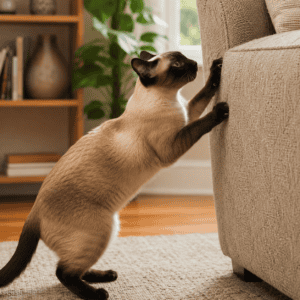
Siamese cat scratching Sofa

Scratching is a natural and necessary behavior for cats. It helps them keep their claws sharp, stretches their muscles, and allows them to mark their territory with both visual marks and scents from their paw pads.

However, it can be frustrating for cat owners when their kitties choose to scratch on furniture instead of their scratching posts.

A common mistake among cat owners when dealing with this behavior problem is using squirt guns as a deterrent.

Animal behaviorists and veterinarians generally do not recommend this, as it can cause stress to your cat and damage the cat-owner relationship.

Do these instead

Step 1

Provide Appropriate Scratching Surfaces

The key to redirecting this behavior is to provide appealing alternatives:

Scratching Posts and Pads: Introduce scratching posts and pads made from materials that cats prefer, such as sisal, cardboard, or wood.

These should be sturdy and tall enough for your cat to stretch their body entirely.

Placement: Position these posts and pads near the furniture they are currently scratching and in areas where they spend a lot of time.

Cats often scratch upon waking from a nap, so placing a post near their sleeping area can be effective.

Step 2

Encourage Use of the Scratching Posts

Simply providing the posts may not be enough; you may need to encourage their use:

Catnip and Toys: Sprinkle catnip on the new scratching posts or hang toys to make them more enticing.

Positive Reinforcement: When your cat uses the post, offer praise, affection, or treats to reinforce the behavior. This positive association encourages them to use the post more frequently.

Step 3

Making Furniture Less Appealing

In conjunction with providing suitable alternatives, try making your furniture less attractive to your cat:

Furniture Protectors: To discourage use, use furniture protectors, double-sided tape, or specially designed scratching deterrents on favored scratching areas.

Scent Deterrents: Cats dislike the smell of certain substances like citrus or menthol. Applying these scents to furniture can deter scratching but ensure they are safe for use around cats.

Step 4

Regular Claw Trimming

Keeping your cat’s claws trimmed can reduce the damage caused by scratching.

However, this doesn’t eliminate their need to scratch for stretching and marking territory


Aggressive Behavior

Siamese cat aggressive behaviorAggression can manifest in various forms, such as hissing, swatting, biting, or scratching, often rooted in fear, stress, territorial disputes, or even medical issues.

Here’s how to understand and address aggressive behavior effectively

Step 1

Identify the Trigger

Understanding what triggers your cat’s aggression is crucial.

Observe their behavior to pinpoint specific circumstances or actions that provoke a response.

Common triggers include feeling threatened, territorial challenges, or uncomfortable interactions with humans or other pets.

Step 2

Provide a Safe Space

Cats often exhibit aggression when they feel they have no escape.
Ensure your Siamese has access to a safe, quiet place to retreat and feel secure.
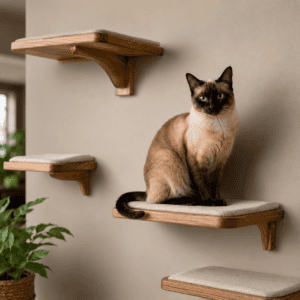
This could be a separate room, a cat tree, or a cozy hiding spot.

Step 3

Avoid Punishment

Reacting to aggression with punishment can exacerbate the issue, increasing your cat’s stress and potentially leading to more aggressive behavior.
Instead, focus on understanding the cause and removing or addressing the stressor.

Step 4

Gradual Desensitization

If the aggression is triggered by specific stimuli (e.g., the presence of strangers or other animals), gradual desensitization can help.
This involves slowly and carefully exposing your cat to the trigger in controlled, positive ways, starting at a distance or intensity that doesn’t provoke aggression and gradually increasing their exposure over time.

Step 5

Positive Reinforcement

When your cat shows calm or non-aggressive behavior in situations that previously triggered aggression, reward them with treats, praise, or play.

This reinforces the behavior you want to see, using positive reinforcement to encourage a more peaceful demeanor.

Step 6

Seek professional advice

If your cat’s aggression is severe or if you can’t identify the trigger, it’s advisable to seek professional help.

A veterinarian can rule out any underlying medical issues contributing to the behavior.

Additionally, a professional animal behaviorist can offer personalized strategies and support for managing aggression.

Step 7

Enrichment and Play

Ensure your Siamese cat has plenty of opportunities for play and mental stimulation.

Interactive toys, puzzle feeders, and regular playtime can help reduce boredom and frustration, which are familiar sources of aggression.

Adequate physical activity can also help mitigate territorial aggression by reducing anxiety and excess energy.

Challenges in Training Siamese cats

Siamese cats are known for their intelligence, vocal nature, and strong personalities, which can both simplify and complicate training efforts.

Among the challenges, the most difficult to overcome when training a Siamese cat is often their stubbornness

This trait is particularly challenging because it’s deeply ingrained in their personality and not something that can be easily changed.

Siamese cats are known for their strong wills and determination to do things their own way, which can make training a test of patience and creativity for their owners.

10 Top Tips To Ensure Quick Success

As promised, here are ten tips to ensure training success with your Siamese

Follow these ten tips that play to the breed’s strengths.

  1. Start training early: Kittens have a prime socialization window between 3-9 weeks old when they are most receptive to learning.

    Start positive reinforcement training like litter box habits, scratching posts, and basic commands during this crucial period for best results
  2. Use treats and praise: Siamese are very food-motivated. Use high-value treats they love, like cooked chicken or fish, to reinforce desired behaviors. Break treats into pea-sized pieces and keep training sessions upbeat with verbal praise like “Good kitty!”
  3. Keep the training period short: Siamese have high energy but short attention spans of 5-10 minutes. End sessions before they lose interest. Several short daily sessions are better than one long one.
  4. Be consistent: Consistency is vital for intelligent Siamese. Use the same short verbal cues like “sit” or “down” paired with hand signals or luring with treats. Reward the same desired behaviors every time.
  5. Use clicker training: A clicker marks the behavior you want to reinforce. Click during the behavior, then treat. Clickers help Siamese cats understand what earns rewards.
  6. Be patient: Siamese is intelligent but stubborn or easily distracted. Stay calm and avoid punishing them, which will backfire. Remain positive and patient as they learn
  7. Socialize early: Proper socialization from 3 to 14 weeks prevents fear and aggression later. Expose them to new people, places, sounds, and experiences positively.
  8. Provide mental stimulation: Training sessions, puzzle feeders, and interactive wand toys satisfy the Siamese’s intelligence and curiosity. This prevents boredom-related issues.
  9. Use positive reinforcement: Siamese respond much better to rewards than punishment, which can cause fear and mistrust. Focus on rewarding good behaviors
  10. Be consistent with rules: Siamese are brilliant and pick up on household rules quickly and consistently. If the couch is off-limits, gently reward them for staying off every time

Embracing the Challenge

Training a Siamese cat is a rewarding journey and a unique challenge, deeply influenced by their distinct personality traits and natural behaviors.

From their remarkable intelligence and vocal nature to their affectionate and social disposition, Siamese cats stand out as companions who are not only capable of learning a wide range of behaviors but also eager to engage in the learning process itself.

Training deepens the connection between you and your Siamese cat. It’s a journey beyond mere obedience, embracing the essence of living in harmony with such a spirited and intelligent breed.

Remember that training is an evolving dialogue between you and your Siamese cat.

Celebrate the milestones, learn from the challenges, and cherish the unique personality that your Siamese brings into your life.

After all, the valid reward of training lies in a well-behaved cat and the rich, loving relationship that blossoms through your shared experiences.

More articles on Siamese cats:

Siamese Cat Facts
Male vs Female Siamese Cats
Pros and Cons of Siamese Cats
Do Siamese Cats Get Along with Other Cats?
Do Siamese Cats Meow a Lot?
Is My Cat Part Siamese?
Do Siamese cats shed?

Frequently Asked Questions

Q: At what age should I start training my Siamese cat?

You can start basic training as early as eight weeks old. Early socialization and simple commands are most effective during their kitten stage, but there is always time to begin training an adult Siamese cat.

Q: Are Siamese cats easy to train?

Yes, Siamese cats are among the most trainable breeds due to their intelligence and desire to interact with their humans. They respond well to positive reinforcement and enjoy the mental stimulation training provides.

Q: What is the best method to train a Siamese cat?

Positive reinforcement is the best method. Rewards like treats, praise, and play will encourage your Siamese cat to repeat desired behaviors. Clicker training can also be very effective due to its precision.

Q: Can Siamese cats learn tricks?

Absolutely! Siamese cats can learn tricks, including fetching, sitting, and walking on a leash. Their intelligence and playfulness make them great candidates for trick training.

Q: How long do training sessions need to be?

Keep training sessions short, about 5-10 minutes, to match a Siamese cat’s attention span. Remember that multiple short sessions throughout the day are more effective than one long one.

Q: Why does my Siamese cat meow so much, and can I train them to be quieter?

Siamese cats are naturally vocal, but excessive meowing might be seeking attention, expressing needs, or boredom. While you can’t train them to be completely quiet, teaching a “quiet” command and meeting their needs can help manage excessive vocalizations.

Q: Can I use squirt guns to train my Siamese cat?

Using squirt bottles or any form of negative reinforcement is not recommended. This can lead to stress, fear, and a breakdown in trust between you and your cat. Positive reinforcement is a more effective and kind approach.

Q: How do I stop my Siamese cat from scratching furniture?

Provide appropriate scratching outlets, such as scratching posts or pads. Place them near the furniture they target and encourage their use with catnip or toys. Consistently redirect your cat to these alternatives and reward it for using them.

Q: Is it necessary to leash-train a Siamese cat?

While not necessary, leash training can be beneficial, especially for curious and active Siamese cats. It allows them to safely explore the outdoors and enjoy new experiences under your supervision.

Q: How can I socialize my Siamese kitten?

Introduce your Siamese kitten to a variety of people, pets, and environments gradually and in a controlled manner. Ensure each new experience is positive, using treats and praise to reinforce good interactions. Early socialization is critical to developing a confident and well-adjusted cat.