
Do Siamese Cats Shed? The Honest Answer for New and Current Owners
Affiliate disclosure:This page contains affiliate links. I may earn a commission on qualifying purchases at no extra cost to you.
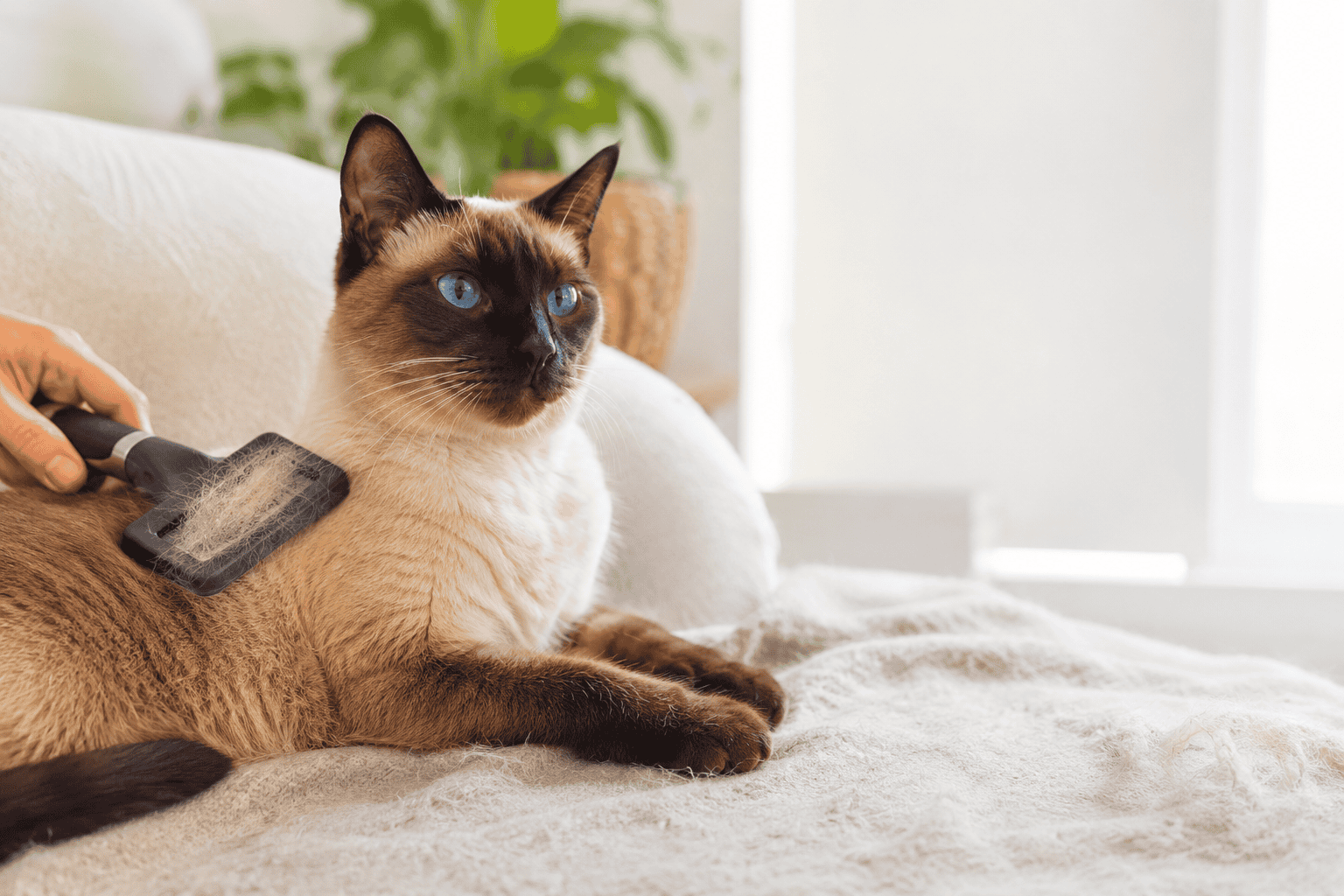
Quick Answer
Yes, Siamese cats shed — but less than most breeds. Their short, single-layer coat means no dramatic fur drifts, but you will still meet the occasional hair on a dark sweater. Once or twice a week with a soft brush is enough for most Siamese. No cat breed is truly hypoallergenic, and a shorter coat does not reduce the allergen Fel d 1.
If you’ve ever Googled “do Siamese cats shed” and come away more confused than when you started, you’re not alone. One article says barely any hair. The next says enough to notice on dark clothes. A third throws in “hypoallergenic” for good measure. This piece cuts through all of that — no vague reassurances, no overselling.
The short version: Siamese cats do shed, but they’re among the lighter shedders in the cat world, largely because of how their coat is built. That said, “light shedding” isn’t the same as “no shedding,” and if your own Siamese seems to contradict that description, there’s usually a reason for it. This article covers what’s normal, what isn’t, and everything in between.
Why Siamese Cats Shed Less Than Most
Most cat breeds carry two layers of fur: a dense, insulating undercoat beneath longer guard hairs. When that undercoat blows out — especially in spring and fall — the fur comes out in volume. Siamese cats are built differently.
Their coat is a single layer of short, fine guard hairs that lies close to the body. Because there is no undercoat, there is simply less fur to shed — no dramatic seasonal blowout, just a consistent, low-level release of hair throughout the year.[4]
That single-layer structure is also why their coat has that characteristic velvet-smooth feel. It’s not just aesthetics; it’s a coat that’s genuinely easier to manage, for both the cat and the person living with one.
Compare that to a Maine Coon or a Persian — double-coated breeds where the thick undercoat means heavier shedding, especially during seasonal transitions. The Siamese is in a different category altogether.
What “Low Shedding” Actually Looks Like Day to Day
“Low shedding” sounds great until you’re wearing a dark top and notice a pale hair across the shoulder. Low shedding still means shedding — a lint roller stays in rotation. It just gets used far less than it would with a double-coated breed.
What you’re more likely to avoid with a Siamese is the dramatic fur accumulation: dust bunnies made of fluff, sofa cushions that need daily brushing, the kind of coat that transfers visibly to every surface within range. On that scale, a Siamese is a genuinely manageable cat to live with.
What you’ll still encounter: the occasional hair on bedding, a fine coat of loose fur that regular brushing will mostly capture before it lands anywhere, and a small uptick when the seasons shift.
It’s also worth knowing that short, fine hairs can sometimes feel more persistent in fabric than longer hairs — they work their way into upholstery and knitwear more readily. A rubber lint roller or a damp rubber glove swept over the sofa handles this efficiently.
Do Siamese Cats Shed Seasonally?
Yes — though to a milder degree than double-coated breeds. Like most cats, Siamese respond to seasonal changes in temperature, and you may notice a small increase in loose hair as they transition between coats in spring and fall.[8]
Indoor cats can follow a somewhat different pattern. Because they experience fewer temperature extremes than outdoor cats, fully indoor Siamese may shed at a lower, more consistent level year-round rather than in distinct seasonal peaks.[8]
If your Siamese sheds a little more at certain points of the year, that is normal and not a cause for concern. A brief increase that settles on its own, without changes to the coat or skin, is part of healthy shedding.
Are Siamese Cats Hypoallergenic?
No cat is truly hypoallergenic. The primary culprit in cat allergies is not fur at all — it’s a protein called Fel d 1, produced in the skin, saliva, and sebaceous glands. Fur simply carries it around the home. Research published in the Journal of Allergy and Clinical Immunology found that hair length was not associated with Fel d 1 levels in homes with cats, meaning a short-coated Siamese is not automatically less allergenic than a long-haired Persian.[1]
Sex and individual variation between cats are the main reasons why some cats produce more Fel d 1 than others. A 2025 article from the University of Southern Queensland, drawing on a 2024 scientific review, notes that unneutered male cats produce more Fel d 1 on average than females or neutered males, and that production can vary widely even within the same cat across the year.[2] Allergy UK confirms that all cats produce Fel d 1 regardless of breed, age, hair length, sex, or body weight, though levels vary between individuals.[3]
The 2024 review cited in that article also concluded that there is currently no scientific evidence for a truly hypoallergenic cat breed.[2]
For anyone with cat allergies: less fur circulating through the home may mean slightly less surface area for Fel d 1 to travel on, but this is an inference — not a demonstrated conclusion from the research. The only reliable way to gauge your personal reaction is to spend time with a specific cat before adopting
What the Research Actually Shows on Fel d 1
Fel d 1 is produced in the skin and saliva — not from fur itself. Studies confirm that cat hair length is not associated with Fel d 1 levels in homes. [1] Sex and individual variation are the main drivers: unneutered males tend to produce more Fel d 1 on average than females or neutered males, and levels can vary widely within the same cat across the year. [2] No cat breed has been scientifically established as hypoallergenic.
Why Is My Siamese Cat Shedding So Much?
Not every Siamese fits the low-shedding profile, and if yours doesn’t, you haven’t been misled. Individual variation is real, and some cats simply produce more loose hair than the breed average. But there are also specific triggers worth understanding.
Seasonal Changes
A small, temporary uptick in spring and fall is normal for most cats. A brief increase that settles on its own is not a cause for concern.
Stress
Stress is a documented trigger for increased shedding. A move, a new pet, or a change in routine can all affect the skin and coat.[8] In more severe cases, cats can develop compulsive overgrooming that leads to bald patches and skin irritation — a condition worth raising with a vet if you suspect chronic stress is driving it. If your Siamese has started losing more fur alongside other anxiety signals — hiding, vocalizing more, appetite changes — the underlying stressor is worth identifying.
Coat Type and Individual Variation
Within any breed, individual cats vary in how much they shed. Coat density can differ between cats depending on genetics, age, and health. If your Siamese sheds more than you expected but the coat still looks healthy and the skin is clear, this is most likely individual variation rather than a problem.
Diet and Coat Health
Nutritional deficiencies are rare in healthy cats eating a complete commercial diet and are an unlikely primary cause of excessive shedding.[5] That said, if a cat’s diet is genuinely lacking in quality protein or essential fatty acids, this can show up in coat condition over time — dull, dry fur that releases more than it should.[7] If you have concerns about your cat’s diet and coat, a vet is the right first step before making food changes or adding supplements.[5]
When Siamese Cat Shedding Needs a Vet Visit
Normal shedding — even on the heavier seasonal end — does not change the appearance of the skin. The coat stays shiny; the skin looks clean; the cat is not scratching or overgrooming. When those conditions change, something else is going on.[6]
Conditions that can drive excessive shedding include: allergies (food, environmental, or flea-related), fungal infections like ringworm, bacterial skin infections, external parasites, hormonal disorders including hyperthyroidism, kidney or liver disease, and stress-related overgrooming.[5][8]
None of these are diagnosable at home. They all require a vet, and the sooner the better — most are very treatable when caught early.
⚠️ Call Your Vet If You Notice Any of These
• Bald patches or areas of obvious thinning
• Fur coming out in clumps with light petting
• Persistent scratching, redness, scabs, or skin irritation
• Dandruff or a dull, greasy, or unkempt coat
• Excessive licking or grooming — especially targeting one area
• Any sudden, significant change in shedding volume
• Changes in appetite, energy, or behavior alongside coat changes
You know your cat’s normal. That baseline is the most useful guide you have between vet visits. If you’re unsure whether a change is within normal range, a vet can assess it — that’s always a valid reason to reach out.
How to Groom a Siamese Cat
The Siamese coat does not need much — which is part of its appeal. The key is choosing tools appropriate for a fine, single-layer coat, and keeping sessions consistent rather than intensive.
The Right Tools for a Single-Layer Coat
Because a Siamese has a single coat without a dense undercoat, grooming tools should suit that coat type.[8] PetMD recommends weekly brushing for Siamese using a gentle approach, noting that their short coat is easy to maintain.[9] A soft-bristle brush works well for day-to-day use. A fine-toothed steel comb is useful for checking the skin underneath and separating any tangles. Vets Love Pets also suggests a grooming glove as an alternative for cats that enjoy the sensation.[10]
Whatever tool you choose, match it to the coat: the Siamese coat is fine and close-lying, so heavy-duty tools designed for thick double coats are more than is needed here.
How Often to Brush
Once a week is a reasonable average for most Siamese — enough to remove loose hair and distribute natural oils without overdoing it.[4][9] During seasonal coat transitions, brushing a little more frequently helps capture loose hair before it settles on furniture. Avoid over-brushing: BetterPet notes that excessive brushing can lead to irritation and hair loss on a Siamese’s fine coat.[4]
Managing Fur Around the Home
A few practical measures that make a real difference:
- Keep a designated blanket or throw in your cat’s favorite sleeping spot — it concentrates most of the shed fur in one washable place.
- A damp rubber glove or damp hand swept over upholstery picks up fine hairs efficiently.
- An air purifier with a HEPA filter can help reduce airborne dander — Allergy UK recommends HEPA-filtered vacuums and air filtration as part of managing cat allergens in the home.[3]
Vacuum soft furnishings weekly during shedding season. A pet-specific attachment makes short work of embedded fine hairs.
Do Siamese Cats Shed Less Than Other Cats?
Compared to double-coated breeds like Maine Coons and Persians, yes — the absence of an undercoat is the key structural difference that reduces shedding volume.[4]
Against domestic shorthairs, the Siamese is roughly comparable, with wide individual variation on both sides. Against long-haired Siamese relatives like the Balinese, the short-coated Siamese sheds less volume, though the Balinese also has a single-layer coat and is considered relatively low-maintenance for a long-haired breed.
The table below summarizes how the Siamese coat compares to several commonly considered breeds, based on published breed characteristics:
| Breed | Shedding vs Siamese |
|---|---|
| Persian | Heavier — thick double coat; daily grooming typically needed [11] |
| Maine Coon | Heavier — dense double coat; heavy seasonal shedding [12] |
| Ragdoll | Moderate — semi-long coat; minimal undercoat per TICA breed standard [13] |
| Domestic Shorthair | Comparable — varies widely between individual cats |
| Balinese (long-haired Siamese) | Similar — single-layer coat, longer but manageable [9] |
| Sphynx | No visible shed — but produces skin oils and dander |
If minimal shedding is a priority, the Siamese is a solid choice. Cornish Rex, Devon Rex, and Burmese cats are similarly light shedders worth considering alongside it.
Final Verdict: Is a Siamese the Right Cat If You Hate Fur?
A Siamese is one of the more manageable choices if fur is a genuine consideration. The single-layer coat means significantly less volume than most breeds, no heavy seasonal blowouts, and grooming that stays straightforward. You will still own a lint roller — but it will not become a way of life.
What matters more than the shedding level is whether the rest of the Siamese package suits you. This is a vocal, social, intensely people-oriented cat that does not do well with long hours alone. The coat is the easy part. The personality is the real commitment.
If your Siamese is shedding more than you expected, work through the practical checks first: diet quality, stress triggers, grooming frequency, and coat condition. If the coat still looks healthy and the cat seems well, it may simply be that your cat sits on the higher end of normal individual variation. When in doubt, a vet is always a reasonable first call — they can confirm whether what you’re seeing is normal for your specific cat.
And if something does change suddenly — the coat thins, bald patches appear, the skin looks irritated — book a vet appointment without overthinking it. Most causes of abnormal shedding in cats are treatable, and catching them early makes everything easier.
Curious what living with a Siamese is like beyond the shedding? Here’s everything you need to know → Siamese Cat: Temperament, Size, Care, Cost, Lifespan & More
Frequently Asked Questions
Do Siamese cats shed a lot compared to other cats?
No — Siamese cats are consistently described as light to moderate shedders. Their single-layer coat without an undercoat means less total fur volume than double-coated breeds.[4] That said, individual cats vary. Some Siamese shed more than others, and a mixed-breed Siamese may have a coat that behaves differently from the breed standard.
Are Siamese cats good for people with cat allergies?
Less fur in the home may mean slightly less surface area for Fel d 1 to travel on, but this is an inference — not a demonstrated research finding. The primary allergen is produced in skin and saliva, not fur itself, and hair length has not been shown to correlate with Fel d 1 levels in homes.[1][2] Neutering status and individual variation between cats are larger factors than breed or coat type.[2] Anyone with allergies should spend time with a specific cat before adopting — that is the only reliable personal test.
How often should I brush a Siamese cat?
Once a week is the standard for most Siamese, enough to remove loose hair without over-irritating a fine coat.[4][9] Increase frequency slightly during seasonal coat transitions. Avoid daily brushing — BetterPet notes that excessive brushing can cause irritation and hair loss on a Siamese’s single-layer coat.[4]
What is the best brush for a Siamese cat?
A soft-bristle brush suits the Siamese coat well for everyday use, and a fine-toothed steel comb is useful for checking the skin and separating tangles. PetMD recommends a gentle, consistent weekly brushing approach for Siamese rather than intensive grooming sessions.[9] A grooming glove is another option that some cats find comfortable. Whatever you choose, match the tool to the coat type — the Siamese coat is fine and close-lying, so tools designed for thick double coats go further than needed.[8]
Do Siamese cats shed more in summer?
Like most cats, Siamese may shed a little more during seasonal transitions — spring and fall — as their coat adjusts to temperature changes.[8] Indoor cats that experience fewer temperature extremes may shed at a more consistent, lower level year-round rather than in distinct seasonal peaks.[8]
Is it normal for a Siamese cat to shed a lot?
For most Siamese, heavy shedding is not typical — but individual variation exists, and some cats shed more than others. What matters most is whether the coat looks healthy: shiny, without thin patches or skin irritation.[6] If shedding increases suddenly, or if the coat becomes dull or patchy, a vet visit is the right next step. Vetster notes that owners concerned about excessive shedding should speak with a veterinarian, since abnormal shedding can be difficult to distinguish from normal variation without proper assessment.[5]
Do Siamese cats have an undercoat?
Standard Siamese cats do not have an undercoat. Their coat is a single layer of short guard hairs, which is the structural reason they shed less than double-coated breeds.[4] Individual cats may vary, and mixed-breed Siamese cats may inherit coat characteristics from the other side of their parentage.
Can stress make a Siamese cat shed more?
Yes — stress is a documented cause of increased shedding. Changes like a house move, a new pet, or a disrupted routine can affect skin and coat health.[8] In more severe cases, compulsive overgrooming can create bald patches — a sign that the stressor needs to be addressed, and a reason to speak with a vet if it persists. Addressing the root stressor is more effective than managing the shed fur.
When should I worry about my Siamese cat shedding?
Worry when shedding comes with visible changes to the coat or skin: bald patches, thinning areas, redness, scabs, dandruff, or a dull or greasy coat.[5][8] Also watch for behavioral changes alongside coat changes — decreased appetite, increased hiding, or excessive licking. A sudden unexplained increase in shedding volume is worth investigating. Vetster recommends speaking with a vet any time you notice a change in your cat’s skin or coat health, since underlying causes can be difficult to distinguish without an assessment.[8]
More on Siamese Cats
If you found this useful, you might also enjoy:
- Do Siamese Cats Meow a Lot? — Because the coat is just the beginning. The voice is the real commitment.
- How to Train a Siamese Cat — One of the most trainable breeds around, but they learn fast in both directions.
- Male vs. Female Siamese Cats — The differences in behavior, temperament, and coat.
Sources
[1] Siebers R et al. Journal of Allergy and Clinical Immunology. “Fel d 1 levels in domestic living rooms are not related to cat color or hair length”
[2] University of Southern Queensland. “Why are some cats more allergenic than others? It’s not their coat length”
[3] Allergy UK. “Cat Allergy Factsheet”
[4] BetterPet. “Siamese cats: Cat breed characteristics & care”
[5] Vetster. “Role of nutritional deficiency in excessive shedding in cats”
[6] Bond Vet. “8 Ways to Reduce Cat Shedding”
[7] Catster. “Cat Shedding: What’s Normal & When to Call the Vet”
[8] Vetster. “Is your cat’s seasonal shedding normal?”
[9] PetMD. “Siamese Cat Breed Health and Care”
[10] Vets Love Pets. “The Vet’s Guide to Siamese Cats: Facts, Care, and Training Tips”
[11] Vets Love Pets. “The Vet’s Persian Cat Guide: Grooming & Nutrition”
[12] PetMD. “Maine Coon Cat Breed Health and Care”
[13] TICA. “Ragdoll Breed Standard”