
The 7 Biggest Mistakes Owners Make When Responding to Their Cat's Solicitation Purr
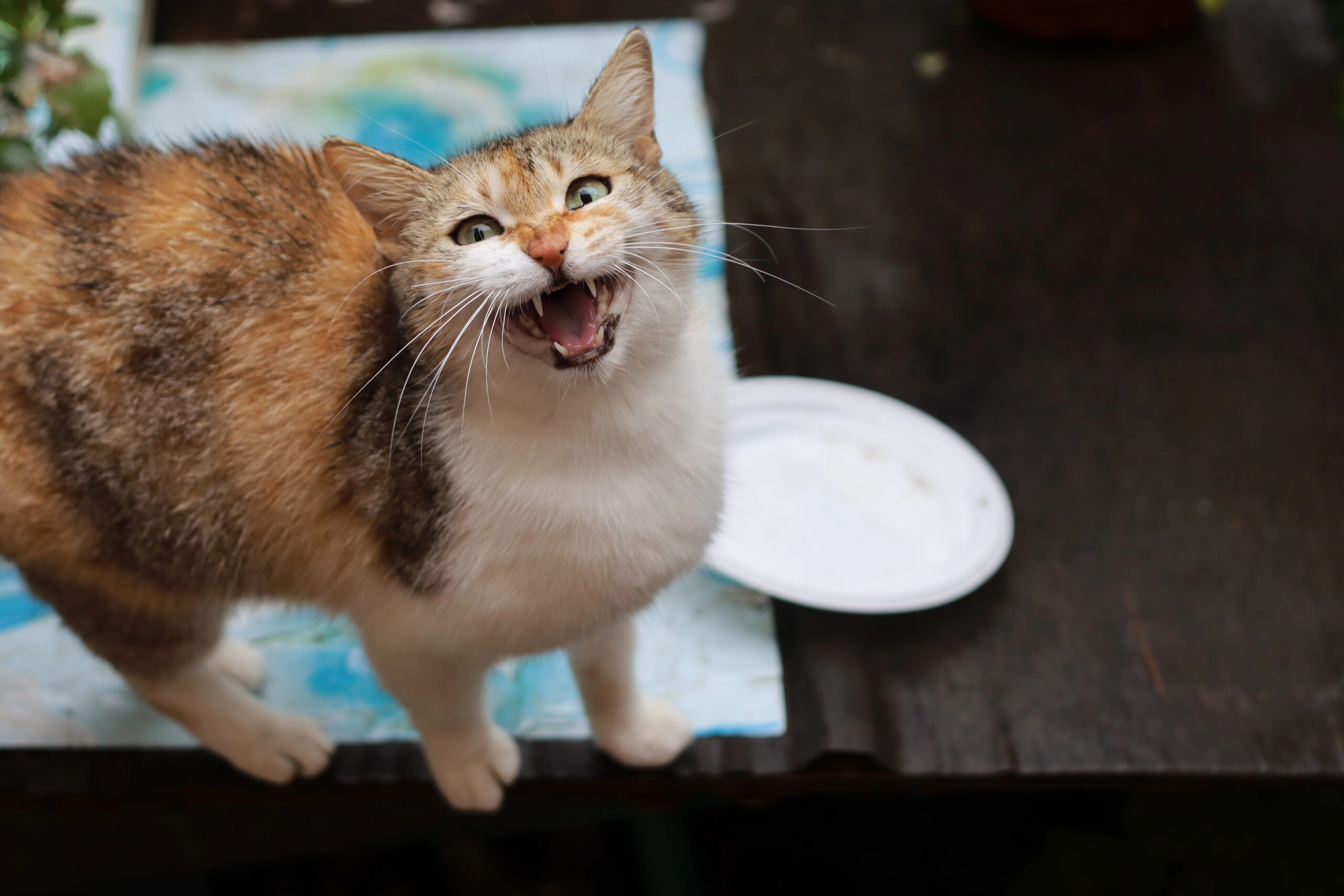
Quick Answer: How Should You Respond to a Solicitation Purr?
When your cat uses a solicitation purr, pause before you react. Check what they may actually need — food, play, attention, or comfort. If it’s mealtime, feed calmly. If it isn’t, avoid giving food or treats just to quiet the sound. The goal is not to ignore your cat. It’s to respond thoughtfully. A solicitation purr is communication, but not every request needs to be answered in the exact way your cat is hoping for.
There is a specific purr that does not feel peaceful.
You know the one.
It starts soft, but something about it has an edge. Your cat locks eyes with you. Then the food bowl. Then you again. Maybe a small meow slides into the rumble for emphasis.
And suddenly you are standing in the kitchen, wondering how you got outplayed by an animal who ate twenty minutes ago.
That is the solicitation purr.
A regular purr can mean contentment, trust, or comfort. A solicitation purr is different. It is your cat’s “I need something from you” sound. Sometimes that something is food. Sometimes it is attention. Sometimes it is the immediate end of whatever you were doing.
Most cat owners figure out quickly that their cat wants something. The harder part is learning how to respond without accidentally training your cat to be louder, pushier, or more demanding over time.
Because cats learn fast. If one urgent purr delivers breakfast early, a treat, or a 3 a.m. appearance from their human, they will remember.
Here are the seven most common mistakes owners make when responding to a solicitation purr — and what works better instead.
What Is a Solicitation Purr?
A solicitation purr is a specific type of purr cats use when they want something from humans, particularly food.
Researchers found that cats can embed a high-pitched, cry-like frequency into their normal low purr when seeking food, making the sound more urgent and harder for people to ignore. In the study, even people who had never owned a cat rated solicitation purrs as more urgent and less pleasant than regular purrs. [1]
Your cat may have discovered the exact sound that makes your brain go: Fine. What do you want?
The purr is not always loud. Sometimes it is subtle. But it feels different from the slow, drowsy purr you hear when your cat is melting into the sofa beside you.
A solicitation purr often comes with:
- direct eye contact
- walking toward the food bowl
- rubbing against your legs
- pawing at you
- purring and meowing layered together
- following you from room to room
- escalating if you ignore it
This is why how you respond matters. If you react automatically every time, your cat may learn that this sound is the fastest route to getting what they want. And once a cat learns that, the routine tends to grow.
7 Common Mistakes to Avoid When Responding to Your Cat’s Solicitation Purr
Mistake 1: Feeding Your Cat Every Time They Purr
This is the easiest mistake to make.
Your cat purrs. It sounds urgent. They look deeply underfed, despite all available evidence to the contrary. So you put food in the bowl. Peace returns. For now.
The problem is that your cat has just learned a simple rule: purr like this = food appears.
That is not manipulation in any dramatic sense. It is just learning. Cats repeat what works.
The issue with feeding on demand is that it can quietly turn into a pattern of begging, meal creep, and extra calories that accumulate without you noticing. Cornell Feline Health Center notes that adult cats generally do well with once- or twice-daily feeding, though individual needs vary based on age, health, and your vet’s guidance. [2]
When the urgent purr starts outside of mealtime, ask yourself a few things before you move toward the bowl:
- Is it actually mealtime?
- Has my cat already eaten?
- Is this hunger, boredom, habit, or attention-seeking?
- Am I feeding my cat, or am I feeding the silence?
That last one is where most of us get honest.
A better approach is to keep meals predictable. Feed at regular times. If your cat purrs before mealtime, wait until the scheduled time rather than letting the schedule drift earlier and earlier based on how persuasive the purr is.
Cats thrive on routine. If the meal window keeps shifting because the purr worked, your cat will keep testing the system. They will usually test it loudly.
Mistake 2: Ignoring the Purr Completely
The opposite mistake is pretending the solicitation purr means nothing.
That approach can be just as unhelpful.
A cat using an attention-seeking purr is still communicating. They may not need food, but they may be asking for interaction, play, reassurance, or company. Some advice about cat behavior treats every request as a bad habit waiting to happen, which misses the point. Cats are not appliances making noise at inconvenient moments. Sometimes they are simply checking in.
If your cat comes to you purring, rubbing against you, and looking engaged, take a moment to read the situation before deciding to ignore it entirely. Maybe they want a short play session. Maybe they want to sit near you. Maybe they have spent most of the day watching a patch of sunlight move across the floor and have now decided that counts as enough enrichment for one day.
The better response is not automatic compliance or total rejection. It is assessment.
Look at their body language. Look at the time of day. Look at the pattern. If your cat is asking for attention, give them a form of attention that does not reinforce a problem. That might mean a few minutes of petting, a short play session, or simply acknowledging them without producing food.
Sometimes the right answer to a solicitation purr is not yes or no. It is: I hear you, but we are not doing snacks right now.
Mistake 3: Giving In to Nighttime Purring
Few things test a cat owner’s resolve like a cat purring at 3 a.m.
During the day, you may be consistent, calm, and reasonable. At 3:17 a.m., with a cat purring directly into your ear like a small, vibrating alarm clock, your standards may collapse. You get up once. You feed them, or open a door, or let the paw stop tapping your face. The cat learns: night purr = human wakes up.
That one response becomes a routine you never agreed to.
Nighttime solicitation purring often happens because cats are naturally more active during dawn and dusk, and some extend that into the night. It may also happen when dinner was too early, when the cat is bored, or when the cat has already learned that nighttime noise produces results.
The mistake is not responding once to a genuine need. The mistake is accidentally teaching your cat that the middle of the night is a negotiating window.
A better approach starts in the evening, before the problem begins. Give your cat a proper play session before bed, followed by their evening meal. That taps into a more natural rhythm: hunt, eat, groom, sleep. Then make nighttime genuinely boring. No feeding. No big reactions. No turning 3 a.m. into an open support ticket.
If the behavior is sudden, extreme, or comes with signs like restlessness, weight changes, confusion, or a change in appetite, it is worth a vet visit. Sudden behavior shifts should not be brushed off as annoying.
But if your healthy cat has simply learned that nighttime purring works, consistency is the only fix. Your cat may protest the new policy. That is expected. Cats do not typically retire a successful strategy without filing a complaint first.
Mistake 4: Using Treats to Stop the Purr
Treats feel like a clean solution.
Your cat purrs urgently. You give a treat. The purr stops. Problem solved.
Except you may have just taught your cat that purring on demand opens the treat cabinet.
This is one of the stickier mistakes because treats feel minor. One treat does not seem like a big deal. Then one becomes two. Then it becomes just a few, and somehow your cat has built an entire side economy around emotional snacking.
Treats are not bad. They have real uses: training, enrichment, medication support, occasional bonding. But they should have a purpose. Using them as a way to quiet your cat’s urgent purr is not a purpose. It is a negotiation, and your cat will come back to the table.
If your cat is purring for treats, redirect the energy instead. Offer a toy. A short play session. Brushing, if they enjoy it. Attention that does not involve food. You can also use puzzle feeders or food-dispensing toys during planned meals so your cat gets mental engagement without random extra calories.
The point is not to deprive your cat. The point is to avoid teaching them that every emotional performance earns a snack. Cats are excellent performers when the snack budget is involved.
Mistake 5: Responding With Too Much Excitement Every Time
Not every solicitation purr needs a full production in response.
Some cats purr because they want your attention. But if every purr gets answered with high-energy play, you may be overstimulating a cat who only wanted calm contact.
Cats can shift quickly from interested to overwhelmed. A purr may start as a request for interaction, but too much excitement, rough play, or nonstop stimulation can push some cats into biting, swatting, or agitation. Cats Protection notes that cats can become overstimulated during stroking or play, and biting or scratching may be a signal that they need space. [3]
When your cat purrs for attention, match your response to their energy level:
- If they seem relaxed: calm affection
- If they seem playful: a toy, and keep the session short
- If they seem restless: something structured to channel the energy
- If they start twitching, biting, or pulling away: stop
Do not take it personally. Cats are very good at asking for something and then deciding they have had enough of it. That is not betrayal. That is cat ownership.
Mistake 6: Punishing or Scolding the Purr
This one can damage trust fast.
A solicitation purr can be repetitive and grating, especially when it starts at an inconvenient time. But scolding, shouting, spraying, or punishing your cat for purring does not teach them a better way to communicate. It teaches them that asking you for something is unsafe.
That can create stress, avoidance, confusion, or other behavior problems. It also misses the more useful question: what is my cat asking for, and what about the current routine is making this pattern happen?
If the purring has become excessive, look at the setup first:
- Is your cat bored?
- Are mealtimes unpredictable?
- Are they getting enough play?
- Is there enough enrichment in the space?
- Has anything changed in the household?
- Could there be an underlying health issue?
The American Association of Feline Practitioners’ behavior guidance makes clear that punishment is generally not useful for changing cat behavior and can increase fear and anxiety. [4]
Punishment may interrupt the behavior in the moment. It does not solve the need behind it.
Stay boring, calm, and consistent. Do not reward what you do not want. But also do not make your cat afraid to communicate. There is a real difference between setting limits and making your cat afraid to ask.
Mistake 7: Assuming It’s “Just Begging” When Something Is Wrong
This is the one to take most seriously.
Most solicitation purring is harmless. Your cat wants food, attention, play, or access to something they want. But sometimes a change in purring is part of a larger health picture.
If your cat is suddenly purring more than usual, purring in unusual contexts, purring while hiding, refusing food, acting lethargic, breathing differently, or avoiding being touched, do not dismiss it as begging. Cats Protection notes that purring is not always a happiness signal and can happen when a cat is in pain or trying to self-soothe. [3]
This is especially important when the behavior is new.
A cat who has always purr-begged for breakfast at 7 a.m. is following a learned routine. A cat who suddenly starts urgent purring, hiding, and not eating is telling you something different.
This is where knowing your cat’s normal matters. Not what another cat does. Not what an article describes as typical. Your specific cat, on a normal day, is the baseline.
If the purring comes with appetite changes, litter box changes, vomiting, sudden clinginess, hiding, or anything that feels off — contact your vet. The purr may sound familiar. The situation may not be.
How to Respond to a Solicitation Purr Without Reinforcing Bad Habits
The goal is not to shut your cat down. The goal is to respond in a way that meets real needs without rewarding every demand.
Start by checking the basics:
- Is it mealtime?
- Is the water bowl clean?
- Is the litter box usable?
- Has your cat had play or activity today?
- Are they acting normal?
- Has anything changed in the house?
Then choose the response that fits the situation:
- If it’s mealtime: feed calmly
- If it’s not mealtime: don’t feed just because the purr is persuasive
- If your cat wants attention: offer it without food
- If they want play: use a toy, not your hands
- If they seem overstimulated: give space
- If something seems wrong: call the vet
That is how you stay responsive without becoming fully managed by your cat’s sound effects. Your cat may still think you are underperforming. That is between them and their standards.
A Simple Solicitation Purr Response Guide
| What Your Cat Is Doing | What It May Mean | Better Response |
|---|---|---|
| Purring near the food bowl | Hunger, routine, or learned begging | Feed only if it is mealtime |
| Purring and staring at you | Attention request | Offer petting, talking, or a short play session |
| Purring and meowing together | More urgent request | Check the need, but avoid automatic treats |
| Purring at night | Learned wake-up behavior, boredom, or routine issue | Improve bedtime routine; avoid rewarding nighttime demands |
| Purring while tail flicks | Possible overstimulation | Pause contact and give space |
| Purring while hiding | Stress, fear, or possible discomfort | Watch closely and check for other symptoms |
| Purring with appetite loss | Possible illness or pain | Contact your vet |
| Purring constantly before meals | Learned food cue | Keep a consistent feeding schedule |
This table is a starting point, not a replacement for knowing your cat. Cats are very good at making simple situations emotionally complicated.
Final Thoughts
Your cat’s solicitation purr is not bad behavior.
It is communication with a goal attached.
Sometimes that goal is food. Sometimes it is comfort or company. Sometimes it is your immediate surrender. The mistake is not listening to it. The mistake is reacting without thinking.
This is where life with cats gets genuinely interesting. Cats learn us. They test patterns. They remember what worked yesterday and try it again today with slightly more confidence. That does not mean you need to be hard on them. It means you need to be consistent.
Feed with routine. Respond with attention when attention is what’s needed. Avoid turning every purr into a snack. Never punish communication. And always pay attention when the purr feels different from your cat’s normal — because that difference can matter.
The solicitation purr is a small sound. In the right cat’s mouth, it can run the whole house.
Frequently Asked Questions
What is a solicitation purr?
A solicitation purr is a specific purr cats use when they want something from humans, especially food or attention. It often has a more urgent quality than a relaxed purr and may include an embedded high-pitched, cry-like frequency that humans find harder to ignore. Not every cat uses it in the same way or to the same degree.
Why does my cat purr for food?
Your cat likely purrs for food because they have learned it works. If that purr has previously produced food, the behavior tends to strengthen. It is not instinctive in the way hunger is — it is a learned communication strategy, which means it can also be untrained with a consistent routine.
Should I feed my cat every time they purr?
No. A consistent feeding schedule serves cats better than responding to every purr. If the purr happens at the right time, feed calmly. If it doesn’t, check whether your cat needs play, attention, or something else — and respond to that instead of the purr itself.
Is a solicitation purr the same as a happy purr?
No. A happy purr typically happens when a cat is relaxed, comfortable, and not asking for anything. A solicitation purr is goal-directed — it is used to get a response. The two can feel similar on the surface, but context and body language usually make the difference clear.
Why does my cat purr and meow at the same time?
When a cat layers purring and meowing together, they are usually escalating. The purr provides familiarity and warmth, while the meow adds urgency. It can indicate that a calmer version of the request was not getting the result they wanted. The combined sound tends to be harder to ignore, which is likely the point.
How do I stop my cat begging for food?
Keep a consistent feeding schedule and avoid giving treats just to end the begging. Use play and enrichment to reduce boredom-driven purring. If the begging is sudden or seems out of character, it is worth checking with a vet to rule out hunger caused by a health issue rather than behavior.
Why does my cat purr at night?
Nighttime purring is usually a request for food, attention, play, or access to a space. It can also be a learned behavior if previous nighttime responses reinforced it. Cats are naturally more active at dawn and dusk, and some extend that into the night. A structured evening routine — play, then feeding — can help shift the pattern. If it is new and comes with other changes, check with your vet.
Should I ignore my cat’s solicitation purr?
Not completely. Ignoring it without assessment misses the point. The better approach is to pause, figure out what your cat may actually need, and respond to that real need rather than either the purr automatically or the silence you’re hoping to create.
Can a solicitation purr mean my cat is sick?
Usually it is a request for food or attention, but a sudden change in purring — especially when combined with hiding, appetite loss, lethargy, or unusual behavior — can signal illness or pain. If the purring is new, frequent, or comes with other symptoms, contact your vet. Cats often mask discomfort, and purring is one of the ways they self-soothe.
Is my cat manipulating me with purring?
Not in a deliberate, human-style way. Your cat is using learned behavior. If a specific purr has reliably produced food or attention, they will use it again. That is operant conditioning, not scheming — although some cats do make a compelling case for both.
Sources
- Current Biology — The Cry Embedded Within the Purr
- Cornell Feline Health Center — How Often Should You Feed Your Cat?
- Cats Protection — Why Does My Cat Purr?
- American Association of Feline Practitioners — Feline Behavior Guidelines