
Cat Purr Meaning: 5 Mistakes Owners Make When Reading a Purr
Quick Answer: What Does a Cat Purr Mean?
A cat’s purr can mean contentment, comfort, bonding, stress relief, social communication, or — less often — pain or illness. The most common mistake is assuming it always means happiness.A relaxed cat purring with soft eyes, loose posture, and completely ordinary behavior is almost certainly fine. A cat purring while hiding, refusing food, sitting unusually still, or acting out of character deserves a closer look.
The better rule: don’t read the purr alone. Read the whole cat.
A purring cat can take the edge off almost any day.
You come home tired, your cat climbs onto the couch beside you, and that low hum starts up like a small engine finding its rhythm. It feels like an answer to a question you didn’t ask out loud. And most of the time, when everything else looks easy and relaxed, a purr probably does mean your cat is comfortable.
But here’s what trips a lot of cat owners up: a purr is not a single-meaning sound.
It can mean I’m happy. It can mean I want something from you. It can mean I’m trying to calm myself down. And occasionally, it’s the quietest possible signal that something isn’t right. Understanding cat purr meaning isn’t about decoding the sound in isolation — it’s about reading the whole cat, the sound included.
The purr is one sentence in a much longer conversation. And a few very common mistakes make it easy to miss the rest.
5 Mistakes Owners Make When Reading a Purr
Mistake 1: Assuming Purring Always Means Happiness
This is the most common one, and honestly, it makes sense.
A happy purr is one of the best sounds in the world. When your cat is stretched across a warm spot, kneading a blanket, and running that low motor, it’s easy to hear that and feel immediately reassured. The sound itself is calming.
But does purring always mean a cat is happy? No. Cats can also purr when they’re stressed, frightened, unwell, or physically uncomfortable. Veterinary sources describe purring as a behavior that appears across a range of situations: contentment, yes, but also stress, attention-seeking, illness, and discomfort. [1][2]
That doesn’t mean you should be monitoring every purr with quiet alarm. Most everyday purring is exactly what it sounds like — your cat is comfortable. The problem starts when the purr becomes the only evidence you’re looking at.
A cat purring on your lap after a normal evening is a very different picture from a cat purring while crouched in a corner with wide eyes and a body that looks braced for something. Same sound. Completely different message.
What a Happy Purr Usually Looks Like
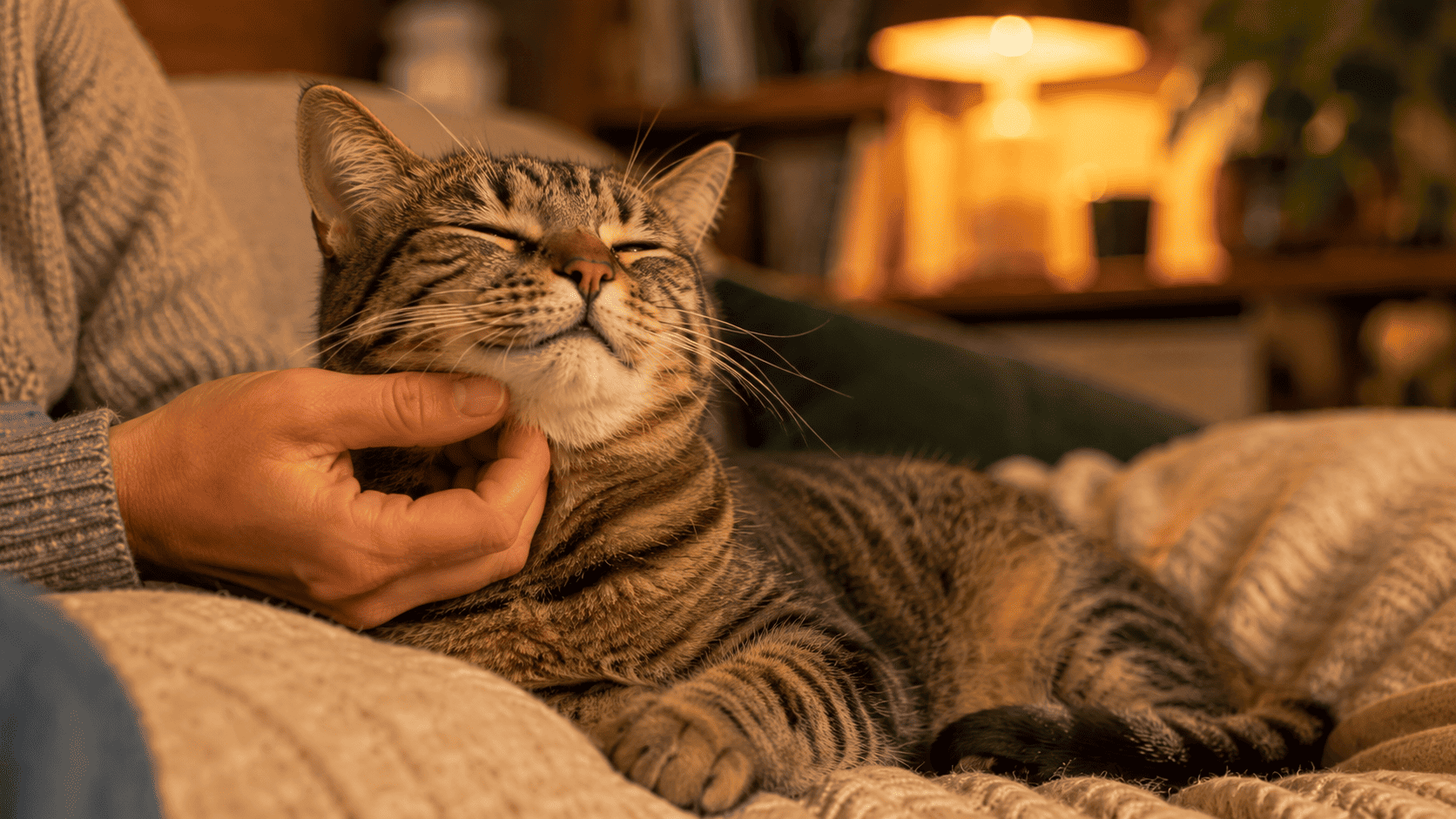
The body looks soft and loose. Eyes may be half-closed or slow-blinking. Ears sit in a relaxed, neutral position. The cat might knead, roll slightly, or lean into your hand. They’re not trying to get away.
What a Worried Purr Often Looks Like
The body looks tighter. The cat might hide, hunch low, or turn away. Ears may flatten or swivel sideways. The tail might flick sharply. They may stop eating or go unusually quiet.
The purr is one piece of the message. The rest is written in the body
Mistake 2: Ignoring the Rest of the Body
The second mistake is listening to your cat without actually watching them.
A purr tells you something is happening. Cat purr body language tells you what.
Cats communicate through posture, ear position, eye shape, whiskers, tail movement, and how much space they put between themselves and everything else. PetMD explains that cats use a combination of body language, vocalizations, physical touch, and chemical signals to communicate — no single signal tells the whole story. [3] Cats Protection describes how cats in different emotional states — relaxed, anxious, frightened, or overstimulated — show distinctly different body postures. [4]
So if your cat is purring, pause and look at the whole picture.
A relaxed cat looks physically soft. Muscles loose. Paws comfortably tucked or spread. Tail still or moving slowly. Eyes soft. Not orienting toward the exit.
A stressed cat often looks more contained. Body lower. Pupils wider. Tail tighter. Whiskers pulled forward or flattened down.
This matters most when people ask about the difference between a happy purr and a stressed purr. You often can’t tell by sound alone. Some cats have a deep, rolling purr when happy. Some have a faint, almost inaudible purr when nervous. Some purr at vet visits. Some purr during car rides. Some purr constantly — mealtime, greetings, nap time, mild inconvenience.
The body fills in what the sound can’t tell you on its own. Think of it like someone saying “I’m fine” — you know whether they mean it by the look on their face and what just happened, not the words.
Cats work exactly the same way. Except they also have whiskers and a tail that doesn’t know how to lie.
Happy Purr vs. Stressed or Painful Purr: What to Look For
| Happy Purr | Stress or Pain Purr |
|---|---|
| Soft, relaxed eyes | Hiding or avoiding contact |
| Loose, comfortable body | Tense, hunched, or stiff body |
| Slow blinking or half-closed eyes | Flattened or sideways ears |
| Kneading or leaning into touch | Not eating or drinking normally |
| Normal daily routine and energy | Withdrawal, unusual stillness, or clinginess |
| Choosing to stay near you | Sudden behavior change or aggression |
This table is a starting point, not a diagnosis. Use it to notice whether the purr matches the rest of what you’re seeing.
Mistake 3: Forgetting That Cats May Purr to Cope
This is where it gets a little more layered.
A cat can purr because they feel good. A cat can also purr because they’re trying to feel better. That one difference changes how you should read the sound.
The American Animal Hospital Association notes that cats may purr when they’re in pain or discomfort, and that the act of purring may help soothe them in those moments. [2] Which means a cat purring when stressed isn’t a contradiction — it’s the cat using the one tool available to regulate how they feel.
Some cats purr at the vet. Some purr in the car. Some purr after something scared them, or while recovering from illness. That doesn’t mean they’ve suddenly decided everything is fine. It often means they’re coping.
New cat owners especially get confused here. They learn that purring can signal stress, then hear their cat purring regularly and start to worry. Most of the time, that’s not necessary. Context is everything.
If your cat is purring and also eating normally, playing, using the litter box, and acting like themselves — the purr probably isn’t telling you anything alarming.
But if the purring comes alongside hiding, appetite changes, sudden clinginess, unusual stillness, aggression, or changes in breathing — that deserves closer attention.
The mistake is letting the purr talk you out of what you’re already noticing. Merck Veterinary Manual notes that changes like decreased activity, reduced appetite, weight loss, or poor grooming don’t individually confirm pain — but they do indicate something worth paying attention to. [5] A purring cat isn’t automatically a fine cat. The purr can be comfort. The purr can also be coping. The difference lives in everything happening around it.
Mistake 4: Missing the “I Want Something” Purr
Not every purr comes from a deep emotional place.
Sometimes your cat isn’t saying I feel safe in your presence. Sometimes they’re saying the bowl is empty and you’re standing in the wrong room.
Cats use purring as direct communication, and that’s a real part of cat purring meaning that often gets overlooked. Some cats purr when they greet you at the door. Some rev up before meals. Some start purring the moment you sit in the petting spot they’ve quietly designated as theirs.
You’ll usually notice the context: they walk ahead and look back. They rub against your legs and lead you somewhere. They climb onto your laptop with the quiet confidence of someone who has never once been told no.
This kind of purr is real communication — it just has a very specific purpose. And if you’ve been responding to it consistently, your cat almost certainly knows that.
This is part of why why do cats purr doesn’t have a single clean answer. Cats purr in contentment, during stress, when coping with discomfort, and when they want something from you. Often more than one thing at once.
So when your cat purrs, it’s worth asking: what usually happens after this sound? Because there’s a reasonable chance they’ve already figured out the pattern.
Mistake 5: Comparing Your Cat’s Purr to Every Other Cat’s
Some cats purr like a small appliance left running in the next room. Others purr so softly you only notice it when your hand rests on their chest. Some cats purr at everything. Others save it for rare, specific moments.
None of those cats is more content or more stressed than the others — they just purr differently.
A loud purr doesn’t mean happier. A quiet purr doesn’t mean worried. A cat who almost never purrs is not automatically unhappy. And a cat who purrs at high volume for most of the day is not necessarily relaxed every single minute. This is why the question why is my cat purring so much depends entirely on what’s normal for that cat.
A cat who has always been vocal at breakfast is probably just being themselves. A cat who suddenly starts purring constantly while hiding, eating less, or moving differently — that’s worth watching.
The same goes in the other direction. If your usually rumbly, affectionate cat suddenly goes quiet and withdrawn, the absence of purring isn’t the signal. The behavior change is.
This is where knowing your own cat matters more than any chart. You know how they greet you. How they ask for things. How they settle in the evening. How loud they usually purr and how long they usually stay close.
Those patterns are your baseline. The mistake is comparing your cat’s purr to some general standard. The better approach is comparing today’s purr to your cat’s normal.
How to Tell If a Cat's Purr Is Happy or Stressed
A happy purr usually fits what’s happening around it.
Your cat is resting, being touched in a way they like, settling into their routine, or greeting you after an ordinary day. The body looks relaxed. Eyes soft. Breathing easy. Tail either still or moving slowly. They’re not trying to leave.
A stressed or uncomfortable purr often feels mismatched.
The purr is there, but the body is saying something else. The cat is low or tight. Ears flattened. Pupils wide. Tail flicking. They pull away from touch, stop eating, or go somewhere they usually don’t go. Or they go quiet in a way that feels different from their usual quiet.
The short version: a happy purr matches a relaxed cat. A stressed purr often clashes with the rest of the cat. When the sound says one thing and the body says another, trust the body.
When Should You Worry About Cat Purring?
Ordinary purring from a cat who is eating, moving, playing, and behaving like themselves is not something to worry about.
But pay attention when the purring comes with other changes.
Watch more closely if your cat is purring while hiding more than usual, eating or drinking less, seeming weak or stiff, breathing differently, acting unusually restless, biting or growling when touched, or becoming much more clingy or much more withdrawn than normal.
This matters especially with cat purring when sick or in pain. A purr is not proof that your cat is fine. If your gut says something is off, and your cat’s behavior has changed, call your vet. Cats are not dramatic about discomfort — if anything, they’re the opposite. By the time something is obvious, it’s often been going on for a while.
Subtle is exactly what gets missed when the purr is the only thing you’re listening for.
A Simple Way to Read Your Cat's Purr
Start with the purr. Don’t end there.
Three questions that take about five seconds:
First — what’s happening right now? Is this a normal, calm moment? Or is your cat at the vet, hiding, recovering from something, or acting differently than usual?
Second — what does the body say? Are the eyes soft, the posture loose, the ears relaxed? Or is something tighter, lower, or pulled away?
Third — is this normal for your specific cat? Some cats purr loudly at everything. Some barely purr at all. Some purr only when deeply comfortable. Knowing what’s typical for your cat makes changes much easier to catch.
That’s the actual skill — not decoding every sound, not researching every purr type, but knowing your cat well enough that something different registers as different.
Final Thoughts on Cat Purr Meaning
A cat’s purr is one of the most comforting sounds in the world. It is also not a simple translation.
It can mean happiness. It can mean trust. It can mean I’m hungry. It can mean I’m trying to stay calm. And occasionally, it means your cat needs you to look past the sound and notice what else is happening.
The mistake isn’t loving the purr. The mistake is stopping at the purr.
Because your cat is rarely saying just one thing. The purr is the opening of a sentence. The rest is written in the body — in the eyes, the tail, the posture, the timing, and the small shifts that only someone paying attention would ever notice.
That’s where the real meaning lives. And that’s what turns a cat owner into someone their cat actually communicates with.
Frequently Asked Questions
Why do cats purr?
Cats purr for several reasons: contentment, bonding, communication, stress relief, and self-soothing. Some cats also purr when sick or in pain, which means context and body language always matter more than the sound alone.
Does purring always mean a cat is happy?
No — though it often does. Cats purr when relaxed and content, but they also purr when stressed, anxious, or unwell. A relaxed body, soft eyes, and normal behavior point to a happy purr. Tense posture, hiding, appetite changes, or unusual behavior suggest something else is going on.
How can I tell if my cat’s purr is happy or stressed?
Look at the whole cat. A happy purr usually comes with a loose body, slow blinks, and a cat who’s choosing to stay near you. A stressed purr often comes with flattened ears, wide pupils, a stiff or low posture, or avoidance of touch. When the sound and the body don’t match, trust what the body is telling you.
Why does my cat purr when I pet them?
Usually because they feel comfortable, safe, and bonded with you. But watch the body. If they lean in and stay relaxed, they’re enjoying it. If they purr but tense up, twitch the tail, or turn their head toward your hand — they may be getting overstimulated. The purr doesn’t always mean keep going.
Why does my cat purr and then bite me?
Overstimulation. Cats have a threshold for how much touching they want in one go, and that threshold varies by cat and by mood. The purr doesn’t reset the clock — it just means they were okay with it until they weren’t. Watch for tail flicking, skin twitching, or ears rotating as earlier signals before the bite.
Why is my cat purring so much?
If your cat has always been a heavy purrer and is otherwise behaving normally — eating, playing, moving well — it’s most likely just their personality. If the increase is sudden, or comes alongside hiding, appetite changes, or low energy, it’s worth checking in with your vet.
Can cats purr when they are in pain?
Yes. Purring can be a self-soothing response, which means a cat in pain may purr as a way of coping. Don’t assume a purring cat is automatically fine if other signs suggest discomfort.
Is it normal if my cat doesn’t purr much?
Yes. Some cats purr very softly, rarely, or mostly when deeply relaxed. If your cat seems healthy, affectionate in their own way, and is behaving normally, a lack of frequent purring isn’t a concern on its own.
Do kittens purr?
Yes, often from a very young age — sometimes during nursing or close contact with their mother. Purring in kittens serves as communication and bonding, and it tends to develop into a lifelong habit.
Should I be concerned if my cat is purring but also seems sick?
Yes. If your cat is purring but also hiding, eating less, moving stiffly, breathing differently, or acting unlike themselves — contact your vet. The purr doesn’t cancel out the other signals. If anything, a cat who is clearly unwell but still purring may be doing exactly what cats do when they’re trying to stay calm under stress.
Sources
- PetMD — Why Do Cats Purr? 5 Meanings Behind a Purring Cat
- American Animal Hospital Association — Why Do Cats Purr? 5 Reasons Behind the Secret Feline Language
- PetMD — How Do Cats Communicate With Each Other?
- Cats Protection — Cat Body Language
- Merck Veterinary Manual — Recognizing and Assessing Pain in Animals