
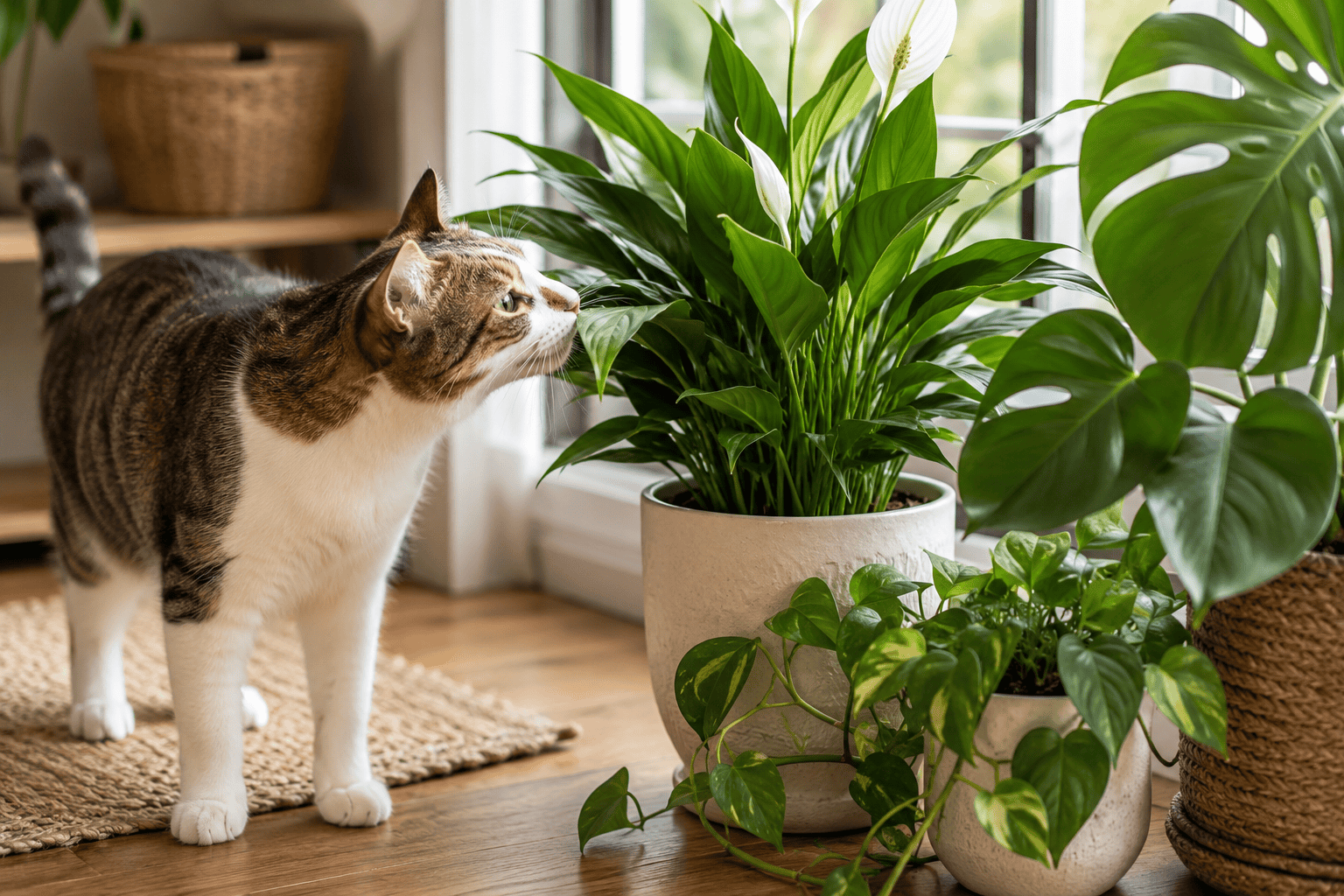
1. True Lilies: The One Plant I Would Never Gamble With
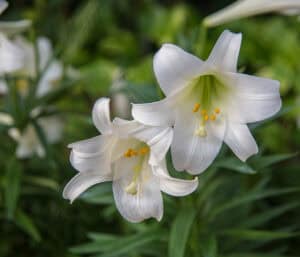
If there is a single plant I would not allow in a cat home under any circumstances, it is the true lily.
We are talking about plants from the Lilium and Hemerocallis groups: Easter lilies, tiger lilies, Asiatic lilies, Oriental lilies, stargazer lilies, daylilies. These are some of the most dangerous houseplants for cats, full stop.
What makes them so serious is how little exposure it takes. Your cat does not need to eat a whole flower. According to the FDA, the entire lily plant is toxic — stem, leaves, flowers, pollen, and even the water in the vase. Licking pollen off their coat while grooming is enough to trigger kidney damage. And the timeline is brutal: signs of kidney failure can develop within 24 to 72 hours, and if treatment is delayed beyond 18 hours, irreversible kidney damage is likely.
Early signs include vomiting, drooling, lethargy, and loss of appetite — but I would not wait for those. If your cat has been anywhere near a true lily, call your vet or an animal poison control line immediately.
The pollen and vase water point is worth pausing on specifically. A cat does not need to chew a lily to be poisoned by one. Pollen sheds from open flowers and settles on fur, whiskers, and nearby surfaces — your cat grooms it off without you even knowing. The vase water carries the same risk: as the plant sits, toxins leach in, and a cat sniffing around or drinking from the vase is exposed. This is why “keeping it on a high shelf” does not make a lily safe in a cat home. The only safe option is removing it entirely.
Safer swap: Orchids. They give you the same elegant, flowering-plant feel without the same danger.
2. Sago Palm: Stylish Plant, Wrong Home
 Sago palm is one of those plants that looks exactly like it belongs in a bright, modern living space.
It does not belong in a home with cats.
This is not a keep-it-on-a-high-shelf situation for me. Cats climb. They knock things over. They jump onto surfaces you were convinced they could not reach. Keeping a sago palm high up is not a reliable safety plan.
The ASPCA lists sago palm as toxic to cats and identifies cycasin as the toxic principle. All parts of the sago palm are toxic, with the seeds being the most dangerous. The plant contains cycasin, a toxin that attacks the liver. According to VCA Animal Hospitals, ingestion of even a small amount can cause severe gastrointestinal upset and lead to liver failure. Early signs include vomiting, diarrhoea, drooling, and loss of appetite — and within two to three days, more serious symptoms can develop, including jaundice, black tarry stool, and in severe cases, neurological signs. PetMD reports that around 50 percent of cats who ingest sago palm do not survive.
This is one of the toxic indoor plants for cats I would remove entirely.
Safer swap: Ponytail palm. Despite the name, it is not a true palm and is widely listed as non-toxic to cats.
3. Aloe Vera: Great for Sunburns, Not Great for Cats
 Aloe vera is the plant that tricks people because it feels inherently healthy.
We use it for skin. We see it in wellness products. It sits on bathroom shelves and kitchen windowsills looking completely innocent.
But for cats, aloe vera is not a good choice. The ASPCA lists it as toxic to cats, and ingestion can cause vomiting, diarrhoea, lethargy, and digestive upset.
The placement issue is worth flagging specifically. Aloe tends to live in exactly the spots cats frequent — windowsills, counter edges, bathroom shelves. It is not usually a high-emergency plant, but it is one that frequently ends up exactly where your cat decides to investigate.
One more thing: if you use aloe gel for yourself, keep lids closed and wipe up spills. Some cats are remarkably committed to sniffing out anything new or sticky.
Safer swap: Haworthia. Similar chunky succulent look, much better safety profile for cats.
4. Snake Plant: The Unkillable Plant That Can Still Cause Problems
 Snake plant is popular precisely because it is nearly impossible to kill.
Forget to water it? It does not care. Low light corner? Fine. Neglect it for two weeks? Still standing there, upright and unbothered.
But snake plant is toxic to cats. The ASPCA lists it as causing nausea, vomiting, and diarrhoea if ingested. It is not usually in the same emergency tier as true lilies or sago palm, but it is not something to leave within reach of a cat that likes chewing leaves.
The practical risk is the shape. Those tall, rigid, sword-like leaves are oddly appealing to some cats — possibly because they move in a breeze, or possibly just because cats have opinions about leaves. A bored cat with access to a snake plant may absolutely take a bite.
Safer swap: Calathea or rattlesnake plant. You still get the dramatic leaf look without the worry.
5. Pothos: The Trailing Vine That Looks Like a Cat Toy
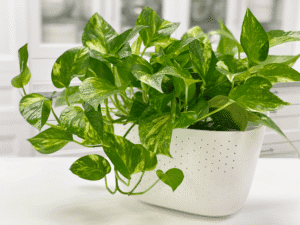 Pothos is everywhere — and for good reason. It is easy, fast-growing, and gorgeous trailing down a shelf.
To a person, it is a decorative vine. To a cat, it is a swinging green toy at exactly the right height.
Pothos contains insoluble calcium oxalates, which irritate the mouth, tongue, and throat on contact. The ASPCA lists golden pothos as toxic to cats, with effects including drooling, pawing at the mouth, vomiting, and difficulty swallowing.
Out of reach sounds like a solution — until you realise how long pothos vines can get and how low they can trail. A shelf-hung pothos with a metre of vine hanging down is probably still within reach. Cats are not known for respecting vertical boundaries.
Safer swap: Boston fern. It gives you that same lush, soft greenery without the same concern
6. Philodendron: Beautiful Leaves, Unpleasant Bite
 Philodendrons are one of the most popular houseplant families right now — and one of the ones cat owners most often overlook.
They come in dozens of varieties, climb, trail, or sit dramatically in pots, and they look genuinely expensive with very little effort. But like pothos, they contain insoluble calcium oxalates.
The ASPCA lists philodendrons as toxic to cats. A cat that bites into the leaves may experience mouth irritation, drooling, vomiting, and discomfort while swallowing. The vine-like varieties are the most likely to end up accessible — a trailing philodendron draped over a plant stand can easily come within reach.
Safer swap: Parlour palm. Soft, leafy texture, much better suited to a cat home.
7. ZZ Plant: Low Maintenance, Not Cat-Safe
 The ZZ plant has earned its popularity. It tolerates low light, minimal watering, and general neglect. It looks modern and glossy without requiring much effort.
Unfortunately, it is not safe for cats. ZZ plant contains calcium oxalate crystals, and if chewed, it can cause mouth irritation, vomiting, and digestive upset.
This one is particularly worth flagging because the leaves are thick, shiny, and neatly arranged in a way that seems to interest some cats. The plant also tends to be placed at floor or shelf level — exactly where cats spend time.
If your cat has a history of chewing plants, skip this one entirely.
Safer swap: Rattlesnake plant or prayer plant — interesting leaf patterns, much better safety profile.
8. Monstera: The It-Plant That Your Cat Does Not Care About
 Monstera is in every stylish interior photo right now. Big split leaves. Tropical feel. It practically communicates that you have your life together.
Your cat has no interest in your interior design goals.
Monstera — sometimes called Swiss cheese plant — contains insoluble calcium oxalates and is listed as toxic to cats by the ASPCA and Cats Protection. Chewing the leaves can cause mouth irritation, drooling, vomiting, and swallowing discomfort.
The size issue is worth thinking about practically. A large monstera is hard to tuck out of reach. The leaves spread out, lean across furniture, and a determined cat can brush against them or knock them over. I have seen readers underestimate this one because it looks like such a harmless, cheerful plant.
Safer swap: Spider plant. Easy to care for, genuinely cat-friendly, and still brings that airy, green energy.
9. Dieffenbachia: Also Known as Dumb Cane — For a Reason
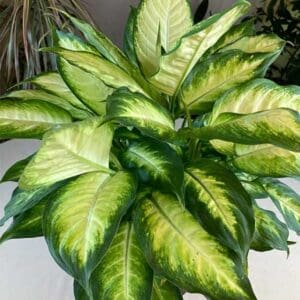 Dieffenbachia is a beautiful plant with broad, patterned leaves. It is also one I would not keep in a home with cats.
The common name dumb cane refers to the plant’s ability to cause painful mouth and throat irritation severe enough to temporarily affect speech in humans. Cats obviously are not delivering speeches, but the point stands: this plant can cause significant discomfort.
The ASPCA and MSD Veterinary Manual both list dieffenbachia as toxic to cats. Symptoms from chewing include intense mouth and throat irritation, drooling, pawing at the face, vomiting, and difficulty swallowing.
The leaves are broad and soft-looking — exactly the type a plant-chewing cat might find interesting. I would not keep this one anywhere a cat can access it.
Safer swap: Prayer plant. Beautiful leaf patterns, slight movement through the day, and a much safer pick for cat homes.
10. Peace Lily: Not a True Lily, But Still Not Safe
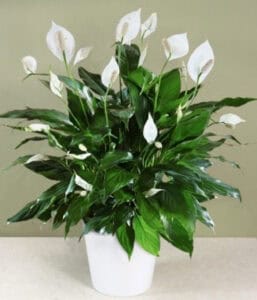 Peace lily causes more confusion than almost any other plant on this list.
The name includes lily, which understandably makes cat owners panic. But peace lily is not a true lily. It does not come from the Lilium or Hemerocallis groups, and it does not carry the same kidney-failure risk. MSD Veterinary Manual notes that many plants share the lily name without having the same toxicity profile as true lilies — and peace lily is one of them.
That said, peace lily is still toxic to cats. It contains insoluble calcium oxalates, so chewing it can cause mouth irritation, drooling, vomiting, and difficulty swallowing. It belongs on the avoid list — just not in the same urgency category as Easter lily or tiger lily.
This distinction matters because accurate risk information helps you respond appropriately. If your cat chews a peace lily, call your vet for guidance and watch for symptoms. If your cat was exposed to a true lily, treat it as urgent and act immediately.
Safer swap: Bromeliads give you similar shape and colour without the same concern.
11. English Ivy: A Common Trailing Plant With a Real Track Record
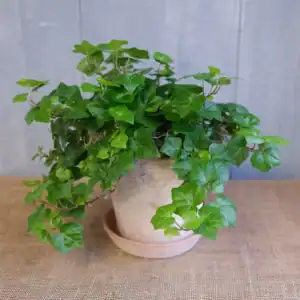 English ivy is one of those plants that feels like background decor — a trailing vine in a hanging planter, a cascade down a bookshelf, a classic feature in any cottage-style arrangement. It is also commonly found in outdoor pots that get brought inside seasonally. What it is not is cat-safe.
The ASPCA lists English ivy as toxic to cats. The plant contains saponins and polyacetylene compounds, and ingestion can cause vomiting, diarrhoea, drooling, abdominal pain, and hypersalivation. The leaves are more toxic than the berries. It is not typically in the same emergency tier as true lilies, but the trailing habit of the plant means it sits exactly at a cat’s eye level, and the vines are exactly the kind of thing a bored or playful cat decides to investigate.
Safer swap: Swedish ivy (Plectranthus australis) gives you the same trailing, lush look and is considered cat-safe.
12. Dracaena: The Office Staple That Belongs Out of Reach
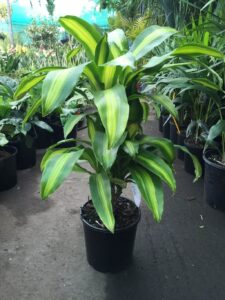 Dracaena is one of the most widely kept indoor plants in the world. It tolerates low light, needs infrequent watering, and comes in enough varieties — corn plant, dragon tree, lucky bamboo lookalikes — that most people have owned one at some point without thinking much about it.
The ASPCA lists dracaena as toxic to cats. The plant contains saponins, which can cause vomiting (sometimes with blood), drooling, lethargy, loss of appetite, and dilated pupils. The concern is not just short-term discomfort. In documented cases, cats have required bloodwork and veterinary monitoring to rule out more serious internal effects after significant dracaena ingestion.
It is worth flagging specifically because it appears so frequently in homes where the owner has never thought of it as a risk. The tall, strappy leaves of varieties like corn plant also tend to be accessible from the floor — or from a nearby sofa.
Safer swap: Parlour palm or ponytail palm. Both give you a similar upright, architectural feel and are widely considered cat-safe.
These are not typically everyday houseplants, but they show up in enough homes — seasonally, as gifts, in pots moved indoors for winter — to be worth a mention.
Oxalis / Shamrock plants
 Oxalis — sold as shamrock plants and popular around St. Patrick’s Day — contains soluble oxalates. This is a different mechanism to the insoluble calcium oxalates in pothos or philodendron. Soluble oxalates are absorbed into the bloodstream, where they bind to calcium and can affect calcium levels in the body. The ASPCA lists oxalis as toxic to cats, with symptoms including drooling, vomiting, diarrhoea, and in large ingestions, more serious metabolic effects. The cheerful, clover-like appearance of the plant does not hint at any of this.
Azalea and rhododendron
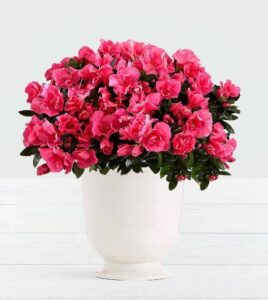 Azaleas and rhododendrons are outdoor shrubs that occasionally get brought indoors in pots or included in seasonal floral arrangements. They contain grayanotoxins, which affect sodium channels in cells and can cause serious cardiovascular and neurological effects — abnormal heart rate, low blood pressure, weakness, and tremors. The ASPCA lists both as toxic to cats and considers them a significant ingestion risk. Even a few leaves can cause symptoms. If you bring potted azaleas inside for winter or receive them as a gift, treat them the same way you would a lily arrangement: check before it goes down, and keep it away from your cat entirely