
What to Do If a Cat Eats a Toxic Plant
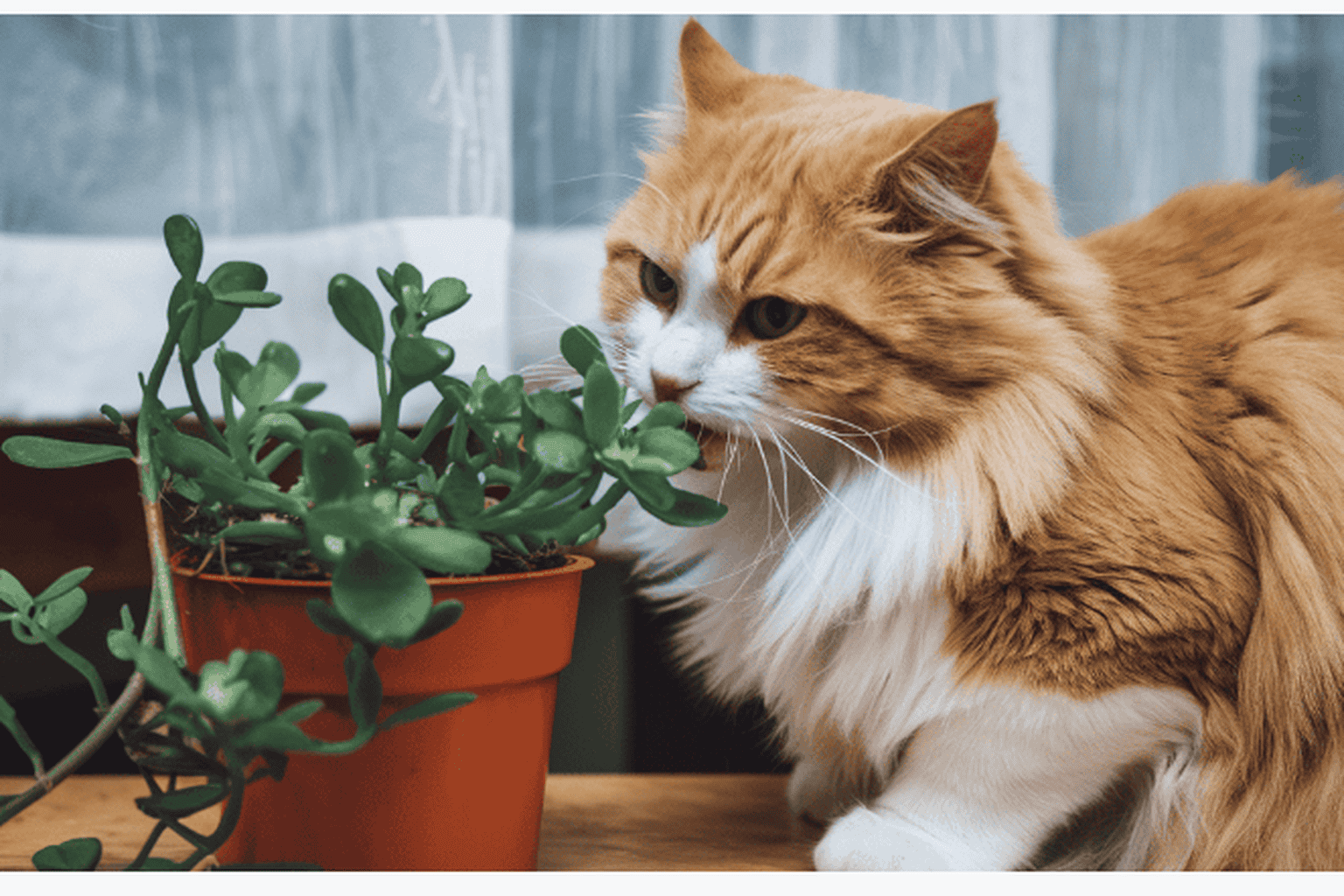
Quick Answer
If your cat eats a toxic plant, move them away from the plant, take photos or a sample, and call your vet, emergency vet, ASPCA Animal Poison Control, or Pet Poison Helpline immediately. Do not try home remedies or induce vomiting unless a vet tells you to. If the plant is a true lily or daylily, go to an emergency vet right away, even if your cat seems fine.
Your cat just ate a toxic plant — or at least you think they did. Now you’re doing what all of us do: panic-scrolling through a dozen different websites while your cat sits there looking completely unbothered, like nothing happened.
Here’s the thing. Sometimes nothing did happen. And sometimes the stakes are very high. The terrifying part is that you often can’t tell just by looking at them, especially in the first hour.
Some plants cause mouth irritation and a miserable afternoon. Others — particularly lilies — can trigger kidney failure so quickly that the window for effective treatment is measured in hours, not days. The specific toxin in true lilies that affects cats hasn’t even been fully identified, but what we know is that even licking pollen off their fur while grooming can be fatal within 72 hours if treatment is delayed. [2]
So let’s skip the panic spiral and get straight to what actually matters.
The rest of this article will explain the why behind each step, help you understand how to read the situation, and give you the information your vet is going to ask for.
What To Do If A Cat Eats A Toxic Plant — 7 Steps
Step 1: Get Your Cat Away From the Plant — Right Now
I mean this literally. Stop reading and move your cat first if they’re still near it.
Do not leave the plant sitting there while you research. Cats are ridiculous little repeat offenders. They will absolutely go back for a second bite like they’re reviewing the salad bar. If there are broken leaves, fallen petals, scattered soil, or nearby plant water, clean those up too.
If your cat has lily pollen on their fur, do not wipe or bathe them without calling the vet first. Grooming pollen off themselves counts as exposure. Ask your vet what to do before you act.
This step isn’t about solving the whole problem. It’s about stopping the exposure from getting worse while you figure out the next move.
Step 2: Identify the Plant — Your Vet Will Ask
The first thing your vet will want to know is simple: what plant did your cat eat?
That sounds easy until you’re staring at a plant you’ve owned for three years and realised you’ve never actually looked up its name. Most houseplants go by five different common names anyway. Pothos is also called devil’s ivy. Dieffenbachia is sometimes called dumb cane. And here’s one that trips people up — a peace lily sounds like a lily, but it doesn’t carry the same catastrophic kidney risk that true lilies and daylilies do. [3]
So instead of guessing, gather evidence.
Take photos of:
- The whole plant from a distance
- The leaves — both sides if you can
- The flowers, if any
- The stem
- The pot label, nursery tag, or any packaging
- The chewed area
- Any vomit that contains plant pieces
If you can safely take a small physical sample, bag it and bring it with you if your vet asks you to come in. The better the identification, the more precisely your vet can assess the risk.
Step 3: Call Your Vet — Don’t Wait for Symptoms
Once the plant is away from your cat and you have photos or a sample, call your vet.
If your regular vet is closed, call an emergency vet clinic. You can also contact:
- ASPCA Animal Poison Control: (888) 426-4435
- Pet Poison Helpline: (855) 764-7661
Be ready to answer:
- What plant did your cat eat, and what part of it?
- How much do you think they ate?
- When did it happen?
- Has your cat vomited, drooled, or acted differently since?
- How old is your cat, how much do they weigh, and do they have any existing health conditions?
- Are they on any medication?
Don’t worry if you don’t have every answer. Give what you know. The important thing is that you call early. With some toxins, damage begins before any visible symptoms appear. Waiting to see how your cat feels is not the safe option it might seem.
Step 4: If the Plant Is a True Lily or Daylily, Treat It as an Emergency
Call an emergency vet while you are preparing to leave — or go straight in if you already know for certain the plant was a true lily or daylily. This step gets its own number because lilies are in a completely different category from almost every other houseplant toxin.
True lilies (Lilium species) and daylilies (Hemerocallis species) can cause fatal kidney failure in cats. The entire plant is dangerous — the stem, leaves, flowers, pollen, and even the water in the vase. [2]
According to the FDA, eating just a small amount of a leaf or petal, licking a few pollen grains off their fur while grooming, or drinking water from a lily vase can cause kidney failure in less than three days. Early signs begin within 0 to 12 hours. Kidney damage starts 12 to 24 hours after exposure. Kidney failure can occur within 24 to 72 hours. And if treatment is delayed by 18 hours or more, that kidney failure may be irreversible. [2]
I would not keep a single true lily or daylily anywhere in or around a home with cats. Not even in a room with the door closed. Not even in the garden if your cat goes outside. The risk is too asymmetric.
According to AAHA, citing Pet Poison Helpline toxicologist Dr. Renee Schmid, lilies were the number one exposure call for cats in 2024 — ahead of every other toxin on the list. [5]
If your cat had any contact with a lily — ate part of it, groomed pollen off their coat, or drank from the vase — treat it as an emergency right now, even if your cat seems completely fine. The window where treatment can actually prevent serious harm is short.
Step 5: Know the Signs of Poisoning — But Don’t Wait for Them
If your cat ate a poisonous houseplant, symptoms vary a lot depending on the plant, how much was eaten, and your cat’s age and overall health. Some show up fast. Others are delayed. Some toxins cause visible distress quickly. Others do damage internally while your cat still looks fine to you.
| Urgent — Go Now | Common Signs — Call Your Vet & Monitor |
|---|---|
| Tremors or seizures | Drooling |
| Breathing difficulty | Pawing at the mouth |
| Collapse or unconsciousness | Vomiting or diarrhoea |
| Repeated vomiting | Loss of appetite |
| Extreme lethargy or weakness | Hiding more than usual |
| Mouth irritation or trouble swallowing |
If your cat ate a plant and is vomiting, don’t take that as confirmation that the problem is over. Vomiting may mean the plant irritated their stomach, but it does not mean all the toxin is gone. With lily exposure in particular, digestive upset can appear well before the more serious kidney effects set in. [2]
Step 6: Don’t Try to Treat It at Home
This is where well-meaning cat owners accidentally make things worse.
Do not give salt. Do not give hydrogen peroxide. Do not give milk. Do not give oil. Do not force food or water. Do not induce vomiting unless your vet specifically tells you to.
The ‘do not induce vomiting’ one matters more than people realise. What works for one species, one toxin, or one situation can cause serious harm in another. Cats are not small dogs. Their bodies process things differently, and some substances cause more damage when brought back up.
Your job in this moment is not to treat the poisoning at home. Your job is to stop the exposure, gather information, and get a professional involved as fast as possible.
Step 7: Follow Your Vet’s Lead — Here’s What to Expect
A lot of cat owners hesitate because they picture the vet visit as an expensive mystery. So let’s remove some of that fear.
| What the Vet May Do | What It Means for Your Cat |
|---|---|
| Physical exam + history | Vet checks your cat's vitals and asks what plant was eaten, how much, and when. |
| Induce vomiting (in clinic) | Only if appropriate for that toxin and timing — not something to do at home. |
| Activated charcoal | Binds remaining toxin in the stomach to reduce absorption. |
| Blood and urine tests | Checks kidney and liver values — critical with lily exposure. |
| IV fluids | Supports kidney function and flushes toxins. Often started immediately with lily ingestion. |
| Anti-nausea / pain meds | Manages symptoms and keeps your cat comfortable. |
| Hospitalization | For serious exposures — monitoring, repeat bloodwork, extended IV support. |
| Follow-up bloodwork | Even after discharge, kidney and liver values may be rechecked. |
The important thing to understand is that your vet has more options early. Before a toxin causes deeper damage, treatment is more straightforward. After organ values have shifted, the options narrow. That’s why calling promptly — even when your cat seems okay — gives you more runway, not less.
What If My Cat Ate a Plant But Seems Totally Fine?
This is one of the most common worries — and honestly, one of the most dangerous situations to misjudge.
Your cat chews a leaf. You panic. Then they stroll away, eat dinner, and promptly fall asleep in a sunbeam like nothing happened. And now you’re wondering: was I overreacting?
Maybe. But maybe not.
“Seems fine” is not a toxicology report. Some plants cause almost immediate mouth irritation — you’ll know quickly. Others cause delayed effects. Some are genuinely mild. Others are emergencies that just haven’t announced themselves yet.
If the plant could be a lily, sago palm, oleander, autumn crocus, foxglove, or azalea — or if you genuinely don’t know what the plant is — call your vet regardless of how your cat is acting. With high-risk plants, waiting for visible symptoms means losing treatment time you can’t get back.
Common Toxic Houseplants — Risk at a Glance
Not all toxic plants carry the same danger. Here’s how some of the most common ones compare. [1][2][3][4]
| Plant | Risk Level | What It Can Do |
|---|---|---|
| True Lilies (Asiatic, Easter, Tiger, Stargazer) | CRITICAL | Even vase water / pollen can cause fatal kidney failure within 72 hours [2] |
| Daylilies | CRITICAL | Same kidney failure risk as true lilies — treat any exposure as an emergency [2] |
| Sago Palm | CRITICAL | All parts toxic; can cause severe liver damage and neurological signs [1] |
| Oleander | HIGH | Contains cardiac glycosides; can cause serious symptoms [1] |
| Autumn Crocus | HIGH | Can cause liver failure, kidney failure, and cardiac issues [1] |
| Azalea / Rhododendron | HIGH | Can cause vomiting, drooling, weakness, and heart rhythm problems [1] |
| Foxglove | HIGH | Contains cardiac glycosides; affects heart rhythm [1] |
| Pothos | MODERATE | Calcium oxalate crystals — mouth pain, drooling, vomiting [4] |
| Dieffenbachia (Dumb Cane) | MODERATE | Same calcium oxalate irritation — mouth and throat swelling [4] |
| Philodendron / Monstera | MODERATE | Calcium oxalate crystals — oral irritation and GI upset [4] |
| Peace Lily | MODERATE | Not a true lily — mouth/throat irritation, not kidney failure [3] |
| Tulip / Daffodil bulbs | MODERATE | Bulbs are the highest-risk part; GI irritation, drooling, and possible cardiac effects [4] |
| Aloe Vera | LOW-MODERATE | Saponins in the white sap cause vomiting, diarrhoea, lethargy [4] |
| Snake Plant | LOW-MODERATE | Mild GI upset in most cases; still warrants vet guidance [1] |
| Jade Plant | LOW-MODERATE | Vomiting and lethargy; mechanism not fully understood [1] |
Note: This table covers common houseplants but is not exhaustive. If you're unsure about any plant, call your vet or check the ASPCA's full toxic plant list at aspca.org.
How Long Until a Cat Shows Symptoms After Eating a Toxic Plant?
There’s no single answer, because it depends entirely on the plant.
Irritating plants — those containing calcium oxalate crystals like pothos or dieffenbachia — often cause almost immediate mouth discomfort, drooling, and pawing at the face.
Lily exposure follows a more dangerous timeline. According to the FDA: early signs appear within 0 to 12 hours, kidney damage starts at 12 to 24 hours, and kidney failure can occur within 24 to 72 hours. [2]
The question shouldn’t be ‘how long should I wait and see?’ The right question is: ‘what plant is it, and what does a vet recommend?’
After the Emergency: Audit Your Home
Once your cat is safe, don’t spend time on guilt. Spend it on prevention.
Walk through your home and look at every plant from your cat’s perspective:
- Can they reach it from a windowsill or bookshelf?
- Can they jump to it from a chair or cat tree?
- Can fallen leaves or petals land where they walk?
- Can lily pollen drift onto surfaces they groom from?
- Can they drink from a vase or dig in the soil?
- Would they chew it when bored at 2am?
“High shelf” is not the same as safe. Cats are furry little parkour athletes. If there’s a route, they’ll find it.
For homes with plant-curious cats, the most practical approach is to remove high-risk plants completely and replace them with verified non-toxic options — cat grass, catnip, spider plant, parlor palm, calathea, or Boston fern. Even non-toxic plants can cause mild stomach upset in large quantities, but they won’t trigger organ failure.
How to Stop Cats From Eating Plants Again
First, give them something appropriate to chew. Cat grass is an easy win — it satisfies the urge to nibble greenery, costs almost nothing, and grows fast.
Then look at the boredom problem. A lot of plant chewing isn’t about hunger or nutrition. It’s about stimulation. Plants sit in interesting places like windowsills. They move in air currents. They smell like the outside world. They’re genuinely interesting to a cat who doesn’t have enough to do.
Try adding:
- A window perch where they can watch the world
- A taller cat tree with more vertical territory
- Puzzle feeders that make mealtimes mentally engaging
- Regular wand toy sessions — even 10 minutes makes a difference
- Safe herbs in small pots: cat grass, catnip, valerian
- More scratching surfaces and hiding spots
You can also use hanging planters for safe plants, or put dangerous plants in rooms your cat can’t access. But for high-risk plants, don’t rely on deterrent sprays alone. A bitter spray might work for a week. It is not a safety plan.
The actual safety plan is removing plants that could seriously harm your cat.
Final Thoughts
When your cat eats a plant, the hardest part is the uncertainty. You don’t know if you’re looking at a rough afternoon or something that requires emergency vet care. And because cats hide discomfort so well, their behaviour won’t always tell you which one it is.
That’s exactly why the plan is simple: remove the plant, identify it, call a professional, and skip the home remedies. You don’t need to figure out the severity yourself. That’s what the hotline is for.
And if there’s any chance the plant was a true lily or daylily — any part of it, including the pollen — don’t wait around at home to see what happens. Call the emergency vet while preparing to leave, or go straight in.
Because with cats and lilies, fast action is the difference between a genuinely scary afternoon and something you can’t take back.
Frequently Asked Questions
What should I do immediately if my cat eats a toxic plant?
Move your cat away from the plant, take photos or a sample for identification, and call your vet or a pet poison hotline right away — ASPCA Animal Poison Control at (888) 426-4435 or Pet Poison Helpline at (855) 764-7661. Don’t try home remedies and don’t induce vomiting unless a vet tells you to. The steps you take in the first hour matter more than almost anything that comes after.
What are the signs that my cat ate a toxic plant?
Common signs include drooling, vomiting, diarrhea, pawing at the mouth, loss of appetite, lethargy, and hiding. More serious signs — tremors, seizures, breathing trouble, or collapse — are emergencies. That said, some toxins cause delayed symptoms, and your cat may seem completely normal at first even when something is wrong internally. Never wait for symptoms to appear before calling your vet if you suspect plant exposure.
My cat only ate a tiny amount — is that still dangerous?
It depends entirely on the plant. With true lilies and daylilies, a tiny amount can be dangerous — even licking pollen off their fur or drinking lily vase water has caused fatal kidney failure in cats. [2] With other plants like pothos, a small bite usually causes mouth irritation and GI upset, which is unpleasant but rarely life-threatening. Identify the plant first, then call your vet to assess the risk based on what it actually was.
Should I make my cat vomit if it ate a poisonous plant?
No — not at home, and not without a vet telling you to. Inducing vomiting is sometimes the right call, but only in specific situations and with specific methods. Some home methods cause serious harm to cats. Some toxins are more dangerous on the way back up. Your vet can assess whether it’s appropriate based on the plant, timing, and your cat’s condition.
What if my cat ate lily pollen?
Treat it as an emergency and call a vet immediately. True lily and daylily pollen is dangerous — cats can be exposed just by grooming pollen off their coat after brushing against a flower. Don’t wait for symptoms. The earlier treatment starts with lily exposure, the better the outcome. [2]
Can cats recover from plant poisoning?
Many can, especially when treatment starts early. Recovery depends on the plant, how much was ingested, how quickly treatment began, and whether any organ damage occurred. Mild plant irritation usually resolves with supportive care. Lily poisoning has a much more serious prognosis, particularly if treatment is delayed beyond 18 hours. Early action is the single most important factor in outcome. [2]
Should I bring the plant to the vet?
Yes, if possible. Bring photos, a physical sample if you have one, the pot label or nursery tag, or any chewed pieces. If your cat vomited plant material, ask your vet whether a sample of that would be helpful to bring. The more clearly the plant can be identified, the more precise your vet’s assessment can be.
My cat seems fine — can I skip the vet call?
Don’t skip the call, even if your cat seems completely normal. Call your vet or a poison hotline, describe what plant was eaten, and let them advise you. If it’s a low-risk plant and a tiny amount, they may reassure you that monitoring at home is fine. But if it’s a high-risk plant — especially a lily — ‘seems fine’ is not information you can act on safely without professional input. The cost of a five-minute call is low. The cost of waiting on the wrong plant can be very high.
Sources
[1] Source: ASPCA — Toxic and Non-Toxic Plant List: Cats
[2] Source: FDA — Lovely Lilies and Curious Cats: A Dangerous Combination
[3] Source: VCA Hospitals — Household Hazards: Toxic Hazards for Cats
[4] Source: VCA Hospitals — Plants That Are Toxic to Cats
[5] Source: AAHA — Top Ten Reasons Cat Owners Call the Pet Poison Helpline