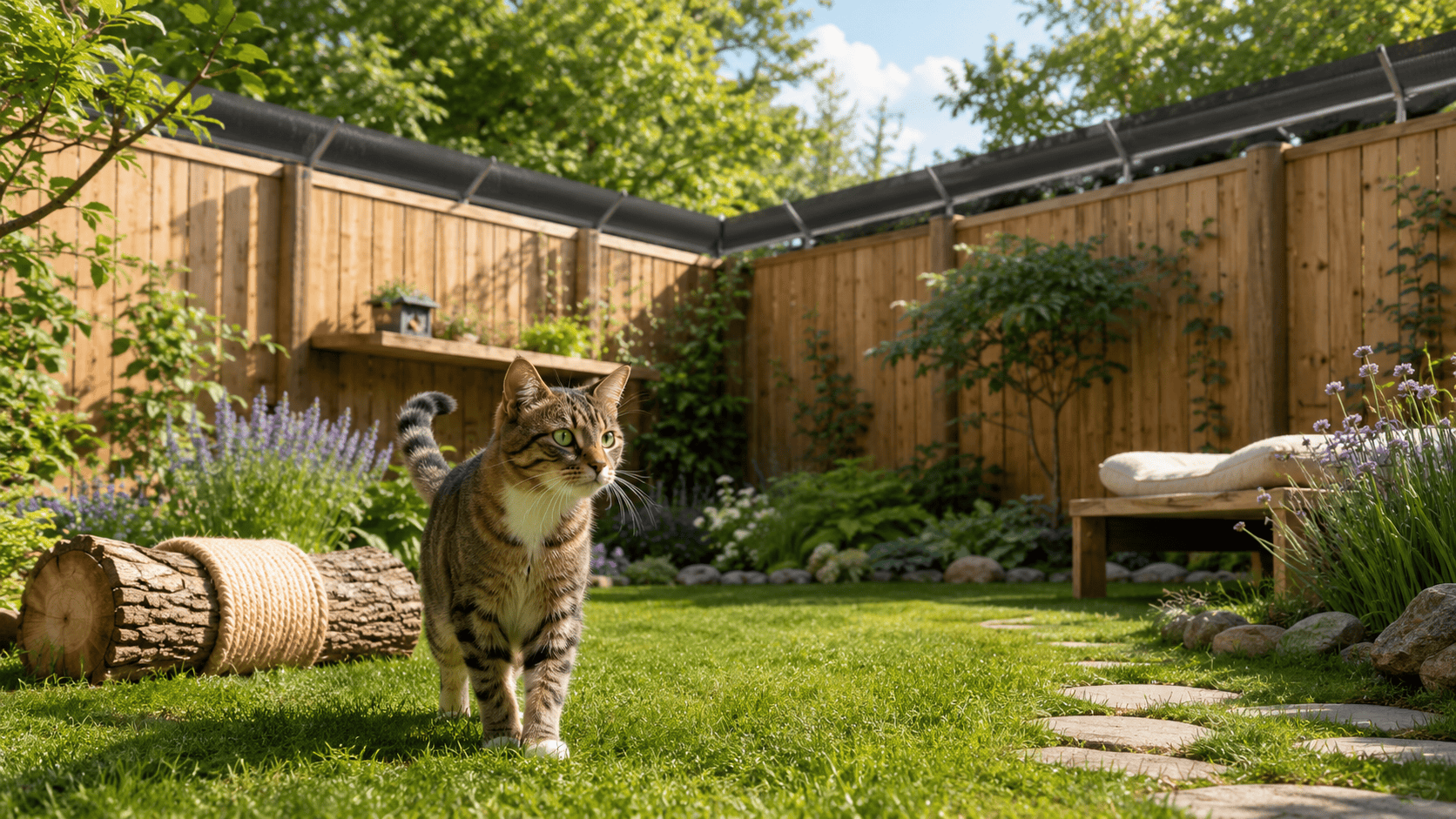
;

How to Cat-Proof Your Yard (Without Turning It Into a Prison Yard)

Affiliate disclosure:This page contains affiliate links. I may earn a commission on qualifying purchases at no extra cost to you.

cat proof yard

Quick Answer
A standard backyard fence will not keep a determined cat inside. To cat-proof your yard properly, start by identifying the weak points: fence corners, gates, low sections, and nearby objects your cat can use as a launching pad. Then decide on a system — fence rollers, inward-angled toppers, cat netting, a catio, or a combination. Remove garden hazards including toxic plants, chemicals, and enclosed spaces your cat could get trapped in. The safest yards combine a secure perimeter with enrichment inside, so your cat has good reasons to stay where they are.

There is a very specific kind of panic that only cat owners know.

You let your cat into the backyard for some fresh air. They sniff the grass, roll around like they own the place, and for about thirty seconds, it’s perfect.

Then they look at the fence.

Not casually. Not innocently. They look at it like they’re doing structural calculations.

And suddenly your peaceful Sunday afternoon becomes you standing barefoot on the lawn whispering, “Don’t you even think about it.”

That’s the real reason people search for cat proof yard and cat proof backyard ideas. Not because we’re overprotective. Because we know our cats. We know that a standard fence is often just a suggestion. We know that a determined cat can turn a bin, a fence corner, a shed roof, and a badly latched gate into a flawless escape route. [1]

A cat-proof yard isn’t about stopping your cat from enjoying the world. It’s about letting them enjoy it — without giving them unsupervised access to traffic, roaming dogs, toxic plants, and the kind of adventure that ends with you walking around the block shaking a treat bag like a desperate fool.

The goal is simple: outdoor enrichment without the escape drama.

A cat-proof yard is a securely enclosed outdoor space designed to let cats enjoy fresh air while preventing escape and reducing outdoor hazards.

Why a Normal Fence Is Not Cat-Proof

Most of us look at a fenced yard and see a boundary.

Cats see options.

A wooden fence isn’t just a fence. It’s a climbing surface. A gate isn’t just a gate. It’s a gap. A patio chair beside the fence isn’t just outdoor furniture — to your cat, it’s step one of a well-planned disappearing act.

Many cats can clear a six-foot fence without much effort, not by leaping from the ground, but by using whatever the yard gives them. A crossbar. A low corner. A bin. A shed roof. Even a stack of plant pots can become part of the route. The most common escape points are the ones people overlook: fence corners, gate gaps, sections near trees, and areas where the ground slopes and the fence sits lower than it should.

This is why the first step in cat-proofing isn’t buying a product. It’s walking your yard the way your cat would — whether you have a small patio or a full backyard. Not as a person. As a small, athletic, deeply motivated escape artist with no concern for your blood pressure.

Start Here: The Weak Points Walk

Before you buy anything, walk the perimeter of your yard with fresh eyes.

Start low. Check under the gate, under the fence, and along the base where the ground might be uneven. Cats can flatten themselves considerably — a gap you think is too small may not be.

Then check the fence itself. Look for horizontal rails that act as climbing steps, posts that offer grip, sections that sit lower because of a slope, and corners where two fence panels meet and create natural leverage. Fence corners are consistently the most common escape point — a cat who finds a lower corner with crossbars for leverage will use it again and again.

Then step back and look near the fence. This is where most cat-proofing plans quietly fail. A fence topper is nearly useless if your cat can jump onto a storage box first. Netting won’t help if a shed roof gives your cat a higher launch point. Even the best roller system can’t do its job if your cat can reach the fence from a tree branch.

The “helper objects” are the problem. Patio chairs, bins, barbecues, stacked pots, plant stands, garden shelves, and firewood piles are all potential launchpads. Moving them away from the fence line isn’t glamorous. But neither is chasing your cat down the street in slippers.

Fix the layout first. Then look at products — whether that’s a cat fence topper, a DIY cat proof fence, or a full cat containment system. An escape-proof cat yard starts with the gaps, not the gear.

Do Cat-Proof Fences Actually Work?

Honestly? It depends.

Cat fence rollers, inward-angled mesh, and netting can all work well — but only when the perimeter is genuinely sealed and the weak spots are dealt with first. They’re not magic. Here’s how the main options compare:

Cat fence rollers sit along the top of the fence and spin when a cat tries to grip them, removing the foothold they need to pull themselves over. They work well on clean, level fence runs. They’re harder to install effectively on uneven fences, and corners need separate solutions.

Inward-angled toppers and mesh overhangs extend the top of the fence inward at roughly 45 degrees. A cat climbs up, reaches the top, and meets an overhang that leans back into the yard. That awkward angle removes the “I can pull myself over” moment. International Cat Care recommends an overhang of at least 0.5 metres jutting inward at right angles or at a 45-degree upward angle as one of the more reliable approaches. [2]

Netting stretched across the top or over the whole yard can be very effective, but sagging netting becomes a problem over time. Animal Welfare Victoria notes that the key to netting is that it must be ‘floppy’ enough to feel unstable for the cat to climb on — avoid rigid mesh, which cats can grip and use. [3] Check netting after storms and tighten any sections that have started to droop.

The short answer: yes, these systems work — when the corners are sealed, the weak spots are addressed, and the yard layout doesn’t give your cat a head start.

Catio or Cat-Proof Yard: Which One Is Right for Your Cat?
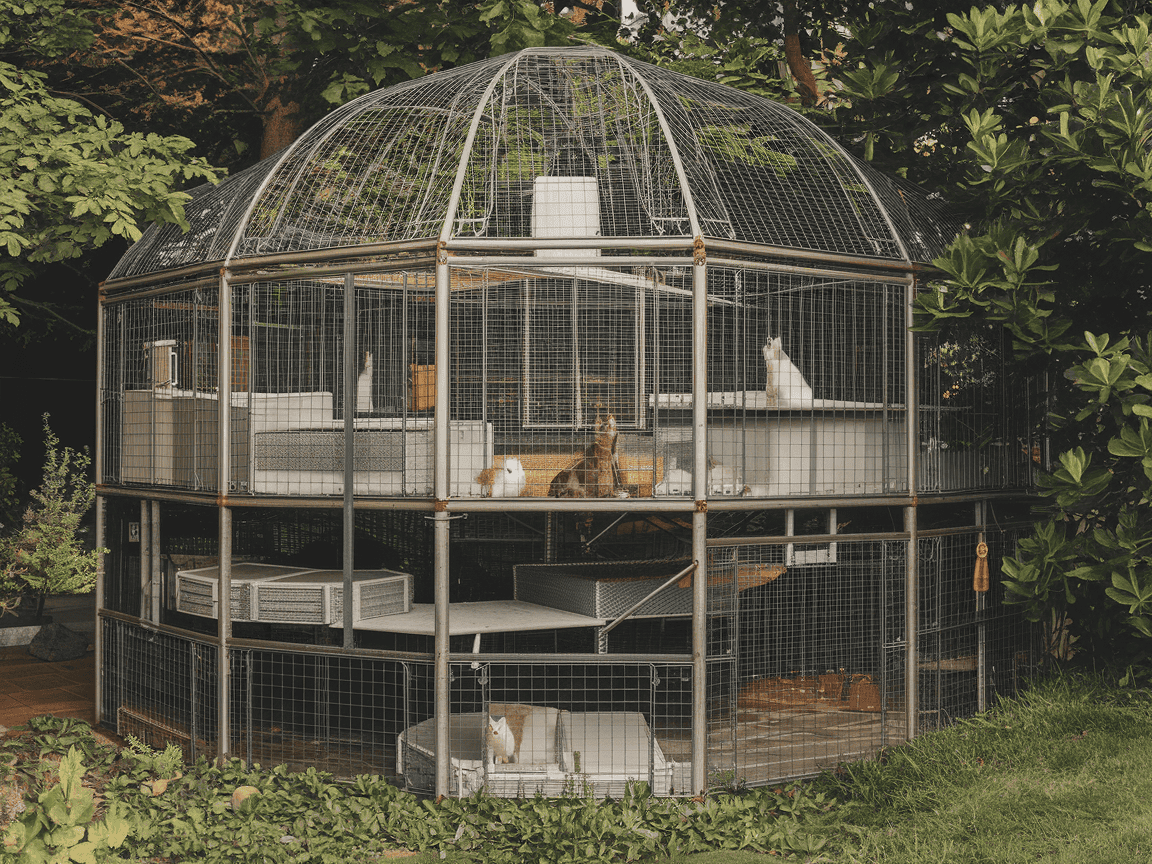
cat catioThis is a real question people wrestle with, and the honest answer is: it depends on the cat and the yard.

A full cat-proof garden sounds ideal, but some yards are genuinely difficult to secure. Trees along the fence line. Sections that belong to a neighbour. Sheds that are hard to block. Uneven ground. In those cases, trying to cat-proof every inch can become expensive, frustrating, and still not entirely reliable.

A catio — an enclosed outdoor cat enclosure attached to the house or freestanding in the yard — gives you more control with less perimeter to manage. It’s a smaller space, but it still delivers the things outdoor time is actually about: fresh air, birdsong, sunlight, and a change of scene. The RSPCA recommends providing cats with access to a safe, escape-proof outdoor environment where possible, noting it helps meet their physical and mental needs by offering more choice, activity, and stimulation. [4]

For very agile cats, or those with a confirmed history of escaping, a catio is often the smarter call. A smaller space you can fully trust beats a larger space you can only mostly trust

Catio / Enclosure Cat-Proof Yard
Space Smaller, contained Full yard access
Control level Very high Moderate to high
Cost Lower (smaller area) Higher for large yards
Best for Agile escape artists, renters, yards with trees or sheds near fence Calmer cats, clean fence lines, owners who want open space
Weak points Limited roaming space Corners, gates, trees, neighbour fences
Other cats Easier to fully exclude Harder to manage entry

How Much Does It Cost to Cat-Proof Your Yard?

Cost is one of the most common concerns, and it’s worth being upfront: cat-proofing a large yard can add up.

The price range is wide. A basic DIY roller setup for a small fence might cost under $80. A professionally installed commercial system for a larger yard can run $500 or more. One UK-based cat-proof fencing company quotes an average garden installation at around £485, with competitors pricing higher depending on fence length and system type.

The good news is you don’t have to do it all at once — and you don’t have to cat-proof the entire yard. Securing just one section, such as a side yard, a narrow run between the house and fence, or a patio area, can still give your cat meaningful outdoor access at a fraction of the cost. Animal Welfare Victoria describes the narrow area between a house and fence, closed at each end with gates, as an ideal and often cheaper alternative to a full cat enclosure. [3]

Option Approx. Cost Best For
Cat fence rollers (DIY) $30–$80 Existing fence with clean top rail
Inward-angled netting (DIY) $50–$150 Longer fence runs, renters, budget-conscious owners
Commercial cat fence system $200–$600+ Owners who want a complete kit with hardware
Purpose-built catio (DIY) $100–$400 Smaller secure area, active escape artists
Professional catio install $500–$2,000+ Permanent setup, larger structures
Harness + supervised time $20–$50 Cats who tolerate harnesses, very limited budget

A smaller safe area is always better than a larger unsafe one. Your cat doesn’t need a luxury resort. They need fresh air, warmth, and a place where you’re not quietly panicking every five minutes.

The Yard Is Secure. Now Make It Safe.

Once the fence is sorted, the next question is just as important: Is what’s inside the yard actually safe for your cat?

This part is often overlooked. People focus so hard on keeping the cat in that they forget the yard itself can contain hazards.

Plants
cat chewing on a plant in the yardMany common garden plants are toxic to cats — and lilies are the most serious. Even brief contact with lily pollen has been linked to kidney failure in cats, which can be fatal without prompt treatment. [5] Other plants to keep out of a cat safe garden include azaleas, tulips, daffodils, sago palm, and oleander. [6] Before your cat gets regular yard access, check every plant against a reliable source. The ASPCA maintains a searchable toxic plant database for cats that’s worth bookmarking.


Chemicals

Fertilisers, pesticides, weed killers, slug bait, and treated soil can all pose a risk if your cat walks through them, licks their paws, or rests on a recently treated surface. Keep your cat out of any treated areas until everything has fully dried or settled.

Heat, water, and enclosed spaces

A sunny yard heats up fast, and cats can overheat — particularly flat-faced breeds, seniors, and kittens. Make sure there’s shade and fresh water available at all times. Cornell’s Feline Health Center recommends checking sheds, garages, and greenhouses to make sure cats cannot become trapped inside, as a sealed outbuilding in summer heat can become dangerous very quickly. [7]

A cat-proof yard is not just a fence project. It’s a whole-yard safety audit.

Give Them a Reason to Stay

Here’s the part people don’t always think about: if the yard is boring, your cat will become obsessed with the fence.

A bored cat in a featureless yard will treat the boundary as the most interesting thing in the space. They’ll map it. They’ll test it. They’ll find the weakest point and revisit it until it works. You don’t want to win the fence battle and then lose the boredom war.

A cat-safe yard should give your cat good reasons to stay busy inside the perimeter:

  • A shaded lounging spot and at least one sunny nap spot
  • A patch of cat grass or safe herbs like catnip, valerian, or silver vine
  • A scratching log or post
  • A weatherproof tunnel or shelter
  • A raised platform or climbing shelf — placed well away from the fence
  • A water bowl in a cool spot
  • A bird feeder positioned so they can watch but not reach

Placement rules matter. Don’t put climbing shelves near the fence. Don’t create the best enrichment zone right next to the escape route. Give your cat height, but give it to them safely in the middle of the yard.

Cats love a lookout spot. Give them one that feels satisfying, and they may spend considerably less time studying the fence like they’re planning a heist.

What About Other Cats Getting In?

Most cat-proofing articles focus on keeping your cat inside. Fewer think about what happens when a neighbourhood cat gets in.

This matters. An unfamiliar cat entering your yard can cause territorial stress, spraying, fighting, or fear. And depending on the fence design, your system might prevent escape better than it prevents entry — a cat that can’t get out, but another cat has just walked into, is not a happy situation.

International Cat Care notes that garden fencing can be adapted to prevent outside cats from entering, but this isn’t guaranteed by every system and depends on the design and approach direction. [2] If your neighbourhood has a lot of roaming cats, ask whether the system you’re considering works both ways before installing.

The full question isn’t just: “Can my cat escape?” It’s: “Is this space genuinely safe from the outside in, too?”

The Part Nobody Mentions: Maintenance

Cat-proofing is not a one-time project. It’s an ongoing one.

Storms loosen netting. Branches grow back over fences. Garden furniture gets moved. Gates warp or stop latching properly. Fence panels shift. New objects appear near the boundary. Your cat does not stop noticing these things.

Make it a habit to check the perimeter every few weeks and always after a storm. Things to look for:

  • Sagging or torn netting
  • Loose rollers, staples, or clips
  • Gate latch function
  • New launchpads — chairs, bins, pots, or stacked items that have appeared near the fence
  • Branches that have grown back or fallen close to the boundary
  • Fence panels that have warped or shifted after wet weather

Think of it less like a home improvement project and more like living with a very small, very determined safety inspector who will absolutely find anything you’ve missed.

Supervise the First Sessions — Your Cat Will Show You What Needs Fixing
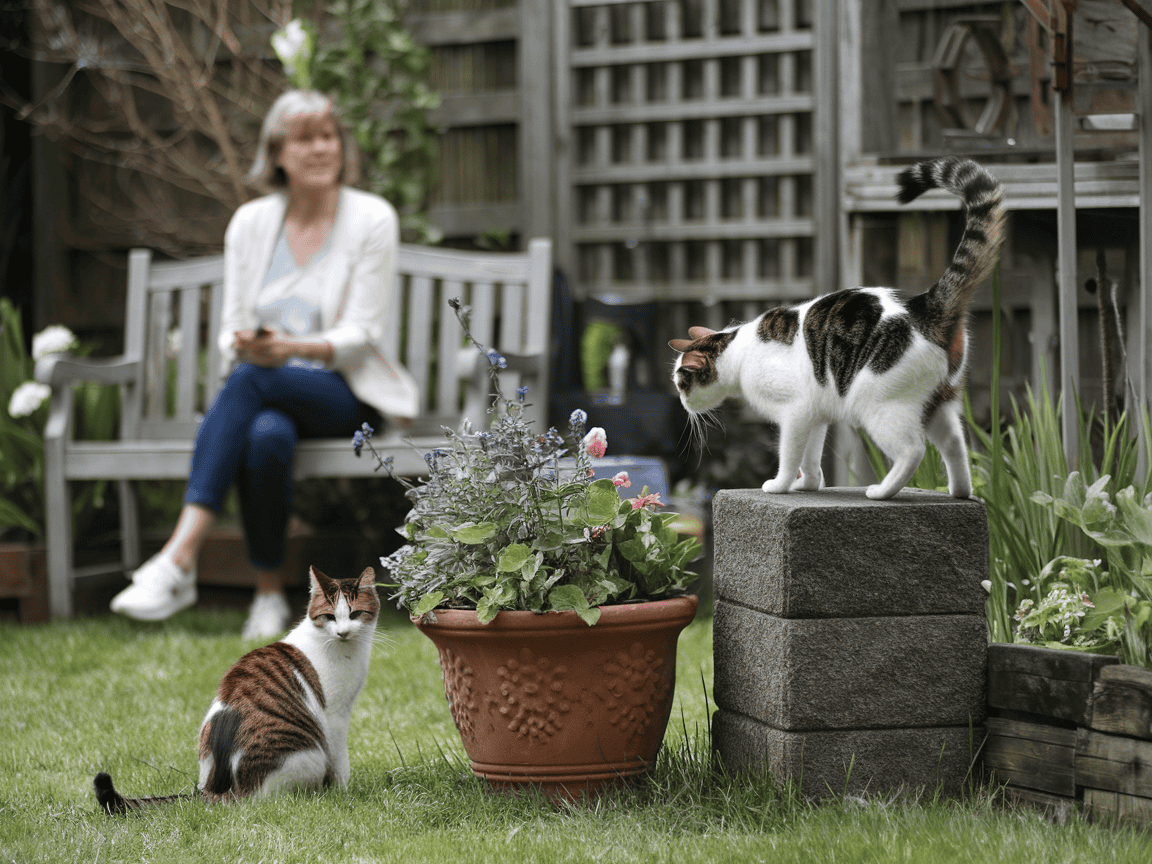
cat-proof your yardEven after you’ve done the work, the first few outdoor sessions should be supervised.

Not because you don’t trust your setup. Because your cat will show you things no article can. Watch where they go first. Watch which corner they return to. Watch what they stare at. A cat who keeps looking at the shed roof is telling you something. A cat who sniffs the same fence section repeatedly has noticed a gap or a weakness.

Their behaviour is the best quality control you have. Use it.

And keep checking over time. Cat-proofing that works in spring may develop a problem by autumn. A yard that was secure when your cat was two may need reassessing when they’re five and bored.

Pros and Cons of a Cat-Proof Yard

✔ Pros of a Cat-Proof Yard ✘ Cons of a Cat-Proof Yard
Your cat gets fresh air, sunlight, and outdoor enrichment Standard fencing is almost never enough on its own
Reduces boredom and stress-related behaviours indoors Setup cost can be significant for large yards
You can watch them without full-time supervision once set up Needs ongoing maintenance, especially after storms
A well-designed yard can work well for multiple cats Yards with trees, sheds, or slopes are genuinely harder to fully secure
Keeps your cat away from roads, predators, and toxins outside Neighbour cats may still enter depending on fence design
Can be done in stages — you don't have to do everything at once Cats with strong escape history may need a catio instead

Is a Cat-Proof Yard Right for You?

A cat-proof yard — or cat proof backyard, if you have a larger outdoor space — is a good fit if you have a manageable fence line, a cat who benefits from outdoor enrichment, and the time or budget to do it properly. It works especially well for calmer or older cats, yards without a lot of trees or sheds near the boundary, and owners who want their cat to have open-yard access rather than a smaller enclosure.

It’s a harder sell if your yard has a lot of natural climbing aids, if your cat is a confirmed and persistent escape artist, or if your fence belongs partly to a neighbour and can’t be modified. In those cases, a catio or enclosed run is usually the more honest choice.

And if you’re renting or the budget is genuinely limited right now? A small secured area — a side yard, a patio run, even a large outdoor playpen — is still worth doing. Any safe outdoor access is better than none.

Final Thoughts

A cat-proof yard is not about being anxious or overprotective. It’s about knowing your cat.

The same cat who ignores you calling their name can apparently hear a treat bag from two rooms away. The same cat who lounges motionless for four hours can become a world-class climber the moment a fence is involved. You’re not being paranoid. You’re being realistic.

The good news is that it’s genuinely achievable. Most yards can be made significantly safer with a combination of sealing weak points, removing launchpads, and adding a proper topper or system. The corners matter more than the height. The layout matters more than the product. And a smaller safe space, done properly, is always better than a large risky one.

Check the plants. Check the chemicals. Check after storms. Move the garden chairs.

Then let your cat into the yard and watch them do what they always do — roll in the grass, stare at a bug for twenty minutes, claim the sunniest patch as theirs, and glance at the fence for exactly four seconds before deciding the catnip patch is actually more interesting.

That’s the goal. Wild little heart, safe place to be wild in.

Frequently Asked Questions

Can cats climb a 6-foot fence?

Yes, many can. Cats are capable of jumping significant heights and typically don’t go over a fence from the ground — they use whatever the yard gives them first. A bin, a chair, a low corner, a crossbar. Height alone is not enough. A secure cat-proof fence needs a topper, roller, or overhang to remove the grip point at the top.

What is the best cat-proof fence system?

There isn’t a single best option — it depends on your fence type, yard layout, and your cat. Inward-angled toppers and overhangs are widely recommended because they remove the grip point at the top. Rollers work well on clean fence runs. Netting can be very effective when properly installed and maintained. Most people end up using a combination. The fence system matters less than sealing the corners, gates, and nearby launchpads first.

Do cat fence rollers actually work?

They can work well, but they’re not a complete solution on their own. Rollers prevent a cat from gripping the top of the fence. They don’t help if your cat can bypass the fence top entirely by jumping from a nearby object. They also need specific installation at corners. Used as part of a complete system — yes. As the only measure — probably not.

How do I cat-proof my yard on a budget?

Start with the free part: move launchpads away from the fence. Chairs, bins, shelves, and pots near the boundary are free to relocate. Then look at DIY netting or roller kits rather than professional systems. You also don’t have to cat-proof the whole yard — a smaller secured area costs significantly less and still gives your cat outdoor access. If the budget is very tight, a harness and supervised outdoor time is a legitimate option until you can do more.

Will a cat-proof fence keep other cats out?

Not always. Some systems are better at preventing escape than preventing entry, depending on the design. If neighbour cats are a concern, check whether the system you’re considering works both ways. International Cat Care notes that fencing can be adapted to keep outside cats out, but this isn’t guaranteed by all systems. [2]

What plants are toxic to cats in the yard?

Lilies are the most serious — even contact with lily pollen has been linked to kidney failure in cats. [5] Other common garden plants to remove include azaleas, tulips, daffodils, sago palm, oleander, and foxglove. [6] Before your cat gets regular yard access, check every plant using the ASPCA’s toxic plant database, which is searchable by plant name.

Do I need to supervise my cat in a cat-proof yard?

At first, yes. The early sessions help you spot weak points your cat has already identified — a corner they keep returning to, a fence section they sniff repeatedly, a spot they stare at. Your cat’s behaviour is the best quality control you have. Once you’re confident the setup is solid, supervision can be lighter. But the yard still needs regular checks, especially after storms.

Is a catio better than a cat-proof yard?

For some cats and some yards, yes. A catio gives you more control over a smaller, fully secure space. It’s often the better choice for very agile or escape-prone cats, yards with trees or sheds near the fence, renters who can’t modify the fence, or owners who want simpler long-term peace of mind. A cat-proof yard gives more open space but requires more thorough perimeter work to be reliable.

How do I stop my cat from escaping through the gate?

Gates are one of the most common weak points. Check that the gate latches securely and that there’s no gap at the bottom or sides. Add a gate roller or overhang to match the rest of the fence system — a secure fence with an unsecured gate is still a functioning escape route. Some owners also add a small secondary gate or airlock-style entryway so there’s always one barrier closed before the other opens.

Can I cat-proof a yard if I rent?

It depends on what your landlord allows, but there are options. Some roller and netting systems use minimal fixings and can be removed without damage. A freestanding catio or enclosed run doesn’t require fence modification at all. A portable outdoor playpen is another option. Avoid anything that permanently alters the fence without permission — and have the conversation with your landlord early. Many are fine with temporary, reversible systems.