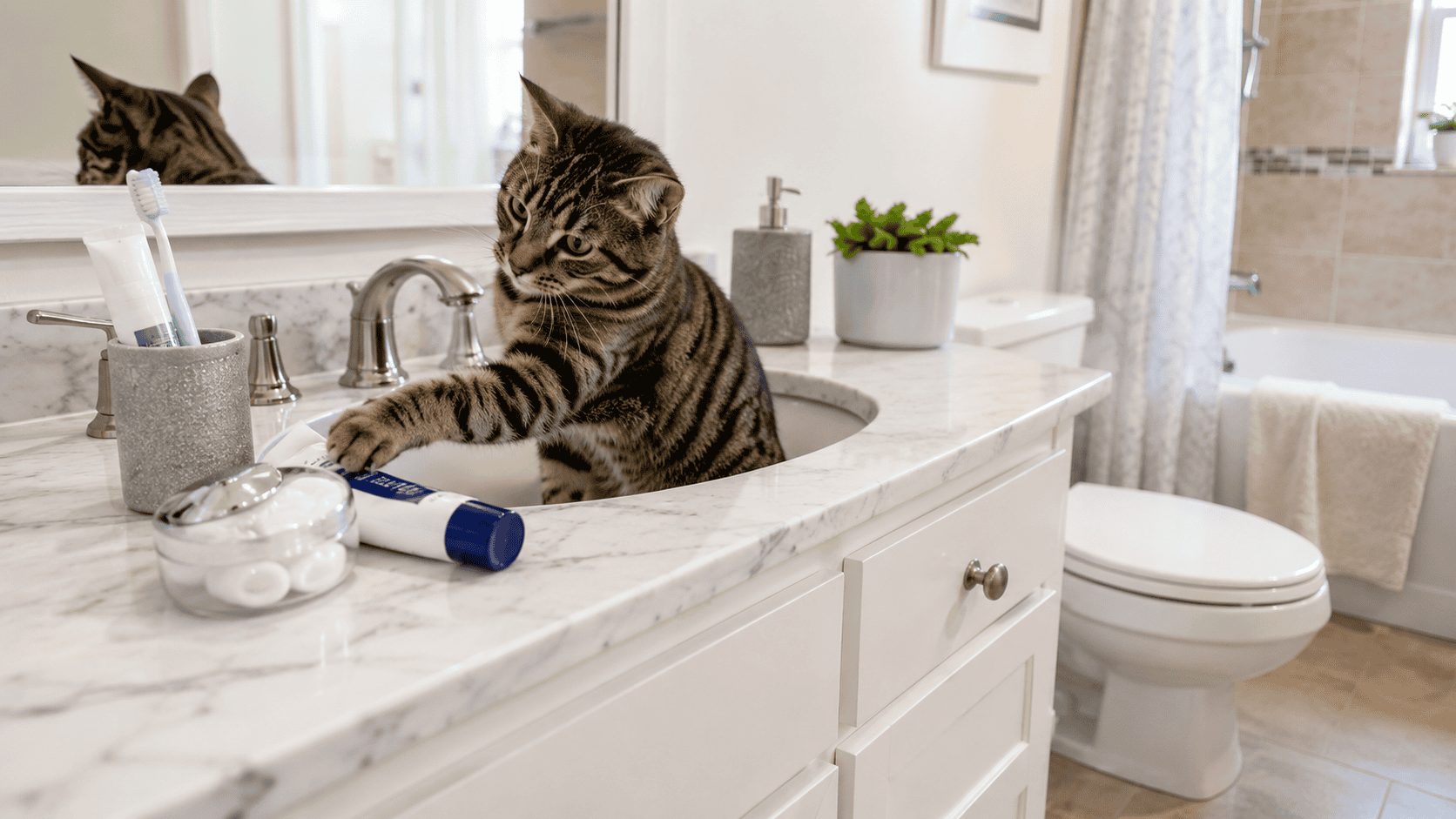
Bathroom Safety for Cats: How to Cat-Proof Your Bathroom
Quick Answer: How do you cat-proof a bathroom?
Keep the toilet lid closed at all times and use a lid lock if your cat is persistent. Store all cleaning products, medications, and toiletries in secured cabinets. Use a trash can with a lid. Remove small objects like hair ties, dental floss, cotton swabs, and razors from counters and floors. Unplug appliances after every use. Drain and rinse the tub after bathing. Avoid essential oil diffusers in spaces your cat uses regularly. The safest cat bathroom is one where the risky stuff is locked away before your cat decides to investigate.
Most of us do not look at the bathroom and think, “Ah yes, the secret danger room.”
We see a sink, a toilet, a trash can, a shower, and maybe a basket of towels we keep promising we will fold. Our cats see something completely different.
They see a cool floor for lounging. A sink that might as well be a private drinking fountain. A toilet that smells interesting. A trash can full of forbidden treasure. Dangling towels, cords, and tiny objects. Closed cabinets that clearly need investigating.
That is why bathroom safety for cats matters more than most owners realize. Your bathroom is not automatically unsafe, but it does contain several things a curious cat can get into quickly: cleaning products, medications, an open toilet bowl, slippery tubs, dental floss, razors, essential oils, and plugged-in appliances. Many of these bathroom hazards for cats look boring to us and strangely exciting to a cat.
Cats are tiny chaos inspectors with whiskers. This cat-proof bathroom guide covers every major risk in the bathroom, why cats are drawn to each one, and exactly what to do to make the room safe.
Why Cats Are So Interested in Bathrooms
Before locking everything down, it helps to understand why cats are drawn to bathrooms in the first place.
Bathrooms are full of sensory weirdness. Cool tiles feel good under paws. Running water is endlessly fascinating. Sinks are perfectly cat-shaped. Towels smell like their humans. Toilets, drains, soaps, and shampoos all carry strong scents that a cat’s nose finds genuinely compelling.
Some cats follow owners into the bathroom for attention. Some like the warm steam after a shower. Some prefer drinking from the tap. And some simply hate closed doors and believe every room in the home falls under their personal jurisdiction.
The issue is that a room built for human hygiene is not built for feline safety. That gap between what the bathroom was designed for and what a curious cat will do in it is exactly where the risk lives.
Key Bathroom Hazards for Cats and Simple Safety Fixes
1. Keep the Toilet Lid Closed
The open toilet is one of those bathroom hazards for cats that feels obvious once you name it, but easy to ignore in daily life.
Many cats are drawn to toilet bowls because the water is cool, accessible, and different from the water in their bowl. Some cats only sniff around. Others drink from it. Kittens or smaller cats may slip if they climb the rim and lose balance.
The bigger risk is not the water alone. It is what may be in the water.
Toilet bowl cleaners, bleach-based products, in-tank tablets, and clip-on rim cleaners can make toilet water genuinely hazardous. VCA Animal Hospitals notes that bathroom surface cleaners and toilet bowl cleaners can be toxic to cats, with effects ranging from gastrointestinal signs and respiratory symptoms to chemical burns and organ damage depending on the product and exposure.[1]
Not every lick of blue toilet water becomes an emergency. The ASPCA’s Animal Poison Control Center notes that the chemicals from in-tank tablets are diluted in the bowl water and, while capable of causing mild stomach upset, more severe signs are not generally expected from the water alone. If a cat gets into the tablet or disc directly, however, that is a different situation – those products can cause burns to the mouth and throat and require immediate veterinary contact.[2]
The simplest cat-proof bathroom habit: keep the lid down. If your cat is persistent, use a toilet lid lock. If you use automatic toilet cleaners, be especially strict about keeping the bowl inaccessible. A closed toilet lid is one of the easiest wins in bathroom safety for cats.
2. Store Bathroom Cleaners Like Your Cat Can Open Cabinets
A lot of bathroom cleaners are designed to be powerful. Great for soap scum. Not so great for a cat who walks across a freshly cleaned floor and licks her paws. Cats do not need to drink from a cleaner bottle to be exposed. They can inhale fumes, step on residue, lick damp surfaces, or groom chemicals off their fur.
PetMD explains that exposure to harmful cleaning products can occur through licking, inhaling fumes, skin contact, or ingestion, with symptoms ranging from mild irritation to more serious organ damage depending on the substance.[3]
The cleaners worth being most careful with include bleach-based products, ammonia cleaners, toilet bowl cleaners, disinfectant sprays, phenol-based cleaners, and mold removers. Use ventilation. Open a window when cleaning. Keep your cat out of the room while cleaning and while surfaces are still drying. Store bottles in a secured cabinet – not on the floor beside the toilet. Rinse surfaces well before your cat walks across them.
So are bathroom cleaners toxic to cats? Some can be, especially if used carelessly or left where a cat can lick, step on, or breathe them in.
3. Do Not Leave Human Medications on Counters
Human medications are among the most serious bathroom risks because they are small, easy to drop, and easy to forget. A pill rolls under the vanity. A bottle gets left uncapped. A cat bats something off the counter, and suddenly it becomes a game.
Cornell Feline Health Center warns that human medications can be acutely toxic to cats and should never be given without veterinary guidance. Cats will often eat pills they find lying on tables or dropped on the floor, so vigilance matters.[4]
Keep all medications in closed cabinets. That means prescription pills, pain relievers, vitamins, supplements, creams, ointments, and medicated products. Do not assume your cat will ignore something because it smells medicinal. Cats have built careers out of doing the thing we assumed they would not do.
The same caution applies to everyday toiletries. Toothpaste, mouthwash, acne treatments, and medicated creams should not be left where a cat can lick or chew them. A clean counter is not just tidy – it is safer.
4. Check Bathroom Plants Before You Let Your Cat Near Them
Bathrooms often end up with plants because the light is soft, the humidity is higher, and a little greenery makes the room feel less sterile. Lovely for us. Not automatically safe for cats.
Some common bathroom-friendly plants are not cat-friendly at all. Pothos, philodendron, peace lily, and English ivy are listed in the ASPCA’s toxic plant database for cats, with effects that can include mouth irritation, drooling, vomiting, or other symptoms depending on the plant and exposure.[8]
That does not mean a cat-proof bathroom has to be plant-free. It just means every plant should be checked before it earns a spot on the sink ledge. If your cat chews leaves, knocks pots over, or treats soil like a personal digging project, move plants out of reach or choose verified cat-safe options.
5. Be Careful With Essential Oils and Scented Products
Bathrooms are often where people keep essential oils, reed diffusers, scented sprays, candles, and bath oils. This is a problem that often gets overlooked because the products feel gentle and natural. ‘Natural’ does not always mean safe for cats.
VCA Animal Hospitals notes that many liquid potpourri products and essential oils are poisonous to cats, and that both ingestion and skin exposure can be toxic. Cats are especially vulnerable because certain compounds are difficult for them to metabolize.[5]
Pet Poison Helpline identifies a specific list of essential oils known to cause poisoning in cats, including tea tree, eucalyptus, peppermint, citrus, clove, cinnamon, and wintergreen. Cats lack certain liver enzymes that help metabolize these compounds, and their grooming behavior puts them at extra risk from any oil that settles on their fur.[6]
The bathroom can make this worse because it is typically small and enclosed. Fumes linger. A cat may walk across spilled oil, rub against a diffuser, or sit in a room where a scent is too concentrated.
For a cat-safe bathroom: skip diffusers in rooms your cat uses regularly. Store oils sealed and away from curious paws. Ensure ventilation. And remember that a scent pleasant to you can be genuinely overwhelming to a nose doing a much more intense version of the job.
6. Cover the Trash Can
Bathroom trash cans are tiny hazard baskets. They may contain dental floss, cotton swabs, tissues, razors, plastic packaging, hair ties, medication packaging, and a variety of other things that look interesting to a cat.
Dental floss is one of the more serious concerns – string-like objects can cause dangerous intestinal blockages if swallowed. Razors can injure paws or mouths. Hair ties look like toys but can cause trouble if ingested. This is one of the easiest bathroom hazards for cats to prevent. Use a trash can with a lid. If your cat is a dedicated bin-diver, store it inside a cabinet or use a heavy covered bin it cannot knock over.
7. Remove Hair Ties, Cotton Swabs, and Small Objects
The bathroom counter collects small things: hair ties, bobby pins, cotton swabs, floss picks, nail clippers, tweezers, contact lens cases, earrings, and bottle caps. Many of these are exactly the size and shape cats love to bat off surfaces.
The concern is not just mess. It is swallowing, choking, mouth injuries, or items getting somewhere they should not be. Cats are fast. Once something slides under a cabinet or into their mouth, you may not catch it in time.
The fix is practical: drawer organizers, a lidded container on the counter, a jar for hair ties. Store razors in drawers. Never leave floss strings loose. Do a quick floor check after dropping anything small.
8. Unplug Hairdryers, Straighteners, and Electric Appliances
Electrical appliances are an underestimated part of how to cat-proof a bathroom. Hairdryers, curling irons, straighteners, and electric razors can cause burns if left hot and attract cats that like to chew or play with cords. Unplug appliances right after use. Let hot tools cool somewhere your cat cannot reach. Wrap cords and store them in drawers. Use cord covers if chewing is a known habit. Do not leave plugged-in appliances sitting on the counter unattended
9. Make the Tub and Shower Safer
Most cats are not fans of baths, but many are drawn to bathtubs and showers anyway – especially if there is standing water, interesting smells, or a warm damp surface to sit on.
A wet tub can be slippery. Standing water may contain soap, shampoo, conditioner, shaving cream, or bath oil residue. A cat that jumps in may slip, drink from the puddle, or track chemical residue onto their paws and groom it off later. For kittens, senior cats, or cats with mobility issues, this matters even more.
Drain the tub fully after use. Rinse away shampoo and soap. Keep bath products off the tub edge. Close the shower door or curtain if needed.
This is cat safety around bathtubs and sinks in its most practical form: a dry, residue-free tub and a closed-off shower make the space significantly safer without any major changes to your routine.
10. Secure Towels, Shower Curtains, and Hanging Items
To humans, a towel is a towel. To some cats, a towel is a climbing wall. Hanging towels, shower curtains, robe belts, loofahs, and dangling cords can tempt playful cats. The danger is rarely the towel itself. It is what happens when the towel rack comes loose, the curtain rod falls, or the cat lands badly in the tub.
If your cat climbs bathroom fabrics, move towels higher, use secure hooks, keep shower curtains tucked inside the tub, remove dangling items, and give your cat better vertical options elsewhere – a cat tree or shelving unit they are allowed to use.
11. Decide Whether Your Cat Needs Bathroom Access
Some owners can simply keep the bathroom door closed. Others cannot – because the litter box is in there, or the layout makes the bathroom part of the cat’s normal route. If your cat does not need bathroom access, a closed door is the simplest solution.
But if the litter box is in the bathroom, the goal is not to block access. It is to make the room safe enough for daily, unsupervised use. That means cleaners locked away, toilet lid closed, trash covered, cords managed, small objects removed, and floors checked. Good ventilation matters too – a litter box in a poorly ventilated bathroom traps odors and humidity.
12. Extra Caution for Kittens and Senior Cats
A healthy adult cat may treat the bathroom like their personal spa and navigate it without incident. A kitten or senior cat may not manage the same.
Kittens are more likely to explore everything, chew unknown objects, squeeze into gaps, lose their footing near toilets, and test things with their mouths. They are especially vulnerable to small-object hazards and chemical exposures that a more cautious adult cat might avoid.
Senior cats may have reduced balance, slower reflexes, arthritis, or vision changes. Wet floors and slippery tubs can be genuinely difficult for them. A non-slip mat, dry floor, and uncluttered space make the room much more manageable for an older cat.
Good cat bathroom safety should match the cat you actually have, not a hypothetical one who makes sensible decisions.
13. What to Do If Your Cat Gets Into Something in the Bathroom
Even careful owners miss things. A cabinet gets left open. A pill drops. A cat licks a freshly cleaned surface. Someone forgets to close the toilet lid.
If you suspect your cat has been exposed to a bathroom cleaner, medication, essential oil, or another harmful product, watch for: drooling, vomiting, pawing at the mouth, coughing, breathing changes, weakness, hiding, skin irritation, tremors, or unusual behavior.
PetMD recommends contacting a veterinarian or pet poison helpline immediately if household cleaner exposure is suspected, and not inducing vomiting unless a professional specifically directs you to. If you can, photograph the product label or bring the packaging to your vet – the exact ingredient matters for treatment.[7]
Do not try home remedies. Do not force your cat to drink. When in doubt, call your veterinarian.
ASPCA Animal Poison Control Center: 888-426-4435 (fee may apply)
Pet Poison Helpline: 855-764-7661 (fee may apply)
Cat Bathroom Safety Checklist
Here is the practical version you can actually use:
| Cat Bathroom Safety Checklist |
|---|
| ✓Keep the toilet lid closed — always. |
| ✓Lock away cleaners, bleach, disinfectants, and toilet products. |
| ✓Store all medications and supplements in secured cabinets. |
| ✓Keep toothpaste, lotions, creams, and toiletries out of reach. |
| ✓Skip essential oil diffusers in bathrooms your cat uses regularly. |
| ✓Use a covered trash can. |
| ✓Remove dental floss, hair ties, razors, and cotton swabs. |
| ✓Unplug appliances immediately after use. |
| ✓Let hot styling tools cool out of your cat’s reach. |
| ✓Drain the tub and rinse away shampoo and soap residue. |
| ✓Keep floors dry when possible. |
| ✓Secure towels, shower curtains, and hanging cords. |
| ✓Use childproof cabinet locks if your cat opens doors. |
| ✓Keep your vet and poison control number somewhere easy to find. |
That is the practical heart of how to make a bathroom cat-friendly. Not perfect. Not complicated. Just one step ahead of the cat.
Bathroom Access: Benefits vs. Risks
Whether to give your cat bathroom access depends on your setup and your cat. Here is how the tradeoffs look:
| Pros of Bathroom Access | Risks to Manage |
|---|---|
| Litter box access is uninterrupted | Open toilet is a drinking and fall risk |
| Cat can choose cool tiles when warm | Cleaning products can harm paws and mouths |
| Owner can supervise grooming routines | Small objects on counters become toys or hazards |
| Cat has access to fresh water from running tap | Appliance cords invite chewing |
| Reduces door-scratching behavior | Steam and strong scents linger in small spaces |
| Easy to monitor water intake | Trash can becomes an easy target |
Final Thoughts
The bathroom is one of those rooms that feels harmless until you start seeing it through your cat’s eyes.
The open toilet is a water bowl. The trash can is a treasure chest. The towel is a climbing wall. The counter is a launchpad. The freshly cleaned floor is something to walk across and lick off later.
That is why a safe bathroom is not about being dramatic. It is about knowing cats. They are curious, fast, and genuinely committed to investigating whatever looks most interesting in the room.
So close the toilet. Lock the cleaners. Cover the trash. Put the small things away. Unplug the cords. Rinse the tub. Make the bathroom boring in all the right ways.
Because the best kind of cat-safe bathroom is the one your cat can wander into without turning an ordinary day into a vet emergency. And with cats, that is already enough excitement for one room.
Frequently Asked Questions
Is the bathroom safe for cats?
The bathroom can be safe for cats, but it requires some preparation. Left unmodified, a typical bathroom contains several genuine hazards: an open toilet, chemical cleaners, medications on counters, small swallowable objects, electrical cords, and slippery surfaces. With the right precautions – lid closed, cleaners locked away, clutter removed – most bathrooms can become a low-risk space for most cats. The level of caution needed depends on the individual cat: kittens and senior cats require more attention than healthy adults.
Are toilet bowls dangerous for cats?
An empty, clean toilet bowl is unlikely to cause serious harm to a cat that takes a quick sniff. The real risk comes from the contents. Toilet bowl cleaners, bleach-based products, and in-tank tablets can make toilet water genuinely hazardous, especially if a cat drinks from it regularly or gets into the cleaning tablet directly. The safest approach is to keep the lid closed at all times and use a lid lock if needed.
How do I keep my cat away from bathroom cleaners?
Store all cleaning products in a cabinet with a latch or lock your cat cannot open. Do not leave bottles on the floor or on open shelves. While cleaning, keep your cat out of the bathroom, turn on ventilation, and let surfaces dry fully before allowing access. Rinse cleaned areas well – cats walk across surfaces and then groom their paws, which is how cleaning product residue gets ingested.
How do I prevent my cat from falling into the toilet?
Keeping the toilet lid closed is the only reliable way to prevent this. A cat sitting on an open toilet rim can lose their footing, especially if the seat is wet. Kittens are at particular risk because they are smaller, lighter, and less coordinated. If your cat consistently tries to open the lid, a toilet lid lock is a simple and inexpensive addition.
What bathroom products are dangerous for cats?
The most commonly risky items include bleach and bleach-based cleaners, ammonia-based products, toilet bowl cleaners and in-tank tablets, phenol-based disinfectants, essential oils (especially tea tree, eucalyptus, peppermint, citrus, and clove), mold and mildew removers, and human medications including pain relievers, antidepressants, and vitamins. Toiletries like toothpaste and medicated creams can also cause stomach upset if a cat licks them.
Are bathroom plants toxic to cats?
Some common bathroom plants are toxic to cats. Pothos, philodendron, peace lily, and English ivy can cause problems ranging from mouth irritation to more serious symptoms depending on the plant and exposure. If you want plants in the bathroom, look for feline-safe options like air plants, spider plants, or orchids. Always verify a specific plant’s safety using a reliable source like the ASPCA’s toxic plant database before keeping it in a space your cat uses.[8]
How do I make a bathroom cat-friendly if the litter box is in there?
If the litter box lives in the bathroom, the goal is not to block your cat’s access – it is to make the room safe for daily, unsupervised visits. Keep cleaners locked up, the toilet lid always down, the trash can covered, counters clear of small objects, appliances unplugged, and the floor dry when possible. Good ventilation matters too, both for odor control and because cleaning product fumes can linger in enclosed spaces.
Is grooming my cat in the bathroom safe?
Grooming a cat in the bathroom is generally fine as long as the space has been properly prepared. Use shampoos specifically formulated for cats, rinse thoroughly, and dry them well to prevent chilling. Keep the toilet lid closed during the process and ensure cleaning product bottles are stored away before bringing your cat into the room. A non-slip mat in the tub or sink makes the experience safer and less stressful.
What should I do if my cat drinks from the toilet?
If the toilet was clean and untreated, one drink is unlikely to cause serious harm, though it is not a habit worth encouraging. If the toilet contained a cleaning product, automatic tablet, or visible residue, contact your vet or a pet poison helpline, especially if your cat shows any signs of drooling, pawing at the mouth, vomiting, or unusual behavior. Offering your cat a consistently fresh water source – or a running water fountain if they prefer moving water – is the best long-term solution.
How do I cat-proof a bathroom without spending a lot of money?
Most effective cat-proofing is free or very low cost. Closing the toilet lid costs nothing. Moving cleaning products to a higher shelf or inside a cabinet with a latch is inexpensive. Clearing the counter of small objects, putting hair ties in a jar, storing razors in a drawer, and unplugging appliances after use are all habit changes that require no purchases at all. If you want to invest in anything, a toilet lid lock and a covered trash can are both inexpensive and highly effective.
Sources
[1] VCA Animal Hospitals – Household Hazards: Toxic Hazards for Cats
[2] ASPCA – Toilet Bowl Water and Your Pets: The Dangers Aren’t Always Crystal Clear
[3] PetMD – Common Cleaning Products That Can Harm Your Pets
[4] Cornell Feline Health Center – Common Cat Hazards
[5] VCA Animal Hospitals – Essential Oil and Liquid Potpourri Poisoning in Cats
[6] Pet Poison Helpline – Essential Oils and Cats
[7] PetMD – Household Cleaners to Avoid Near Cats
[8] ASPCA – Toxic and Non-Toxic Plant List: Cats