
1. American Shorthair
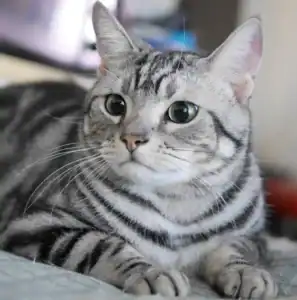 If you want one safe starting point for most new cat owners, the American Shorthair belongs near the top of that list.
What makes this breed work for beginners is the balance. American Shorthairs tend to be friendly without being demanding, playful without being chaotic, and adaptable enough to fit into most households. [4] They’re fine with children. They’re fine with other pets. They don’t require constant entertainment or daily grooming marathons.
Their coat is short and fairly easy to manage — regular brushing, nail trimming, dental care, the usual. No cat is maintenance-free, but compared to long-haired breeds, this is a significantly more forgiving starting point.
They can entertain themselves when you’re busy, which matters more than people expect. A cat that spirals when left alone becomes a source of stress. An American Shorthair is more likely to find a sunspot and wait you out.
Best for: steady, friendly homes that want a reliable, low-drama companion.
Watch for: weight gain. They’ll eat enthusiastically, and portion control actually matters with this breed.
2. Ragdoll
 The Ragdoll is one of the most recommended cats for beginners, and the reputation is mostly deserved — with a few caveats worth knowing.
These cats are big, gentle, and remarkably people-focused. [3] They tend to follow their owners from room to room, enjoy being nearby, and have a relaxed energy that makes them very easy to live with on a day-to-day basis. They’re not the cats bouncing off the walls at midnight. They’re the cats finding the warmest spot on the couch.
Where beginners sometimes get a surprise: Ragdolls are large cats with semi-long coats. Regular brushing is genuinely necessary, and their size means they eat more than a small shorthair. They’re also not a great fit for owners who want a very independent cat — Ragdolls tend to enjoy company and notice when you’re gone.
If you want a calm, affectionate companion who’ll be happy sharing your life closely, few breeds deliver that better.
Best for: people who want a warm, close-bonding companion at home.
Watch for: the grooming commitment. Semi-long coats need real, regular attention.
3. British Shorthair
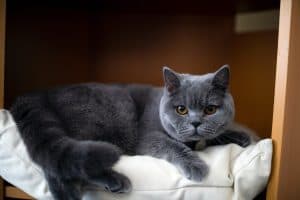 The British Shorthair is a quiet achiever in the beginner-friendly category. They don’t get as much noise as Ragdolls or Maine Coons, but they deserve the attention.
This is a breed that’s genuinely easygoing. British Shorthairs are calm, even-tempered, and affectionate in a way that doesn’t feel overwhelming. [5] They like being near their people without needing to be held constantly. They’ll sit beside you on the sofa while you watch TV and consider that a completely satisfying social interaction.
That makes them excellent for apartment living. They’re not hyperactive, they’re not loud, and they adapt well to smaller spaces as long as they have scratching posts, toys, and window access. Give them a stable routine and a comfortable home, and they’ll settle beautifully.
The one thing to know: British Shorthairs aren’t huge cuddle-seekers. They may not love being picked up and held. That reserved quality is part of who they are — not something you’ll train out of them.
Best for: apartment dwellers, quieter homes, and owners who want companionship without clinginess.
Watch for: don’t expect a lap cat. They show affection on their own terms.
4. Exotic Shorthair
 Think of the Exotic Shorthair as the Persian’s less-demanding sibling. Same sweet, round-faced look. Same gentle personality. Significantly more manageable coat.
For someone who loves the Persian aesthetic but isn’t prepared to commit to daily grooming sessions, the Exotic Shorthair often feels like the right answer. They’re affectionate, calm, and generally happy with quiet indoor life. Their shorter coat still needs regular brushing, but it’s a different category of effort from a full Persian.
The main thing to research before choosing one: flat-faced cats can have health considerations. Breathing, eye drainage, and dental issues are more common in cats with very extreme facial structure. [7] When you’re looking at breeders or kittens, don’t pick based on the flattest face in the litter. Look for a cat that can breathe, eat, and live comfortably — that matters far more than how many centimetres of nose they have.
Best for: people who love the Persian look but want a more practical coat.
Watch for: research the breeder’s approach to brachycephalic health, not just aesthetics.
5. Birman
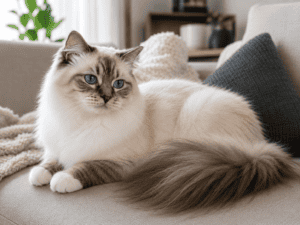 The Birman is one of those breeds that quietly earns its place on beginner lists without making much noise about it.
They’re gentle, social, and affectionate without being high-maintenance about it. Birmans enjoy human company and will usually be somewhere in the same room as you — but they’re not going to loudly demand your attention at every turn. Their energy level is moderate, which makes them easier to live with than high-drive breeds, and their silky semi-long coat doesn’t tend to mat the way heavier coats can.
The result is a cat that gives you warmth and companionship without asking you to rearrange your life around their needs. For a new owner finding their feet, that balance counts for a lot.
Best for: gentle family homes that want affection without emotional chaos.
Watch for: they still need regular brushing and genuinely enjoy company. Not a great fit for very isolated environments
6. Russian Blue
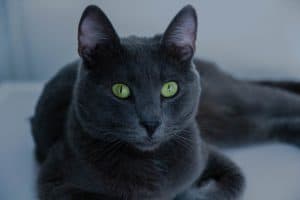 If you want a quieter, more reserved cat — one that bonds deeply with its people without announcing itself to every visitor who walks through the door — the Russian Blue is worth a close look.
This breed tends to be loyal, gentle, and genuinely affectionate, but it takes time to get there. Russian Blues don’t usually throw themselves at strangers. They observe first, decide later, and when they do bond, that loyalty runs deep. That can feel like a slow start, but for the right owner, it becomes exactly the kind of quiet, trusting relationship that makes cat ownership so rewarding.
Their short, dense coat is easy to care for — one of the lower-maintenance options from a grooming perspective. They also tend to suit apartment living well and don’t cope particularly well with loud, chaotic households.
Best for: calm homes, patient owners, and anyone who’d rather earn a cat’s trust than have it handed over immediately.
Watch for: they can be shy and stressed in noisy, high-traffic environments. Give them time and stability.
7. Maine Coon
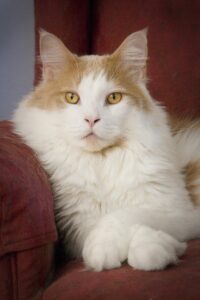 The Maine Coon consistently lands near the top of “best cats” lists, and they’ve earned that reputation. Friendly, sociable, playful, and usually excellent with families — there’s a lot to love here.
But I want to be honest with new owners: Maine Coons are big cats with big needs. [8] They’re not particularly difficult, but they’re not the lowest-effort beginner cat either. They need regular grooming. They eat more than smaller cats. They benefit from climbing structures, play, and mental stimulation. They’re not going to quietly disappear into the background.
For a first-time owner who wants a social, interactive, family-oriented cat and is genuinely ready for the commitment, a Maine Coon can be wonderful. For someone who wants the easiest possible introduction to cat ownership, the American Shorthair or British Shorthair will probably serve you better.
Best for: active families and owners who want a big personality in their home.
Watch for: don’t underestimate grooming, food costs, or enrichment needs. These cats bring a lot — and they expect something in return.
8. Burmese
 The Burmese is, at its core, a people cat. It wants to be involved in your day, sitting near you while you work, following you between rooms, asking where you’ve been if you were gone too long.
For some first-time owners, that sounds ideal. For others, it’s a lot. A Burmese is not the cat for someone who wants a mostly independent companion that manages itself. This breed needs interaction, and it will let you know when it’s not getting enough of it.
The trade-off is that their coat is genuinely low-maintenance — short, sleek, easy to care for. The commitment isn’t about grooming. It’s about presence. If you’re home often, enjoy engaged cats, and want a companion that’s actively interested in you, the Burmese can be a deeply rewarding choice.
Best for: owners who want a loving, interactive cat and spend plenty of time at home.
Watch for: this breed can become bored or lonely if left alone for extended periods regularly.
9. Siamese
 The Siamese is one of those breeds where “right fit” matters more than almost anywhere else on this list.
These cats are intelligent, social, and famously vocal. A Siamese will talk to you. It will have opinions. It will want to know what you’re doing and why, and if you’ve been gone too long, it will tell you about it at volume. That can be absolutely delightful — or it can wear you down, depending on who you are.
Their energy is real, and their need for mental stimulation and interaction is genuine. A Siamese that doesn’t have enough engagement tends to find its own entertainment — which is rarely what the owner had in mind.
For an active, involved owner who enjoys an expressive, personable cat, a Siamese can be one of the most rewarding relationships in cat ownership. For someone who wants quiet and low demand, this probably isn’t the starting point.
Best for: owners who want an engaged, communicative companion and don’t mind an opinion.
Watch for: noise, social needs, and mental stimulation requirements. The coat is easy. Everything else is not.
10. Persian
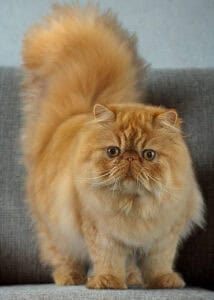 Persians can be genuinely wonderful for a very specific kind of first-time owner. Calm, gentle, happy in quiet indoor environments, and generally not looking to redecorate your home at 11pm.
But they’re not low-maintenance cats, and dressing them up as such does no one any favours.
Persian coats need regular — often daily — attention to stay tangle-free. Their faces need cleaning around the eyes. Flat-faced Persians may have breathing, dental, and eye concerns that require ongoing veterinary attention. [7] If you go into a Persian relationship with eyes open and a genuine enthusiasm for grooming, it can be deeply rewarding. If you’re hoping the coat will somehow manage itself, you will struggle.
Best for: quiet homes and owners who actively enjoy grooming as part of the relationship.
Watch for: the daily grooming commitment is real, and brachycephalic health concerns vary by breeding.
11. Norwegian Forest Cat
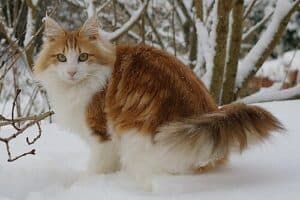 The Norwegian Forest Cat is a bigger, more independent-spirited breed that can work well for first-time owners who want something slightly more characterful.
These cats tend to be friendly and adaptable, but they also appreciate space — a good climbing tree, access to windows, room to explore. They’re not usually clingy, which can feel refreshing for owners who want a cat that’s affectionate but not demanding.
The thick double coat is the main thing to plan for. It’s built for Norwegian winters and sheds seasonally — and during shedding season, a beginner who hasn’t planned for that will quickly learn to plan for it. Regular brushing during those periods isn’t optional.
Best for: owners who want a friendly, semi-independent cat with a bit more personality and presence.
Watch for: seasonal shedding is significant. Have a brush ready and use it.
12. Cornish Rex
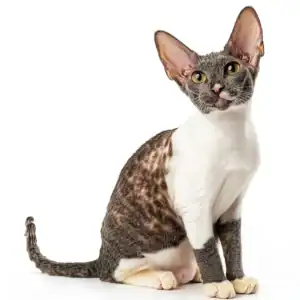 The Cornish Rex is playful, warm-seeking, and genuinely entertaining to live with — but calling them low-maintenance because of the short coat misses the point.
Yes, their soft wavy coat is easy to care for. But these are active, attention-enjoying cats that need play, interaction, and stimulation. They’re not going to sit quietly on a shelf and look pretty. They want to be part of what’s happening.
If you enjoy active cats and have the time and energy to match that, a Cornish Rex can be a fantastic choice. If you’re hoping for a calm couch companion, you might find this one busier than expected.
Best for: playful homes where the cat gets to be part of things.
Watch for: low grooming doesn’t mean low-effort. These cats need engagement.
13. Abyssinian
 The Abyssinian is built for movement. Athletic, curious, mentally active — this is a cat that wants to investigate everything in your home and will get bored if you let it.
Smart cats are wonderful. They’re also excellent at finding ways to entertain themselves when you don’t, which is rarely what the owner had in mind. If you want an Abyssinian, you need to meet their enrichment needs: climbing space, puzzle toys, regular play. It’s not optional for this breed.
For a first-time owner who already knows they love an active, engaging cat, this can be exciting. For someone looking for their calmest possible first experience, this breed is probably better suited to a second or third cat.
Best for: active owners who genuinely enjoy high-engagement cat relationships.
Watch for: a bored Abyssinian will show you what bored looks like. It’s not subtle.
14. Bengal
 Bengals are stunning. They’re also one of the most common “I didn’t know what I was getting into” breeds that shows up in rescue situations.
These cats are smart, athletic, intensely active, and can become noisy or destructive when their needs aren’t met. “High energy” for a Bengal is not the same as “high energy” for most other breeds on this list. They need real enrichment, real play, real mental stimulation — and an owner who has genuinely done the research and is prepared for that relationship. [9]
That doesn’t make Bengals bad cats. It makes them cats for a very specific kind of owner. For most first-time owners, I’d put them firmly in the “think carefully before you commit” category. If your heart is set on one, go in fully informed.
Best for: experienced or very committed active owners who can build a rich indoor environment.
Watch for: a Bengal that doesn’t have enough stimulation will find ways to make its displeasure known.
15. Sphynx
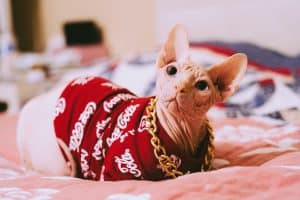 The Sphynx is proof that “no fur” and “low maintenance” are not the same thing.
Because they don’t have a coat to absorb body oils, Sphynx cats need regular skin care — wiping down, occasional baths, and attention to ear cleanliness. [6] They’re also sensitive to temperature and need protection from cold and direct sun exposure. Many are highly social and don’t enjoy being alone for long periods.
None of this makes them a bad choice for first-time owners — but it does mean the research needs to come before the impulse. A Sphynx owner who’s prepared for that routine can have a deeply rewarding experience with a genuinely affectionate, people-oriented cat. Someone who expected “easy because no shedding” will be in for a surprise.
Best for: owners who’ve researched the breed thoroughly and are genuinely ready for the skin care routine.
Watch for: temperature sensitivity, social needs, and regular bathing requirements
16. Scottish Fold
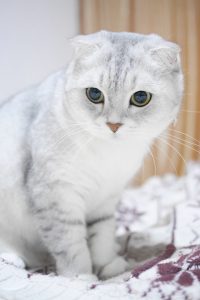 The Scottish Fold is gentle, sweet-natured, and often calm. It’s also the breed on this list that I feel the strongest responsibility to be honest about.
Those folded ears come from a genetic mutation that affects cartilage throughout the body — not just the ears. UC Davis Veterinary Genetics Laboratory explains that the fold mutation is dominant and affects cartilage development, with related cartilage, bone, and joint problems varying by cat. [1] The Universities Federation for Animal Welfare describes Scottish Fold osteochondrodysplasia as a developmental abnormality affecting cartilage and bone, which can cause severe arthritis and chronic pain throughout a cat’s life. [2]
The Scottish Fold’s cute face should not be separated from that reality. A first-time owner choosing this breed from scratch should understand exactly what the breed’s defining feature is linked to. If you’ve already adopted or rescued a Scottish Fold, that cat deserves all your care, monitoring, and veterinary support. But if you’re choosing a kitten fresh and researching options, this is a breed that warrants serious thought before supporting.
Best for: only owners who are fully informed about the health concerns and prepared to manage them.
Watch for: inherited cartilage and joint disease is not a minor consideration. It’s the defining health reality of this breed.