

Quick Comparison: The 15 Cuddliest Cat Breeds at a Glance
1. Ragdoll — The Undisputed Cuddle Champion
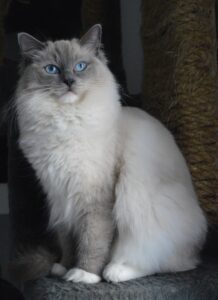 If there’s one breed that was practically engineered for snuggling, it’s the Ragdoll. The name says it all: pick one up and they go completely limp in your arms, like a warm, furry beanbag that purrs.
Ragdolls are large, silky-coated cats with the kind of deep blue eyes that make you stop mid-sentence. But it’s their personality that’s made them one of the most popular cat breeds in the world — and the unanimous answer to “what’s the cuddliest cat breed?” among owners who’ve had one.
What makes them different from other affectionate cats is the nature of their affection. They don’t just tolerate being held — they actively seek it out. A Ragdoll will follow you to the bathroom, wait outside the shower, and be on your lap before you’ve even sat down properly. They’re not just lap cats. They’re devoted lap cats.
They’re also exceptionally gentle, which makes them brilliant around children and excellent for first-time cat owners who want a lot of warmth without unpredictable behaviour.
How they show affection: Full-body relaxation when held, following owners room to room, slow blinks, sleeping pressed against you.
One thing to know: Ragdolls are indoor-only cats. Their trusting nature makes them dangerously naive outdoors
2. Maine Coon — The Gentle Giant Who Doesn’t Know It’s Huge
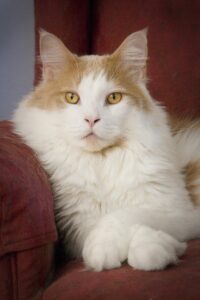 Maine Coons are the largest domestic cat breed, and they have absolutely no idea. They will attempt to sit on your laptop, squeeze into the arm of your chair, and drape themselves across your legs like they weigh five pounds. They don’t. They weigh up to 18.
Despite their imposing size — big tufted ears, bushy raccoon tail, thick luxurious coat — Maine Coons are among the softest-natured cats you’ll find. They’re often called “dog-like” because of how they interact: they’ll greet you at the door, follow you around the house, play fetch, and respond to their name.
They’re not traditional lap cats in the sense of sitting still for hours. They’re more like affectionate companions who want to be near you rather than on you. Expect them by your feet, beside you on the couch, or pressed against your leg while you cook.
How they show affection: Chirping and trilling (they rarely meow), headbutts, sitting as close as physically possible, playing interactive games with you.
One thing to know: Maine Coons are slow to mature, not reaching full size until 3–5 years. They stay kitten-like in personality well into adulthood.
3. Birman — The Sacred Cat Who’ll Steal Your Heart Quietly
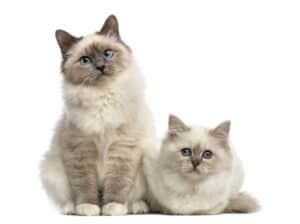 The Birman is often overshadowed by flashier breeds, which is a genuine shame — because in terms of consistent, dependable affection, few cats come close.
Known historically as the “Sacred Cat of Burma,” Birmans have a quality that’s hard to put into words. They’re calm without being boring, affectionate without being needy, and gentle in a way that feels almost deliberate. They don’t demand attention. They simply make themselves present, following you with their deep blue eyes and settling wherever you are.
Their coat is stunning — long, silky, and colour-pointed like a Siamese — but with white “gloves” on all four paws that give them an almost formal look. They’re the kind of cats that look like they know something you don’t.
Birmans are exceptional with children, adaptable to different household types, and rarely cause drama. They’re the quiet achievers of the cuddly cat world.
How they show affection: Gentle proximity, settling into laps without fuss, slow blinks, soft chirping sounds.
One thing to know: Birmans are more sensitive than they look. Changes in routine or household stress affect them noticeably — they’re empathetic cats.
4. Persian — The Lap Cat Who Was Born for Sunday Afternoons
 If Ragdolls are the enthusiastic cuddlers, Persians are the refined ones. They don’t chase you around the house. They find the best spot — usually your lap — settle in, and simply radiate contentment.
Persians are the definition of an indoor companion cat. They’re calm, quiet, low-energy, and deeply attached to their people. They prefer predictable routines and peaceful households, and they reward that environment with a level of steady, undemanding affection that’s genuinely soothing to be around.
Their appearance is famously striking — that flat face, those enormous eyes, the cloud of silky fur — but it’s their temperament that keeps Persian owners devoted. They’re not the cat that knocks things off shelves. They’re the cat that watches you from the most comfortable surface in the room and purrs when you make eye contact.
How they show affection: Lap sitting for extended periods, soft purring, gentle headbutts, staying close without demanding interaction.
One thing to know: Persian coats require daily grooming to prevent matting. This is a significant time commitment — factor it in before falling for those eyes.
5. Burmese — The Velcro Cat (Quite Literally)
 Burmese cats have a nickname in the cat community: velcro cats. It’s earned. They don’t just want to be near you. They want to be touching you. Always.
A Burmese will greet you at the door, follow you to every room, sit on whatever you’re working on, and curl against you the moment you stop moving. They’re deeply social cats with an intensity of affection that can catch people off guard — in the best way.
What’s particularly interesting about Burmese cats is their emotional intelligence. They seem to read their owner’s mood with uncanny accuracy. When you’re tired, they settle quietly. When you’re playful, they’re right there. When you’re sad, a Burmese will often climb directly onto your chest and stay there.
Their coat is short, silky, and low-maintenance, which means all that affection comes without the grooming overhead of longer-haired breeds.
How they show affection: Constant physical contact, greeting at the door, chest-sitting, following every single room transition you make.
One thing to know: Burmese cats can develop separation anxiety if left alone too much. They do better in households where someone is home regularly, or with a feline companion
6. Siamese — The One Who Needs to Tell You About Their Day
 Siamese cats are not subtle about their feelings. They’re the most vocal breed on this list, and they use every meow, chirp, and distinctive yowl to maintain a running commentary on your life together.
But beneath all that noise is a genuinely devoted, deeply affectionate cat. Siamese form intense bonds with their people. They don’t just want to be in the same room — they want to be part of whatever you’re doing. Reading? They’re on the book. Working? They’re on the keyboard. Sleeping? They’re on your face.
Their affection style is interactive rather than passive. They’re not content to sit quietly on your lap for hours. They want engagement, conversation (yes, really), and active participation in your day. For owners who want a responsive, communicative cat, this is unparalleled. For those who want peace and quiet, it can be a lot.
How they show affection: Constant vocalisation directed at you, following closely, sleeping pressed against you, demanding eye contact.
One thing to know: Siamese are prone to depression and destructive behaviour if under-stimulated or ignored. They need an engaged owner.
7. Scottish Fold — The Calm, Steady Companion
 Scottish Folds have a look that stops people in their tracks — those distinctive folded ears and round, owl-like face give them an almost cartoon quality. But their personality is nothing like a novelty. They’re grounded, steady, and quietly devoted in a way that makes them one of the most reliably affectionate cats on this list.
Unlike some of the more intense breeds here, Scottish Folds offer a balanced kind of companionship. They want to be near you, but they’re not demanding about it. They’ll settle on the sofa beside you, follow you from room to room at a relaxed pace, and curl up in your lap for a solid evening of doing absolutely nothing together.
They adapt well to apartment living and get along with children and other pets without drama. They’re the kind of cat that improves any household simply by being in it.
How they show affection: Calm lap-sitting, following you at a relaxed pace, sitting upright in that distinctive “Buddha pose” nearby, gentle head presses.
One thing to know: Due to genetic concerns with the fold mutation, always source Scottish Folds from responsible breeders who health-test their cats. Some countries have restricted breeding of this breed — worth researching before committing.
8. Sphynx — The Warmest Cat You’ll Ever Meet (Literally)
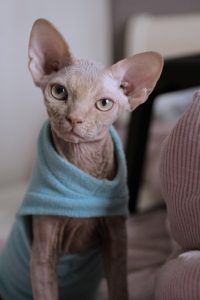 Here’s the thing about Sphynx cats: most people are put off by the hairless look, but every person who’s actually lived with one becomes a devoted convert. Because Sphynx cats are, without exaggeration, among the most affectionate animals you can own.
Without fur to warm them, Sphynx cats run naturally warm and they seek heat constantly — meaning they will be on you, under the covers with you, pressed against your neck, curled inside your jumper. This isn’t incidental. It’s their preferred state of existence.
But it’s not just about warmth. Sphynx cats have huge, outgoing personalities. They’re playful, social, and completely uninterested in boundaries. They’ll climb your shoulder, drape across your head, and greet every visitor to your home like a tiny, wrinkled ambassador.
How they show affection: Constant body contact, sleeping under covers with you, greeting strangers enthusiastically, climbing to your shoulder level.
One thing to know: Sphynx skin needs weekly wiping down as body oil accumulates without fur to absorb it. They’re also sensitive to cold and sun exposure. Higher maintenance than their short coat suggests.
9. British Shorthair — The Dignified Cuddler Who Does It on Their Own Terms
 British Shorthairs are the introverts of the cuddly cat world. They’re affectionate — genuinely so — but they’ll decide when and how that affection is delivered, thank you very much.
Don’t mistake this for aloofness. British Shorthairs bond deeply with their families. They’ll be in the same room as you almost always. They’ll sit beside you on the sofa, accept being petted with evident pleasure, and offer quiet companionship that many owners find more comfortable than the intense neediness of other affectionate breeds.
Their plush, dense coat and round face give them a teddy-bear quality that makes them irresistible to look at, and their calm, stable temperament makes them easy to live with long-term. They’re not demanding. They’re not destructive. They’re just steadily, dependably there.
How they show affection: Sitting beside rather than on you, slow blinks, headbutts when they initiate, calm presence in whatever room you’re in.
One thing to know: British Shorthairs are not typically lap cats in the traditional sense. They prefer to be near you rather than on you. Don’t take it personally — it’s just how they’re wired.
10. Tonkinese — The Best of Two Worlds
 If you’ve ever wished you could get a Siamese’s devotion without quite so much noise, and a Burmese’s warmth without quite so much intensity — the Tonkinese is exactly that cat. It was literally bred by crossing the two.
Tonkinese cats are sociable, warm, and emotionally tuned-in. They pick up on your mood and respond accordingly, which gives them an almost uncanny quality of feeling genuinely present with you rather than just occupying the same space. They’re playful without being chaotic, affectionate without being overwhelming, and communicative without being incessant.
They’re also among the most social cats with guests — unlike many breeds that disappear when visitors arrive, a Tonkinese tends to investigate, charm, and end up on someone’s lap within minutes.
How they show affection: Seeking lap time, responding to emotional cues, playing interactive games, gentle vocal communication.
One thing to know: Tonkinese need mental stimulation. Without it, they can become mischievous. Puzzle feeders, interactive toys, and regular play sessions keep them happy and calm.
11. Devon Rex — The Pixie Cat Who Lives on Your Shoulder
 Devon Rex cats look like something from a fantasy novel — large ears, enormous eyes, wavy coat, compact body. Their personality matches. They’re playful, clownish, intensely social, and deeply attached to their people.
What makes Devon Rex distinctive in the cuddly stakes is where they express that affection. Most lap cats sit on your legs. Devon Rex prefer your shoulders, your neck, or draped across the back of your head. They want to be at face level with you. This is partly warmth-seeking (they run cool due to their thin coat) and partly just personality — they want to be with you, not just near you.
They bring a lively, entertaining energy to a home that keeps owners smiling, and when it’s time to wind down, they tuck themselves against you with the same enthusiasm they brought to playing.
How they show affection: Shoulder-sitting, face-level proximity, burrowing under covers, following you with playful intent.
One thing to know: Devon Rex coats are fragile — over-grooming or rough handling can cause bald patches. Handle their coat gently.
12. Exotic Shorthair — All the Persian Affection, Half the Grooming
 The Exotic Shorthair is often described as the “lazy man’s Persian” — not as an insult, but as an accurate description. They have the Persian’s flat face, round eyes, and deeply calm temperament, paired with a short, plush coat that needs a fraction of the grooming.
In terms of cuddliness, they’re almost identical to Persians: they love laps, they love warmth, they love being close to their people, and they do it all with a serene contentment that’s genuinely relaxing to be around. They’re not excitable cats. They’re comfort cats — the kind you come home to after a hard day and immediately feel calmer.
They’re quieter than most breeds on this list, communicating with soft chirps and facial expressions rather than vocalisations, which makes them excellent for households where noise is a concern.
How they show affection: Extended lap-sitting, quiet proximity, soft chirping, sleeping pressed against their person.
One thing to know: Despite the shorter coat, Exotic Shorthairs still need regular brushing — just far less frequently than Persians. Their flat faces also require regular eye cleaning.
13. American Shorthair — The Reliable, Everyone-Gets-Along Cat
 American Shorthairs don’t top many “most cuddly” lists, and that’s a mild injustice. They’re not as intensely affectionate as Ragdolls or as demanding as Siamese, but what they offer is something equally valuable: steady, easygoing warmth that works reliably across a huge range of households.
They’re not needy. They won’t follow you into every room or meow for attention. But they’ll be there — reliably present, happy to be stroked, content to curl up beside you in the evenings, and genuinely good-natured with children, guests, and other pets.
For families with unpredictable schedules, young children, or multiple pets, the American Shorthair’s adaptability and even temperament often makes them the most practical cuddly cat on this list.
How they show affection: Settling beside you on their own schedule, relaxed purring, tolerating handling without drama, gentle play.
One thing to know: American Shorthairs are independent enough to handle a busier household but social enough to feel the difference if they’re consistently ignored. They need engagement — just not as much as some other breeds.
14. Abyssinian — The Affectionate Cat Who Doesn’t Do Laps
 Let’s be honest: Abyssinians are not lap cats. If you want a cat that sits still on your legs for hours, this isn’t your breed. But they’re on this list because their style of affection is genuinely distinctive and deeply appealing to the right owner.
Abyssinians are the athletes of the cat world — lean, agile, constantly in motion, and intensely curious about everything. But within all that activity, they maintain a strong bond with their people. They want to be in the same room. They’ll follow you, watch you, play with you, and periodically come in for a brief but warm contact before dashing off again.
Think of them less like a lap cat and more like a loyal companion who keeps moving but keeps coming back.
How they show affection: Staying close while staying active, short but frequent contact initiations, playing interactive games, sleeping near (but not on) you.
One thing to know: Abyssinians need significant environmental enrichment. A bored Abyssinian is a destructive Abyssinian. Tall cat trees, puzzle feeders, and interactive play are non-negotiable.
15. Manx — The Dog-Cat Who Gives You Everything
 The Manx is the wildcard on this list. Tailless (or short-tailed), round, and sturdy, they don’t have the glamour of a Ragdoll or the striking looks of a Siamese. What they have is loyalty — the kind that cat people rarely expect and dog people immediately recognise.
Manx cats follow their owners with a devotion that’s almost dog-like. They’ll greet you at the door, follow you around the house, respond to their name reliably, and position themselves on your lap with a calm, settled confidence that says this is where I belong.
They’re also good with children and other pets, adaptable to different household types, and known for their playful intelligence. They’re not flashy. They’re just genuinely excellent companions.
How they show affection: Loyal following, lap-sitting with a settled, confident quality, greeting at the door, interactive play.
One thing to know: Manx can be protective of their household and may startle at strangers until they’re comfortable. Socialise them well as kittens.