
How I Chose These 20 Breeds
Comparison Table: 20 Best Indoor Cat Breeds at a Glance
The 20 Best Indoor Cat Breeds
1. Ragdoll — Best Overall Indoor Cat
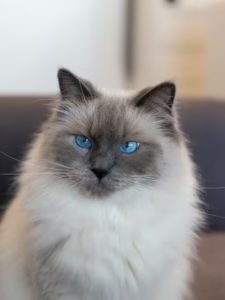 If I had to recommend one breed to the widest range of owners, it would be the Ragdoll.
These cats go limp when you pick them up — hence the name — and they form deep, patient bonds with their people that genuinely rival dogs in their loyalty.
What makes them so reliable as indoor cats is their temperament.
They’re calm without being boring, affectionate without being smothering, and patient enough to handle children, other pets, and even noisy households without getting rattled. The Cat Fanciers’ Association (CFA) has ranked them among the most popular breeds in the US for years running[3] — and unlike some popularity trends, this one is completely deserved.
Where they’re not ideal: Ragdolls don’t do well with extended solitude. If you’re out of the house for long hours regularly, consider getting a companion cat alongside them. I’ve met Ragdolls who’d wait by the door for hours — that kind of loyalty deserves to be matched.
Best for: First-time owners, families, apartments, anyone who wants a genuinely affectionate house cat
Grooming: Moderate — semi-long coat benefits from brushing 2–3 times a week
Energy: Low to moderate | Lifespan: 12–15 years
2. British Shorthair — Best Calm Indoor Cat for Apartments
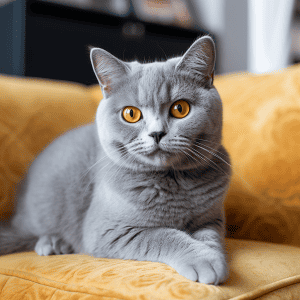 The British Shorthair is the cat that suits people who aren’t sure they’re “cat people.” They’re independent enough to be easy but present enough to be genuinely companionable. They’ll sit near you rather than on you, observe your life with quiet approval, and never once make a fuss about being left alone for a few hours.
For small spaces, shared living, or owners with busy schedules, the British Shorthair is one of the best calm indoor cat breeds available. They’re not climbers or vocalists — two things that matter a lot in apartment living — and their weekly grooming needs are about as low as it gets for a plush-coated breed.
Best for: Apartments, busy professionals, quieter households, first-time owners
Grooming: Low — weekly brushing
Energy: Low | Lifespan: 14–20 years
3. Persian — Best Indoor Cat for Calm, Quiet Homes
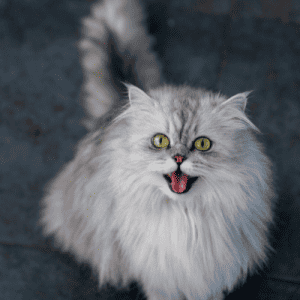 Persians are the ultimate house cats — not by training or preference, but by nature.
They have genuinely no interest in the outdoors and every interest in finding the warmest, softest spot in your home and settling into it indefinitely.
They’re quiet, gentle, and deeply sweet with the people they trust. The Cornell Feline Health Center notes that Persians are prone to brachycephalic airway issues and polycystic kidney disease (PKD)[4] — conditions worth discussing thoroughly with any breeder and your vet before committing.
The grooming reality: Daily brushing is non-negotiable with a Persian. Their long, fine coat mats quickly without it. If that’s not something you can commit to consistently, this isn’t the right breed for you — and a matted, uncomfortable Persian is an unhappy one.
Best for: Calm, quieter households; owners who genuinely enjoy grooming as part of the relationship
Grooming: High — daily brushing required
Energy: Very low | Lifespan: 10–17 years
4. Maine Coon — Best Indoor Cat for Families
 Maine Coons are large — sometimes startlingly so — but they carry their size with an easy, unhurried confidence that makes them wonderful family cats.
They’re playful, curious, and famously dog-like: fetching toys, following their owners from room to room, and greeting people at the door. The CFA recognizes them as one of the oldest natural breeds in North America[3], and their popularity has held steady for decades precisely because they’re so consistently good-natured.
They do best with space to move, which is worth factoring in if you’re in a smaller apartment. Given adequate vertical space — a solid cat tree, some accessible shelving — they adapt well even to compact homes.
Best for: Families with children, homes with other pets, active households
Grooming: Moderate — semi-long coat needs regular brushing
Energy: Moderate | Lifespan: 10–14 years
5. Russian Blue — Best Indoor Cat for Allergy-Sensitive Homes
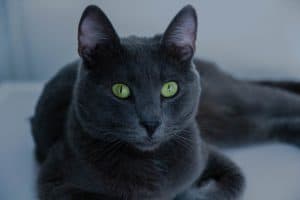 Quiet, loyal, and beautifully reserved — Russian Blues are exceptional indoor companions for people who appreciate a cat that chooses them deliberately rather than loving everyone indiscriminately. They’re often shy with strangers but deeply bonded with their own people, and once you’re in their inner circle, you’ll know it.
On the allergy question: Russian Blues may be better tolerated by some allergy-sensitive owners than other breeds. Some research suggests they produce lower levels of the Fel d 1 protein — the primary cat allergen — though individual responses vary significantly and no cat breed is truly hypoallergenic, as noted by VCA Animal Hospitals.[5] If allergies are a factor, spending time with the individual cat before committing is essential. (See our full guide to hypoallergenic cat breeds for allergy sufferers for a deeper breakdown.)
Best for: Apartments, quieter households, allergy-sensitive owners, people who want a loyal but independent cat
Grooming: Low — dense double coat needs minimal maintenance
Energy: Low to moderate | Lifespan: 15–20 years
6. Siamese — Best Indoor Cat for Interactive, Social Households
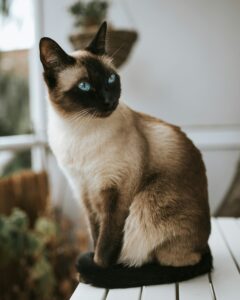 If you want a cat that’s genuinely interested in everything you do and not shy about telling you so, the Siamese is your breed. They’re vocal, curious, and deeply people-oriented — one of the most recognisable and oldest cat breeds in the world, with a history stretching back centuries in Southeast Asia.
The honest caveat: Siamese cats are not well-suited to households where they’ll spend long stretches alone. They need interaction, conversation, and engagement. Provide that, and they’re endlessly entertaining companions. Deprive them of it, and they become anxious and loud. Know which kind of household you’re running before you commit.
Best for: Active households, families, owners who work from home or are home frequently
Grooming: Very low — short, fine coat
Energy: High | Lifespan: 12–20 years
7. Ragamuffin — Best Indoor Cat for Cuddle-Seekers
 The Ragamuffin is one of the most underrated breeds on this list. They share the Ragdoll’s docile temperament and love of being held, but they retain kitten-like playfulness further into adulthood and tend to be slightly more robust physically.
They’re patient with children, accepting of other animals, and the kind of cat that will actively seek you out for company rather than waiting to be approached.
If you want a large, soft cat that genuinely enjoys being held and carried and shows up whenever you sit down, the Ragamuffin delivers that more consistently than almost any other breed. (Also worth reading: our guide to the most affectionate cat breeds for cuddling and companionship.)
Best for: Families, first-time owners, multi-pet households, lap-cat seekers
Grooming: Moderate — thick coat is surprisingly tangle-resistant
Energy: Low to moderate | Lifespan: 12–16 years
8. Scottish Fold — Best Indoor Cat for Apartments and Quieter Homes
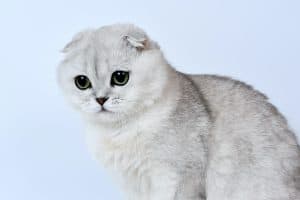 Those folded ears give the Scottish Fold an expression of permanent, benign curiosity that cat owners find completely irresistible — and their personality backs it up. They’re calm, adaptable, and quietly affectionate without being demanding.
An important health note the article wouldn’t be complete without: The genetic mutation that causes ear folding also affects cartilage throughout the body, and can lead to a painful progressive joint condition called osteochondrodysplasia.[1] The American Association of Feline Practitioners recommends discussing this with both your vet and any breeder before getting a Scottish Fold. Ethical breeders health-test carefully — ask directly about their breeding practices.
Best for: Apartments, first-time owners, quieter households
Grooming: Low to moderate depending on coat type
Energy: Low to moderate | Lifespan: 11–15 years
9. Burmese — Best Indoor Cat for Devoted, Interactive Owners
 Burmese cats are compact, muscular, and completely people-obsessed in the best possible way.
The CFA describes the Burmese as “dog-like” in their devotion — they follow their owners around the house, insert themselves into whatever’s happening, and genuinely struggle with extended time alone.
What you get in return is one of the warmest, most interactive relationships possible with a cat. They’re endlessly entertaining, deeply bonded, and have one of the longer average lifespans of any domestic breed. If you’re home a lot and want a cat that’s genuinely invested in you, few breeds match the Burmese.
Best for: Owners who are home frequently, families, multi-pet households
Grooming: Very low — short, glossy coat
Energy: Moderate to high | Lifespan: 16–18 years
10. Devon Rex — Best Indoor Cat for Active, Playful Households
 Devon Rex cats look like they’ve wandered in from a fairy tale — oversized ears, wavy coat, wide eyes, and an elfin face that’s impossible to ignore. Their personality matches: endlessly curious, playful, and inventive. They love climbing, so invest in a good cat tree from day one.
Their thin coat offers minimal protection from cold and environmental exposure, which makes indoor life genuinely important for their health and comfort — not just a preference. On the practical side, Devon Rex are one of the lower-shedding indoor cat breeds, which matters if you’re particular about your furniture.
Best for: Active households, playful owners, people who want an entertaining interactive cat
Grooming: Very low — wavy, minimal-shedding coat
Energy: High | Lifespan: 12–17 years
11. American Shorthair — Best All-Round Indoor Cat for Beginners
 The American Shorthair is the dependable all-rounder — adaptable, friendly, genuinely easy to live with, and unfussy about most things. They get along with children and other pets, adjust well to different schedules and routines, and don’t tend toward the anxious or clingy behaviours that make some breeds harder work.
They’re an excellent best indoor cat for first-time owners precisely because there aren’t many wrong moves here. Forgiving, affectionate, and long-lived — the American Shorthair is a genuinely undervalued choice.
Best for: First-time owners, families, busy households
Grooming: Low — weekly brushing keeps shedding manageable
Energy: Moderate | Lifespan: 15–20 years
12. Exotic Shorthair — Best Low-Maintenance Persian Alternative
 Think of the Exotic Shorthair as the Persian with a practical haircut. Same round face, same large eyes, same gentle and calm temperament — but a much shorter, far easier-to-manage coat. They’re sweet, quiet, and content to spend most of their day in the company of their favourite person.
Like Persians, Exotic Shorthairs can be prone to breathing issues due to their flat facial structure — worth factoring into vet care from the start. But for owners who love the Persian aesthetic without the daily grooming commitment, the Exotic Shorthair is genuinely the best low-maintenance indoor cat alternative.
Best for: Apartments, calm households, owners who love the Persian look but not the grooming
Grooming: Low to moderate — weekly brushing
Energy: Low | Lifespan: 12–16 years
13. Himalayan — Best Indoor Cat for Serene, Unhurried Homes
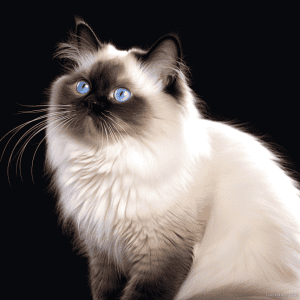 The Himalayan brings together the Persian’s calm temperament and the Siamese’s striking colour-pointed coat and blue eyes — a genuinely beautiful combination that suits unhurried, quieter households exceptionally well. They’re devoted, gentle, and content as pure house cats.
Like the Persian, daily grooming is part of the deal. The Himalayan’s long, fine coat mats quickly without consistent attention, and they’re also prone to the brachycephalic health issues common in flat-faced breeds.[4] The Cornell Feline Health Center recommends regular vet monitoring for respiratory and kidney health in this breed.
Best for: Quieter households, experienced cat owners, people with time for grooming
Grooming: High — daily brushing required
Energy: Low | Lifespan: 9–15 years
14. Birman — Best Indoor Cat for Families and Multi-Pet Homes
 The Birman is genuinely one of the most underrated best indoor cat breeds for families — sweet-natured, sociable, and remarkably easy to live with. They’re affectionate without being demanding, playful without being exhausting, and their silky semi-long coat is surprisingly resistant to tangling compared to other long-haired breeds.
They’re accepting of children, other cats, and even dogs — the kind of cat that adapts to whatever household dynamic they’re placed in and makes the best of it. If you want an indoor cat for kids that won’t become stressed or aggressive in a busy home, the Birman belongs at the top of your list.
Best for: Families with children, multi-pet households, first-time owners
Grooming: Moderate — weekly brushing
Energy: Moderate | Lifespan: 12–16 years
15. Sphynx — Best Indoor Cat for Devoted, Hands-On Owners
 The Sphynx isn’t just an indoor cat by preference — it’s an indoor cat by necessity. Without fur for insulation or protection, they’re genuinely vulnerable to cold temperatures, sunburn, and skin irritation outdoors. VCA Animal Hospitals notes that indoor living is important for their health and safety, not just comfort.[5]
What you get in return is one of the most affectionate, physically warm, and people-focused cats in existence. Sphynx seek out body heat constantly, burrow under blankets, and form intense bonds with their owners. They’re often described as part cat, part dog, part small child — energetic, curious, and always in the middle of whatever you’re doing.
The care commitment: They need regular baths to manage skin oil build-up. Most Sphynx owners find their cats take to bathing remarkably well when introduced early.
Best for: Devoted owners, active households, those who want maximum feline personality
Grooming: Moderate — regular baths in place of brushing
Energy: High | Lifespan: 8–14 years
16. Cornish Rex — Best Low-Shedding Indoor Cat for Small Spaces
 The Cornish Rex is all movement and curiosity — always leaping, exploring, and finding their way into places you hadn’t anticipated. Their coat, made up of only the soft undercoat layer, sheds minimally compared to most breeds, which is a genuine practical advantage for indoor living.
They’re not a match for owners looking for calm and quiet. But if you want a cat that stays playful and active well into adulthood and keeps life interesting, the Cornish Rex is one of the best options for small spaces with active owners.
Best for: Active owners who want a low-shedding cat, playful households
Grooming: Very low — short, wavy coat
Energy: High | Lifespan: 11–15 years
17. Manx — Best Indoor Cat for Families Who Want a Dog-Like Cat
 The Manx is best known for its short tail or complete lack of one — a natural genetic trait that gives them a distinctly rounded, compact appearance. What’s less talked about is how genuinely loyal and people-oriented they are. They fetch, follow their owners, and form tight bonds with their families in a way that reads as more canine than feline.
They’re strong jumpers despite their compact build — vertical enrichment matters. A good cat tree and accessible high points will keep a Manx content and out of trouble. They’re patient with children and generally accepting of other pets, making them a solid indoor cat for kids and family homes.
Best for: Families, homes with other pets, owners who want a dog-like cat
Grooming: Low to moderate — available in both short and long-haired versions
Energy: Moderate | Lifespan: 12–15 years
18. Oriental — Best Indoor Cat for Highly Interactive Households
 The Oriental is essentially the Siamese with a wider range of coat colours and patterns — same slender body, same large ears, same intensely vocal and people-focused personality. They’re curious, opinionated, and absolutely convinced that whatever you’re doing would benefit from their direct involvement.
Orientals are among the best interactive indoor cats for owners who genuinely want a communicative companion. But like the Siamese, they don’t handle solitude well. Extended alone time leads to anxiety and vocal protests. They do best in homes where someone is around for most of the day or where they have a feline companion.
Best for: Active, social households; owners who work from home
Grooming: Very low
Energy: High | Lifespan: 12–15 years
19. Tonkinese — Best Indoor Cat for Social, Multi-Cat Homes
 The Tonkinese is the Burmese-Siamese cross — and it shows in the best way. They’ve inherited the Burmese’s warmth and the Siamese’s intelligence and sociability, landing somewhere in between as a playful, moderately chatty cat that genuinely thrives on company.
They adapt well to apartment living but do best when they’re not the only animal in the house. Two Tonkinese together is one of the more entertaining domestic cat arrangements possible — they’re endlessly engaged with each other and equally glad to include their owners.
Best for: Multi-cat homes, active households, social owners
Grooming: Low — short, soft coat
Energy: Moderate to high | Lifespan: 12–16 years
20. Turkish Van — Best Indoor Cat for Experienced, Active Owners
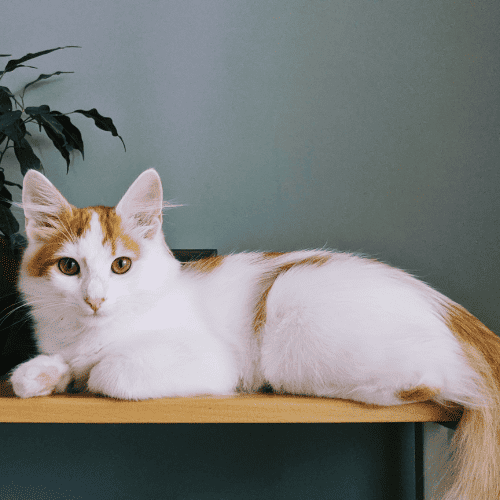 The Turkish Van is the wildcard on this list — athletic, independent, and famously fascinated by water. They’re beautiful cats, recognised by the CFA for their distinctive “Van pattern” — a largely white coat with colour restricted to the head and tail — not a colour-point pattern.
They’re better suited to larger homes than small apartments and need owners who are genuinely engaged and willing to provide real physical and mental stimulation. Get that right and the Turkish Van is a loyal, energetic companion that keeps domestic life genuinely interesting.
Best for: Larger homes, experienced cat owners, active households
Grooming: Moderate — semi-long coat is naturally tangle-resistant
Energy: High | Lifespan: 12–17 years