;

Cat Breeds That Can Be Trained: 15 Smart Cats That Respond to Training

Cat breeds that can be trained

Quick Answer: Which Cat Breeds Can Be Trained?
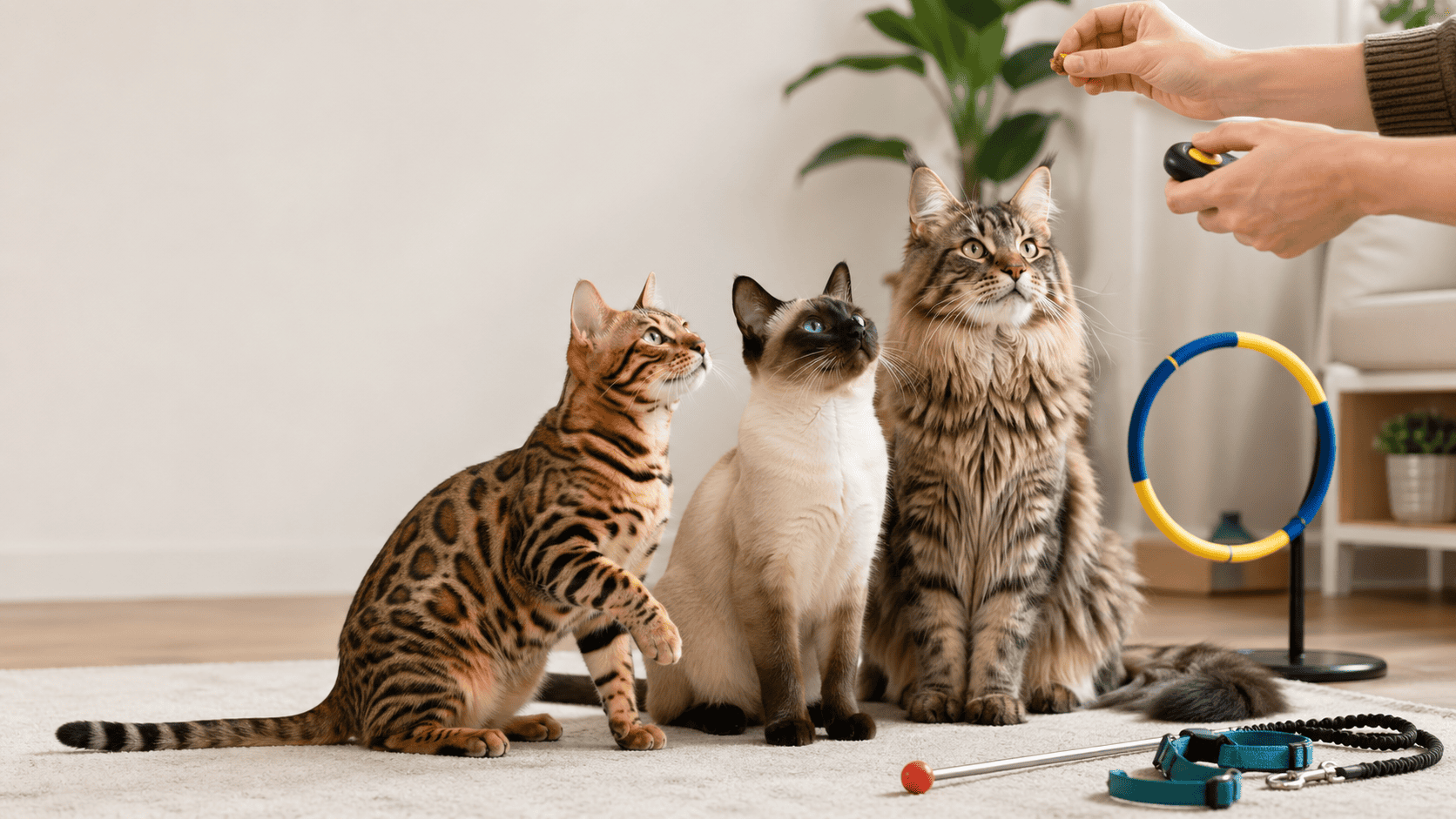
The most trainable cat breeds are usually curious, social, food-motivated, and strongly bonded to their humans. Abyssinians, Bengals, Siamese, Burmese, Maine Coons, Cornish Rex, Devon Rex, Somali, Japanese Bobtails, Turkish Angoras, Savannahs, Ocicats, American Shorthairs, Pixiebobs, and Norwegian Forest Cats are among the easiest cat breeds to train.Each one is different in personality and energy level, but all share the core traits that make positive reinforcement cat training work: they engage with their humans, they notice cause and effect, and they’re willing to work for something they want.That said, trainability is not the same as easy to own. Some of the smartest cats on this list — the Bengal, Savannah, and Abyssinian especially — are demanding animals that need daily mental stimulation to stay settled. The right breed depends as much on your lifestyle as on how quickly a cat learns.

Cats have a reputation for doing whatever they want — and honestly, that’s not entirely unfair. But there’s a big difference between a cat that ignores you because it can’t understand what you’re asking, and one that ignores you because it’s decided your request isn’t worth its time. Most trainable cats fall firmly into that second category. They understand perfectly. They’re just weighing up the offer.

The truth is, cats that can be trained are everywhere. You don’t need a dog for clicker sessions, fetch games, or walking on a leash. What you do need is the right breed — one that’s curious enough to engage, social enough to want to interact, and smart enough to make the connection between behaviour and reward. Get that combination right, and training becomes less of a chore and more of a conversation.

This guide covers 15 of the most trainable cat breeds, what makes each one tick, and how to actually get results with them. Whether you’re starting from scratch with a new kitten or wondering if your adult cat has untapped potential, there’s something here for you.

The short answer: the easiest cat breeds to train tend to be curious, social, food-motivated, and bonded to their humans. Breeds like the Abyssinian, Bengal, Siamese, Burmese, and Maine Coon consistently top the list — but as you’ll see, trainability looks different in each one.

Table of Contents

Can All Cats Be Trained, or Does Breed Really Matter?

Strictly speaking, most cats can be trained to some degree. If a cat is food-motivated and reasonably social, the basic mechanics of positive reinforcement will work. What breed affects is not whether training is possible, but how smoothly and how far it goes.

High-trainability breeds share a cluster of traits — curiosity, social orientation, food drive, and physical energy — that make them more receptive to structured training and more capable of learning complex behaviours. A Norwegian Forest Cat can learn to come when called; a Bengal can learn to fetch, walk on a leash, and perform multi-step trick sequences. Both are trainable. The effort and results look very different.

Breed also affects what motivates a given cat, how long it stays focused, and how it responds to inconsistency. Understanding those differences is what separates a frustrating experience from a rewarding one. The 15 breeds below represent the strongest end of the trainability spectrum — the cats that make the most of what positive reinforcement has to offer. [1][2]

What Makes a Cat Trainable?

Before we get into the breeds, it’s worth spending a moment on why some cats take to training so readily while others seem constitutionally opposed to the idea. It comes down to a handful of traits that tend to cluster together in certain breeds.

Intelligence alone isn’t enough. Some of the cleverest cats are also the most stubborn — they know exactly what you want, and they’ve already decided they’d rather not. What actually predicts trainability is a combination of curiosity (the drive to investigate and engage), social orientation (a genuine interest in their humans), and food motivation (the willingness to work for a reward). Cats that tick all three boxes are the ones who make training feel effortless.

Physical energy matters too. High-energy, active cat breeds have restless minds that genuinely need an outlet. For these cats, training isn’t a trick you’re imposing on them — it’s enrichment. Mental stimulation for cats like the Abyssinian or Bengal isn’t optional; it’s a daily necessity. Training sessions scratch that itch in a way that sleeping in a sunbeam simply can’t.

Finally, adaptability plays a role. Cats that handle new experiences with relative calm are often easier to train than cats that shut down around anything unfamiliar. In one study, more socialized cats were more likely to approach and solve a problem-solving task, which makes sense: the confident, curious cat that inspects something new usually gives you more to work with than the one hiding under the bed. [3]

Best Trainable Cat Breeds at a Glance

Here’s a quick overview of how the 15 breeds compare across the factors that matter most for training.

Breed Best For Training Difficulty Energy Level Good for First-Timers?
Abyssinian Tricks, agility, puzzle work Moderate Very High No
Bengal Leash, fetch, complex tricks Moderate–Hard Very High No
Siamese Voice commands, tricks Moderate Moderate–High Yes
Burmese First-timers, bonding Easier Moderate Yes
Maine Coon Families, leash training Easier Moderate Yes
Cornish Rex Tricks, speed learning Moderate High Yes
Devon Rex Tricks, athletics Moderate High Yes
Somali Agility, fetch Moderate High No
Japanese Bobtail Tricks, fetch, play Moderate Moderate–High Yes
Turkish Angora Play-based training Moderate–Hard Moderate–High No
Savannah Leash, complex commands Hard Very High No
Ocicat Commands, leash, fetch Moderate High Yes
American Shorthair Everyday training Easier Moderate Yes
Pixiebob Fetch, leash, bonding Easier Moderate Yes
Norwegian Forest Cat Patient, long-game training Hard Moderate No

15 Cat Breeds That Can Be Trained

1. Abyssinian

Abyssinian cat

If you want a cat that’s genuinely eager to learn, start here. The Abyssinian is widely considered one of the smartest cat breeds in existence, and more importantly, it’s one of the few breeds that seems to actually enjoy the process of figuring things out. These are active cat breeds in the truest sense — they don’t sit still, they investigate everything, and they get bored with embarrassing speed if you don’t give them something to do. [4]

Abyssinian cat training comes naturally because the breed is wired for engagement. They watch, they process, they try things. Clicker training cats of this breed tends to go quickly — they connect the click to the reward within just a few sessions, and from there they build on each new skill with genuine enthusiasm. Many Abyssinians can learn fetch, high-five, sit, come when called, and even basic agility sequences.

The catch? An unstimulated Abyssinian is a chaos machine. These are cats that need mental stimulation daily — not occasionally, daily. Cat puzzle toys, training sessions, and interactive play aren’t nice extras for this breed; they’re basic maintenance. If you can commit to that, you’ll have one of the most rewarding cats you’ve ever owned. 

Training tips

  • Keep sessions short and varied — 5 to 10 minutes, then stop. Abyssinians lose interest in repetition fast.
  • Start with fetch using a lightweight toy. Their natural retrieve instinct makes this an ideal first trick.
  • Rotate cat puzzle toys weekly so novelty stays high.
  • Lean on clicker training — the precise timing of the click suits their quick processing speed perfectly.

2. Bengal

Bengal cat

Bengals are probably the breed most people think of when they imagine a cat that can be trained like a dog. That reputation is earned. Bengal cat training is genuinely impressive — these cats can learn to fetch, walk on a leash, open doors, turn taps on (unfortunately), and perform tricks with a speed and willingness that feels almost canine. They are also among the most athletic and physically capable of all domestic breeds, which means the range of things they can be trained to do is genuinely spectacular.

What drives this is a combination of exceptional intelligence, high energy, and a powerful bond with their chosen humans. Bengals are not independent cats — they want to be involved in everything you do, and training is just another version of that involvement. They’re curious cat breeds in the extreme, and that curiosity translates directly into fast learning. [5]

But here’s the honest part: Bengals are not beginner cats. Their intelligence means they get bored easily and find destructive outlets if under-stimulated. Cat breeds that act like dogs often come with the same demands as dogs. If you have the time and energy to match a Bengal’s pace, the training relationship you’ll build is extraordinary. If your lifestyle is quieter, a calmer breed on this list might be a better fit. 

Training tips

  • Leash training is a natural fit — start with harness desensitisation early, ideally as a kitten.
  • Introduce fetch with a small ball or crinkle toy. Many Bengals pick this up within a few weeks of consistent practice.
  • Use clicker training for complex trick sequences — they handle multi-step behaviours unusually well.
  • Interactive cat toys that move unpredictably keep their hunting instinct engaged between sessions.

3. Siamese

Siamese Cat with blue eyes

The Siamese is one of the oldest and most recognisable cat breeds in the world, and it has been charming — and occasionally haranguing — its humans for centuries. Siamese cat training works particularly well because this breed is fundamentally communicative. They talk constantly, they pay close attention to what you’re doing, and they have strong opinions about routines. That last trait is more useful than it sounds: a cat that notices deviations from routine is also a cat that notices patterns, which is the core of all training. [6]

Siamese cats are highly social and people-focused. They don’t like being ignored, and training is one of the best ways to give them the sustained attention they crave. They tend to respond well to voice commands — more so than many other breeds — which makes them ideal for teaching verbal cues alongside physical ones.

One thing to know: Siamese cats are emotionally sensitive. They don’t respond well to frustration or raised voices during training. Keep sessions positive, end on a success, and you’ll have a cat that genuinely looks forward to the next session. [→ Full Siamese cat breed profile]

Training tips

  • Use a clear, consistent verbal cue for every command — Siamese cats tend to pick up on voice tone faster than many breeds.
  • Short, routine-based sessions work best. Same time, same place, same sequence builds confidence.
  • Never end a session on a failure. If they’re struggling, simplify the task so you can finish with a reward.
  • Puzzle feeders work well as enrichment between training sessions — they keep the mind engaged without needing you present.

4. Burmese

Burmese cat

The Burmese is the breed that serious cat trainers often cite first, and it’s consistently underrated in mainstream lists. What makes Burmese cat training so effective is a quality that’s genuinely rare in cats: they are highly people-oriented in a way that makes them exceptionally responsive to reward-based training. Not in a needy way, but in a deeply social way — Burmese cats are oriented toward their humans to an unusual degree.

These are affectionate, trainable cat breeds that combine intelligence with a people-focused temperament that’s almost unique in the feline world. They follow their owners from room to room, involve themselves in household activities, and form bonds that feel genuinely collaborative. When you ask a Burmese to do something, they’re already halfway there because they were paying attention. [7]

For first-time owners who want a trainable cat without the intensity of a Bengal or Abyssinian, the Burmese is often the best answer. They’re calmer, more manageable, and just as teachable. 

Training tips

  • Start training young — Burmese kittens are sponges and form habits quickly.
  • Use high-value treats for early sessions, then gradually introduce verbal praise as a primary reward as the bond deepens.
  • Teach come when called early. Burmese cats tend to be naturals at this and it’s a genuinely useful skill.
  • Their social nature means they enjoy training as bonding time — don’t rush through sessions.

5. Maine Coon

Maine Coon

Maine Coons are the gentle giants of the cat world, and their trainability often surprises people who expect big cats to be slow learners. In fact, Maine Coon training is usually smooth, partly because these cats tend to be highly food-motivated and partly because they have a calm, steady temperament that makes them patient in a way that more high-strung breeds simply aren’t. [8]

Maine Coons are social cat breeds that enjoy involvement in family life without being demanding about it. They’re often described as dog-like — they tend to follow their owners around, greet people at the door, and engage in play willingly. That social orientation makes training feel natural to them. They’re also large enough and confident enough to handle new experiences without excessive anxiety, which helps enormously when introducing novel training scenarios.

Maine Coon training is particularly well-suited to leash training. Their size, confidence, and love of outdoor stimulation make them some of the best cats for harness walks. Fetch is another strong suit. As one of the best trainable cats for families, especially those with children, the Maine Coon is hard to beat. [→ Full Maine Coon cat breed profile]

Training tips

  • Food motivation is your friend — use high-value treats like small pieces of cooked chicken for new behaviours.
  • Leash training is a natural fit. Start indoors with the harness before introducing outdoor walks.
  • Maine Coons handle group training well — involve children or other family members in sessions.
  • Their patience means they can sustain slightly longer sessions than most breeds — 10 to 15 minutes works well.

6. Cornish Rex

Cornish Rex 

The Cornish Rex might look delicate with its curly coat and large ears, but this is one of the most playful and trick-friendly cats you’ll find. Cornish Rex cats are perpetually kitten-like — they never quite grow out of the manic energy and enthusiasm of early kittenhood, which makes them wonderful for training because they approach every session as a game rather than a test.

They are intensely people-focused and crave interaction, which gives you natural leverage for positive reinforcement cat training. A Cornish Rex that’s engaged is fully engaged — watching you, anticipating the next cue, practically vibrating with readiness. Among cat breeds that learn tricks quickly, the Cornish Rex is consistently near the top, with a particular talent for high-fives, spin, and sit.

They also do well with clicker training — the clear, precise feedback of the clicker suits their quick, reactive nature. The one thing to watch: like many highly active cat breeds, they need their training energy channelled, not just stimulated. Give them structure alongside enthusiasm. 

Training tips

  • Short, frequent sessions suit them best — they’re enthusiastic but scattered.
  • Start with high-five or paw touch. Their natural front-paw activity makes this an easy first win.
  • Vary the tricks you practise to keep novelty high — they plateau quickly on repetitive routines.

Warmth matters: Cornish Rex cats feel the cold, so training in a warm room keeps them comfortable and focused

7. Devon Rex
Devon Rex

The Devon Rex and the Cornish Rex share a curly coat but are actually distinct breeds with subtly different personalities. Where the Cornish Rex is exuberant, the Devon Rex is mischievous — there’s a pixie-like quality to these cats that makes them endlessly entertaining and surprisingly clever training partners.

Devon Rex cats are people magnets. They perch on shoulders, follow their owners everywhere, and have a level of social engagement that makes them exceptionally receptive to reward-based training. They want your attention so much that the act of training — regardless of what’s being trained — is itself rewarding to them. That’s a rare quality. Clicker training cats of this breed tends to be quick and fun because their attention is already trained on you.

Devon Rex cats tend to excel at tricks that involve their natural athleticism — jumps, spins, and sequences. They’re also small and light enough that more physical tricks are safe to teach. If you want a cat that will make your friends do a double-take, the Devon Rex is an excellent choice. 

Training tips

  • Start training the moment your Devon Rex settles in — they bond fast and training deepens that bond immediately.
  • Use their shoulder-perching habit as a foundation for an ‘up’ command.
  • Alternate between tricks and play within sessions — they engage more fully when training feels like a game.
  • Don’t underestimate the power of verbal praise for this breed. They respond to your voice as much as to treats.

8. Somali
Somali cat

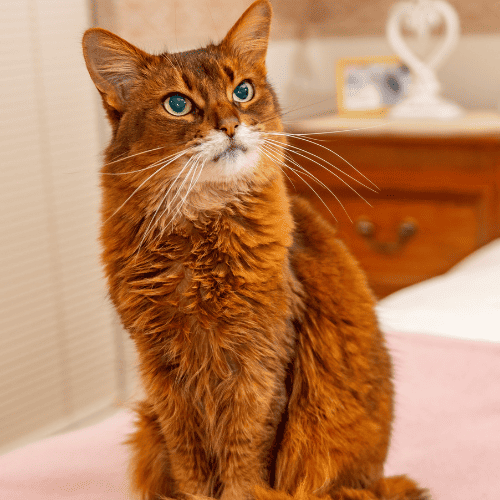
The Somali is essentially the long-haired version of the Abyssinian, and it inherits much of that breed’s extraordinary intelligence and curiosity. What sets the Somali apart is a slightly more balanced energy level — still active, still highly curious, but with a touch more patience that makes training sessions flow a little more smoothly.

Somali cat training benefits from this breed’s exceptional physical agility. These are lithe, athletic cats that love to climb, jump, and move — which means agility-style training, fetch, and leash walking are all realistic goals. They’re also highly interactive, watching their owners carefully and engaging with whatever is happening in their environment.

Somalis are less commonly discussed in trainable cat breed lists than Abyssinians, but they arguably deserve to be higher. If you want the intelligence and trainability of an Abyssinian with a coat you can actually sink your fingers into, the Somali is worth serious consideration. 

Training tips

  • Agility training suits them beautifully — teach them to jump through a hoop or navigate a simple obstacle course.
  • Use interactive toys to warm them up before training sessions. An engaged Somali is a focused Somali.
  • Fetch comes naturally to many Somalis. Start with a lightweight toy and short distances.
  • Mix physical and mental challenges in the same session — a puzzle feeder followed by a trick sequence works well.

9. Japanese Bobtail
Japanese Bobtail

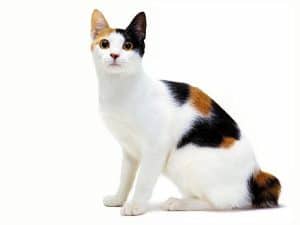
The Japanese Bobtail is a breed with a rich cultural history — it’s been associated with good luck in Japan for centuries, and the famous maneki-neko (the waving cat figurine) is thought to be modelled on this breed. Whether or not luck is involved, these cats are genuinely exceptional training partners.

Japanese Bobtail training is effective because this breed combines high social engagement with reliable food motivation and genuine enthusiasm for play. They’re energetic, responsive, and enjoy interaction — the three traits that matter most for training. They tend to pick up commands quickly and maintain focus well, which makes them ideal for owners who want to work through a proper trick repertoire.

They also have a tendency to chirp and trill in communication, which makes them feel like active participants in the training process rather than subjects of it. There’s a conversational quality to working with a Japanese Bobtail that makes the whole experience genuinely enjoyable. 

Training tips

  • Their chirping means they respond well to voice — use clear, enthusiastic verbal cues.
  • Fetch is a natural starting point. Many Japanese Bobtails are playful enough to enjoy retrieve-style games.
  • Keep the energy high during sessions — they match your enthusiasm, so bring it.
  • Socialise early and often. Their sociability with people extends to training in new environments, which is useful.

10. Turkish Angora
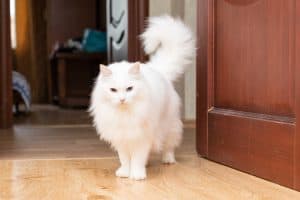
Turkish Angora cat

The Turkish Angora is one of the oldest natural cat breeds in the world, originating in Turkey and prized for centuries for its silky coat and athletic build. What’s less often discussed is how clever these cats are, and how well that intelligence translates to training.

Turkish Angora training requires a particular approach: this breed is independent and won’t be pushed. They respond brilliantly to training when it’s framed as a game or a mutual activity, and they switch off entirely if they feel coerced. Get the relationship right, and you have a highly capable training partner. Miss that step, and you’ll spend your sessions staring at a cat staring at the wall.

They’re particularly drawn to water — a trait that’s useful for introducing novel training environments — and they’re natural athletes who love to run, jump, and climb. Leash training works well with motivated Turkish Angoras. So does fetch, especially if you start young. 

Training tips

  • Frame every training session as play, not instruction. This breed trains best when it thinks it’s having fun.
  • Their independence means short sessions with an abrupt, positive end work better than longer ones.
  • Try water-based games — many Turkish Angoras will play fetch into a shallow tray of water.
  • If they walk away mid-session, let them. Coming back to a willing cat beats pushing an unwilling one every time.

11. Savannah

Savannah cat

The Savannah is not a cat for everyone — and that’s worth saying clearly. As a hybrid breed with serval ancestry, Savannah cats are highly active, highly intelligent, and highly demanding. They need more space, more stimulation, and more daily engagement than almost any other breed on this list. But in the right home, Savannah cat training produces genuinely astonishing results.

These are cats that can learn to walk on a leash, play fetch reliably, follow their owners through the house like a shadow, and perform complex trick sequences with impressive speed. Their intelligence is exceptional, and their energy level means they genuinely need the kind of outlet that proper training provides.

If your lifestyle is active, you have space, and you’re genuinely excited by the idea of a cat that challenges you as much as you challenge it — a Savannah might be the most rewarding training partner on this list. If any part of that description gave you pause, consider a Burmese or Maine Coon instead. [9]

⚠️ Important note: Savannah cats — particularly early-generation (F1–F3) cats — are subject to ownership restrictions or outright bans in many countries, states, and local jurisdictions. Before considering a Savannah, check the regulations in your specific area. 

Training tips

  • Start leash training early — Savannahs that are harness-trained young tend to become confident outdoor walkers.
  • High-intensity play before training sessions channels excess energy and improves focus.
  • Complex trick sequences suit them — they need the challenge of multi-step behaviours.
  • Enrichment must be consistent. A bored Savannah finds its own entertainment, and you won’t enjoy it.

12. Ocicat
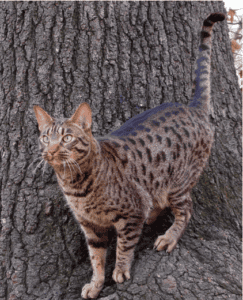
Ocicat

The Ocicat was developed to look wild but behave like a domestic cat, and on both counts it succeeds spectacularly. These cats have the spotted coat of a wild cat and the people-oriented, social personality of a Burmese — which is no coincidence, since Burmese is part of their breeding history.

Ocicat training benefits from this breed’s dog-like tendencies. They come when called, follow their owners around, engage willingly with strangers, and have an enthusiasm for interactive play that makes training feel natural rather than imposed. Cat breeds that act like dogs don’t get more convincing than the Ocicat.

They also respond well to fetch, leash training, and voice commands — and they tend to remain engaged for longer sessions than many breeds. If you want a visually striking cat that performs, the Ocicat is a seriously underrated choice. 

Training tips

  • Teach ‘come’ first — Ocicats tend to take to it quickly, and it’s the foundation for more complex commands.
  • Their dog-like sociability means training in front of other people or with other household members present works fine.
  • Use play as both a warm-up and a reward — they enjoy the toy as much as the treat.
  • Leash training is a realistic goal. Start with a well-fitted harness at 8 to 10 weeks.

13. American Shorthair
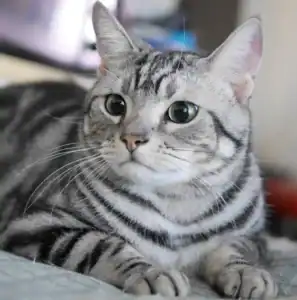
American Shorthair

The American Shorthair is the steady, reliable, underappreciated workhorse of trainable cat breeds. It’s not flashy. It’s not going to perform circus tricks in week one. But it is consistently trainable, patient, and adaptable — qualities that matter enormously for owners who are newer to cat training or prefer a calmer pace.

American Shorthair training works well because this breed is naturally calm, food-motivated, and comfortable in a wide range of environments. They don’t rattle easily, which means training doesn’t have to happen in a perfectly controlled space with no distractions — you can work with them in the living room while life happens around you.

They’re one of the best trainable cats for first-time owners precisely because they’re forgiving. Imperfect timing, slightly inconsistent sessions, the occasional mistake — the American Shorthair rolls with it and keeps showing up. As one of the best cats for training as a long-term, sustainable practice rather than an intensive project, this breed deserves more credit than it typically gets. 

Training tips

  • Consistency matters more than intensity with this breed — regular short sessions beat sporadic long ones.
  • Leash training is achievable with patience. Some American Shorthair owners do walk their cats successfully with consistent effort.
  • Use food motivation strategically. Train before meals, not after, when they’re most motivated.
  • Start with sit and come. Both tend to click well with this breed and build a solid foundation for further training.

14. Pixiebob
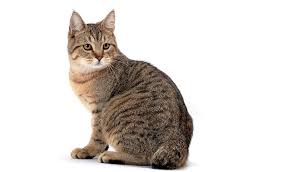
Pixiebob

The Pixiebob is a domestic breed with a deliberately wild appearance — it looks like a miniature bobcat and behaves, according to most of its owners, more like a dog than a cat. Pixiebob training is often described as surprisingly easy by owners who weren’t expecting it, because these cats bring a natural loyalty and social engagement that makes the training relationship feel genuinely collaborative.

They follow their owners, participate in family activities, learn their names quickly, and often take to fetch without much formal training at all — they just start doing it. Clicker training cat breeds like the Pixiebob is effective because their food motivation is reliable and their attention span is longer than average.

If you want a cat that’s trainable, characterful, and genuinely distinctive-looking, the Pixiebob is a hidden gem on most lists.

Training tips

  • Capitalise on their natural fetch instinct. Don’t formally train it — just roll a toy and see what happens first.
  • Leash training suits the breed well. Their dog-like nature means many Pixiebobs take to harness walks naturally.
  • Use companion-based training — involve them in daily activities and let training emerge from that involvement.
  • Their longer attention span means you can push sessions to 10 to 12 minutes without losing focus.

15. Norwegian Forest Cat
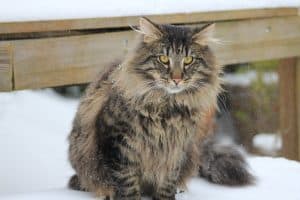
Norwegian Forest Cat

The Norwegian Forest Cat rounds out this list as the most independent of the 15 — and that independence is worth acknowledging honestly. These are not cats that are going to sprint over at the sound of a clicker. They’re thoughtful, self-contained animals that make decisions on their own schedule.

But they’re also intelligent, observant, and capable of forming genuinely strong bonds with the people they trust. Norwegian Forest Cat training works best when you play the long game — building relationship first, introducing training gradually, and letting the cat set the pace. Owners who try to rush this process run into walls. Owners who respect it often end up with a surprisingly responsive training partner.

Think of training a Norwegian Forest Cat less like teaching and more like negotiating. You’re not telling it what to do — you’re making the case that this particular activity is worth its while. Get that relationship right, and you’ll have a loyal, capable, and occasionally astonishing companion. 

Training tips

  • Build trust before training. Spend time just being present with the cat before introducing formal sessions.
  • Height-based training works well — use a cat tree or wall shelves as the training environment.
  • Patience and brevity are everything. Two minutes of willing engagement beats ten minutes of reluctance.
  • Never end a session on pressure. If they disengage, let them — try again tomorrow.

Smart Doesn’t Always Mean Easy

It would be dishonest to write an article about intelligent cat breeds without saying this clearly: the smartest cats on this list are also the most demanding. The Bengal, the Savannah, the Abyssinian — these are exceptional training partners precisely because their minds never stop. That’s also what makes them exhausting if you’re not ready for it.

A bored Bengal doesn’t just sit there being bored. It opens cabinets, turns on taps, harasses the dog, and finds creative ways to communicate its dissatisfaction at 3am. An under-stimulated Abyssinian will redecorate your home in ways you didn’t ask for. The Savannah needs more space and activity than most people’s lives can comfortably accommodate.

This isn’t a reason to avoid these breeds — it’s a reason to choose them intentionally. If your lifestyle is active, if you work from home or have a household that’s busy and engaging, if you’re genuinely excited about the idea of an interactive, demanding cat, then one of the high-intelligence breeds will give you a relationship unlike anything else. But if you’re looking for a trainable cat that will also be reasonably easy to live with, the Burmese, American Shorthair, or Maine Coon will serve you significantly better.

What Can You Actually Train a Cat to Do?

More than most people think. Here’s a realistic list of behaviours that motivated cats of the breeds above can genuinely learn:

  • Come when called — one of the most useful and achievable behaviours for almost any cat
  • Sit — a natural starting point, especially for food-motivated cats
  • High-five — front-paw contact is easy to shape with a clicker
  • Fetch — more common than you’d expect, particularly in Bengals, Ocicats, Japanese Bobtails, and Maine Coons
  • Walk on a leash — achievable with patience in most social, confident breeds
  • Use a carrier calmly — one of the most practical things you can teach a cat
  • Follow routines — cats that learn feeding schedules, sleep cues, and household patterns are far easier to live with
  • Scratch in designated spots — redirectable behaviour that saves furniture and avoids conflict

What cats generally won’t do, regardless of training: obey commands they find pointless, perform reliably when they’re stressed or overstimulated, or work for rewards they don’t value. The most effective cat training always starts by understanding what motivates the individual cat — not what the training manual says should motivate it.

How to Train a Cat: The Basics That Actually Work

You don’t need a complicated system. You need a few consistent principles applied patiently over time.

  • Start with clicker training. The clicker creates a precise marker that tells your cat exactly which behaviour earned the reward. It works because the timing is consistent in a way that your voice alone can’t always be. Click the moment the behaviour happens, then immediately follow with a treat.
  • Use the right reward. Find what your cat will actually work for. Most cats are food-motivated, but not all will work for the same treat. Small pieces of cooked chicken, tuna, or purpose-made training treats tend to work well. If your cat is indifferent to food, try a favourite toy as the reward instead.
  • Keep sessions short. Five to ten minutes is plenty for most cats. End before they lose interest, not after. A cat that ends a session still engaged will come back keen. A cat that ends a session bored or frustrated may start avoiding sessions entirely.
  • Build one behaviour at a time. Introduce a new command only when the previous one is reliable. Trying to teach several things at once creates confusion and slows everything down.
  • Be consistent with cues. Use the same word and the same hand signal for every behaviour, every time. If multiple people are involved in training, everyone needs to use the same language.
  • Never punish. Punishment doesn’t work in cat training — it creates anxiety, damages the relationship, and teaches the cat nothing useful. If a session isn’t working, stop it, wait, and try again later. Positive reinforcement cat training is not just a preference; it’s the only approach that reliably produces results with cats. [12]

Essential Tools for Successful Cat Training

The right tools do not replace good technique, but they make good technique easier to execute consistently. These are the six items worth having before you start any serious training programme with your cat.

1. Clicker

The clicker is the single most useful training tool you can own. It solves the biggest challenge in cat training: timing. The click is fast, precise, and completely consistent in a way that your voice simply cannot be. The moment your cat performs the behaviour you want, you click — and your cat gets an unambiguous signal that what it just did is exactly right. Treats and praise follow, but the click does the communicating.

The Cat School Clicker Training Kit is one of the most practical starter options available — it includes a clicker, a target stick, and a step-by-step instruction booklet, which covers everything a first-time trainer needs in one purchase.

2. Target Stick

A target stick gives you a way to guide your cat physically without touching it. You present the tip of the stick, your cat sniffs or touches it out of curiosity, and you reward that contact. Over time your cat learns to follow the stick, which means you can guide it into positions, direct it through an agility course, or calmly lead it into a carrier — all without pushing or lifting. It is an underrated tool that experienced trainers rely on heavily.

The Cat School Clicker Training Kit mentioned above includes a target stick alongside the clicker, making it a natural starting point if you are new to both tools.

3. Training Treats

Treats are the currency of cat training, and the quality of that currency determines how hard your cat is willing to work. Standard dry kibble will not cut it for most cats in a training context — you need something genuinely high-value. Small pieces of cooked chicken, flaked tuna, or purpose-made training treats tend to get results where ordinary treats fall flat.

Keep training treats small — pea-sized or smaller — so your cat stays motivated throughout a session without filling up quickly. Train before meals rather than after, when food motivation is naturally at its highest.

4. Interactive Toys

Interactive toys serve a dual purpose in a training programme: they warm your cat up before a session by activating its hunting instincts, and they provide a non-food reward option for cats that are more play-motivated than treat-motivated. A cat that has just had five minutes of focused play is a cat that is alert, engaged, and ready to work.

Two options that consistently get good results with active breeds: a fluttering butterfly combo set (butterfly, ambush feather, and track balls in one) that mimics unpredictable prey movement, and a collapsible three-way cat tunnel with a peephole and ball toy for cats that love to stalk and ambush. Both trigger natural hunting behaviour without requiring you to be actively involved.

5. Puzzle and Brain Toys

For the high-intelligence breeds on this list — the Abyssinian, Bengal, Savannah, and Somali especially — puzzle toys are not optional enrichment. They are a daily necessity. A cat that has its mind occupied by a puzzle feeder or treat-dispensing toy between training sessions is a calmer, more settled cat when the session actually begins.

Puzzle toys typically require your cat to manipulate compartments or levers to release treats — mimicking the problem-solving element of hunting. Treat-dispensing balls and interactive feeders do similar work and have the added benefit of slowing down fast eaters while keeping the brain active. Both are worth rotating regularly so novelty stays high.

6. Feather Wands and Hunting Toys

Feather wands and flapping bird toys tap directly into a cat’s predatory sequence — the stalk, pounce, and catch cycle that every domestic cat still carries regardless of breed. Used before a training session, they prime your cat’s focus and physical coordination. Used as a reward during a session, they work especially well for cats that are not strongly food-motivated.

They also serve a behaviour management function: cats that have a regular outlet for hunting play are significantly less likely to redirect that energy onto furniture, other pets, or your ankles. For high-drive breeds like the Bengal, Savannah, or Abyssinian, a feather wand session is as much maintenance as it is enrichment.

Best Trainable Cat Breeds for Different Homes

Not all trainable cats suit all households. Here’s a quick guide to matching breed to lifestyle:

Best for first-time owners

Maine Coon, Burmese, American Shorthair. All three are social, patient, and forgiving of imperfect training technique. They’re also manageable in terms of daily demands — you’ll need to engage them, but not at the pace a Bengal requires.

Best for active homes and experienced cat owners

Bengal, Abyssinian, Savannah, Somali. These are high-energy, high-intelligence cats that thrive in busy households where there’s always something happening. They need daily training, puzzle toys, and interactive play as a baseline — not as a bonus.

Best for trick training

Siamese, Cornish Rex, Devon Rex, Ocicat. These breeds combine quick processing with social engagement in a way that makes formal trick training feel easy. If you want a cat that can perform a proper trick repertoire, start here.

Best for leash training

Bengal, Maine Coon, Savannah, Ocicat. All four have the confidence and physical capability to handle outdoor walks on a harness. The Bengal and Savannah in particular tend to take to leash walking with minimal resistance when introduced early.

Best for families with children

Maine Coon, Burmese, American Shorthair, Japanese Bobtail. These breeds handle the unpredictability of children well — they’re social, patient, and robust enough to enjoy rather than merely tolerate family life.

Final Verdict

The cats on this list aren’t trainable because they’ve been bred to obey — they’re trainable because they’re curious, social, and smart enough to see the value in engaging with you. That’s a fundamentally different thing, and it shapes everything about how training works with cats versus other animals. You’re not commanding; you’re negotiating. You’re not demanding compliance; you’re building a relationship that makes cooperation worth the cat’s while.

The best trainable cat breeds — the Abyssinian, Bengal, Siamese, Burmese, Maine Coon, and others on this list — each bring something different to that relationship. Some are fast learners that need intensive stimulation. Others are steadier, more patient, and better suited to casual training alongside everyday life. The right choice depends less on which breed is objectively most trainable and more on which breed’s personality genuinely fits how you live.

What they all share is this: they respond to investment. Time spent building trust, understanding what motivates them, and training with consistency and patience pays off in a relationship that’s genuinely collaborative. A well-trained cat isn’t just impressive at parties. It’s a cat that’s mentally fulfilled, behaviourally settled, and more deeply connected to you than it would be otherwise. That’s worth the effort, whatever breed you’re starting with.

Frequently Asked Questions

Can cats really be trained?

Yes — genuinely, effectively trained, not just conditioned to tolerate things. Cats are intelligent animals with good memories and the capacity to make connections between behaviour and consequence. They respond well to positive reinforcement and can learn a wide range of commands, tricks, and behaviours. The difference between cats and dogs in training is largely one of motivation: dogs are often bred to defer to humans, while cats need to see the point. Give them a reason, and most cats will engage. [11]

What is the easiest cat breed to train?

The Abyssinian and the Burmese are consistently cited as among the easiest, though they suit different lifestyles. The Abyssinian is the faster learner of the two but requires more daily stimulation. The Burmese is slightly calmer, deeply social, and exceptionally responsive — arguably the best first choice for owners who want trainability without overwhelming demands.

Are Bengal cats easy to train?

Bengals are capable of extraordinary things in training — fetch, leash walking, complex trick sequences, and more. Whether that makes them ‘easy’ depends on what you mean. The training itself tends to go quickly; the management of a Bengal’s overall energy and intelligence is the part that demands real commitment.

Are Siamese cats easy to train?

Siamese cats are highly trainable, especially for voice-command based training. They’re communicative, socially engaged, and pay close attention to their owners. The one caveat is that they’re emotionally sensitive — training needs to be consistent and positive. They don’t do well with frustration or inconsistency.

Are Maine Coons easy to train?

Yes, and they’re one of the best choices for owners who want trainability alongside a manageable temperament. Maine Coons tend to be patient, food-motivated, and calm under pressure. They learn at a steady pace and tend to maintain what they’ve learned reliably.

What cat breeds can play fetch?

Fetch is more common than most people realise across several breeds. Bengals, Ocicats, Japanese Bobtails, Maine Coons, and Pixiebobs are particularly known for it. Many individual cats of other breeds also play fetch spontaneously — it’s worth trying with any curious, active cat.

Can cats be trained to walk on a leash?

Yes, with the right breed and the right approach. The key is harness desensitisation first — let the cat wear the harness around the house before ever attaching a leash. Bengals, Savannahs, Maine Coons, and Ocicats tend to take to leash training most readily, though many individual cats of calmer breeds can also learn with patience. [10]

Are kittens easier to train than adult cats?

Kittens learn fast and form habits quickly, which has advantages — but adult cats are often more focused and less distractible. Both are trainable; the approach just differs slightly. With kittens, aim for short, frequent sessions that capitalise on their natural curiosity. With adults, build the relationship first and let training emerge from that trust.

Can older cats still be trained?

Yes. There’s no age at which cats become untrainable. Older cats may take slightly longer to acquire new behaviours, but they’re often more patient and focused than kittens. If you’ve adopted an older rescue cat and want to build a training relationship, start with something simple like come when called and build from there.

What is the best way to train a cat?

Clicker training paired with high-value treats is the most reliably effective method. The clicker gives precise timing that your voice alone can’t match. Short sessions, consistent cues, and positive reinforcement throughout are the non-negotiables. The best cat training doesn’t feel like training to the cat — it feels like a game worth playing. [11][12]

Are smart cats harder to own?

Often, yes. The same intelligence that makes a Bengal or Abyssinian an exceptional training partner also means they need more mental stimulation, get bored faster, and find more creative ways to cause trouble when under-stimulated. Smart cats are more rewarding, but they’re not lower maintenance. Go in with realistic expectations.

Can any cat be trained, or only certain breeds?

Most domestic cats can learn basic behaviours with patience and positive reinforcement. Breed influences how quickly they learn, how motivated they are, and how complex the behaviours can become — but it doesn’t determine whether training is possible. Even the most independent cats can be trained to come when called or use a carrier calmly. The breeds on this list simply make the process significantly easier and the results more impressive.

What are the best trainable cats for first-time owners?

The Burmese, Maine Coon, and American Shorthair are the most recommended starting points. All three are social, food-motivated, and forgiving of imperfect technique. They won’t frustrate a new owner the way a high-intensity breed like a Bengal or Savannah might, and they’re still genuinely rewarding to train.

Sources

  1. The International Cat Association (TICA) — TICA — Browse All Breeds
  2. Cat Fanciers’ Association (CFA) — CFA Breeds
  3. PMC / National Library of Medicine — Effects of Socialization on Problem Solving in Domestic Cats
  4. Cat Fanciers’ Association (CFA) — Abyssinian Breed Profile
  5. The International Cat Association (TICA) — Bengal Breed Introduction
  6. Cat Fanciers’ Association (CFA) — Siamese Breed Profile
  7. Cat Fanciers’ Association (CFA) — Burmese Breed Profile
  8. Cat Fanciers’ Association (CFA) — Maine Coon Breed Profile
  9. The International Cat Association (TICA) — Savannah Breed Introduction
  10. VCA Animal Hospitals — Cat Behavior and Training — Enrichment for Indoor Cats
  11. PMC / National Library of Medicine — Assessment of Clicker Training for Shelter Cats
  12. VCA Hospitals — Using Food and Treats for Training Cats