
Maine Coon Cat: Temperament, Size, Care, Cost, Lifespan & More
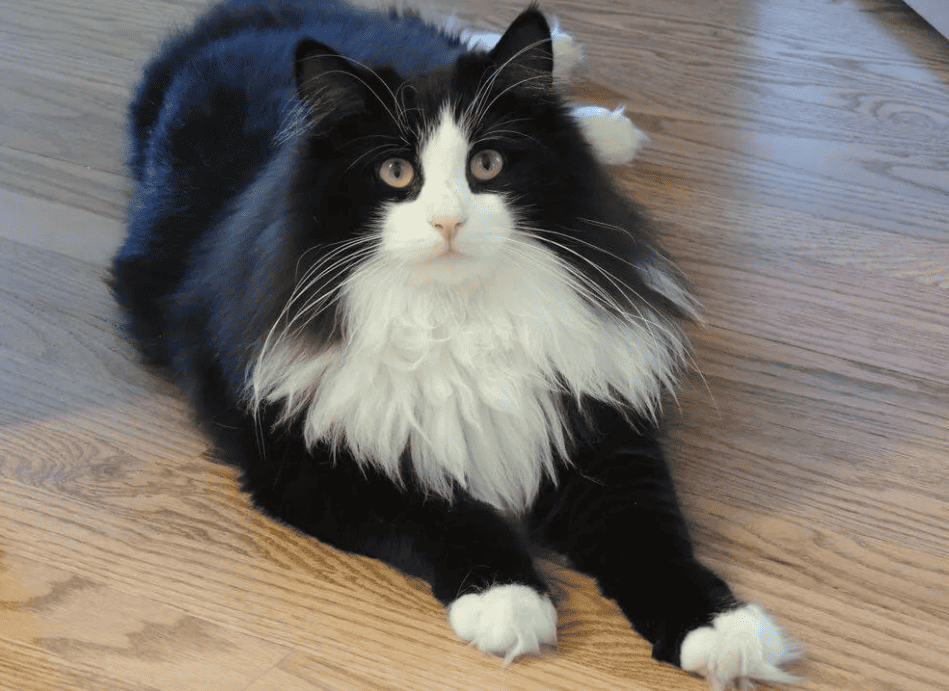
Maine Coons have a way of making other cats look like rough drafts. They are enormous, tufted, and somehow both ridiculous and regal at the same time — and nearly everyone who has owned one will tell you the reality is even better than the description.
As a Maine Coon guide, this page covers everything that matters: where the breed actually came from, what it is genuinely like to live with one, how big they get and how long that takes, what their coat demands from you, the health conditions you need to take seriously before you buy, and how to find a breeder who has done the work. No sales pitch. Just the complete Maine Coon cat breed information you need.
Quick Facts:
The Maine Coon is a large, sociable, and remarkably easygoing breed that adapts well to family life, children, dogs, and other cats. They are not lap cats in the traditional sense — most prefer to be near you rather than on you — but they are consistently present, curious, and engaged with whatever is happening in the house. They communicate through chirps and trills rather than a conventional meow, play fetch well into adulthood, and take three to five years to reach their full size. The coat is genuinely beautiful and genuinely demanding: three to four brushing sessions a week is not optional. The breed carries real heritable health risks, particularly cardiac disease and hip dysplasia, which makes buying from a health-tested breeder more than just a preference — it is the single most important decision you will make about this cat.
Table of Contents
Maine Coon Cat: Key Facts at a Glance
| Trait | Details |
|---|---|
| Origin | Maine, United States — natural breed, not purpose-developed |
| Weight (Male) | 13–18 lbs; some individuals exceed 20 lbs |
| Weight (Female) | 8–12 lbs |
| Height | 10–16 inches at the shoulder |
| Body Length | Up to 40 inches nose to tail tip |
| Lifespan | 12–15 years |
| Time to Full Size | 3–5 years — significantly longer than most breeds |
| Coat Type | Semi-longhair, two-layer, water-resistant |
| Coat Colours | 75+ recognised combinations; pointed/colourpoint not accepted |
| Grooming Needs | High — 3–4x per week; daily during spring shedding |
| Energy Level | Moderate — active but not frenetic |
| Vocalization | Low–moderate; chirps and trills, rarely a conventional meow |
| Good with Kids | Excellent |
| Good with Dogs | Excellent |
| Good with Other Cats | Very good |
| Hypoallergenic | No |
| Registries | CFA, TICA, FIFe |
Maine Coon History and Origin
The Maine Coon is America’s native longhaired cat — one of the oldest natural breeds in North America, developed entirely through natural selection rather than deliberate breeding programs [1][2].
The exact genetic origin remains somewhat disputed, but the most credible explanation is that longhaired cats arrived in New England with European settlers and seafarers during the 1600s and 1700s. Over generations, these cats interbred with local shorthaired cats and adapted to Maine’s harsh winters. The result was a large, heavily coated, physically robust working cat — built for cold, not for show [1][2].
By the 1860s, Maine Coons were a recognised regional type, exhibited at agricultural fairs in Maine and prized for their mousing ability. In 1895, a brown tabby Maine Coon named Cosey won Best in Show at the first major North American cat show, held at Madison Square Garden in New York City. The silver collar awarded that day is now preserved in the CFA’s Jean Baker Rose Memorial Library [2].
The breed’s popularity collapsed in the early 20th century as Persians and Siamese cats dominated the show ring. By the 1950s the CFA had effectively declared the Maine Coon extinct as a show breed. Breed clubs — particularly the Central Maine Cat Club and later the Maine Coon Breeders and Fanciers Association — spent the following decades rebuilding interest and pushing for formal recognition. The CFA granted provisional status in 1975 and full championship status in 1976. TICA recognised the breed from its founding in 1979 [2][3].
Maine became the first US state to name an official state cat when it designated the Maine Coon in 1985. The breed is now one of the most registered in the world, consistently ranking at or near the top of CFA and FIFe annual statistics [2][3].
The raccoon hybrid myth — popular for obvious visual reasons — is biologically impossible. The name most likely reflects both the common brown tabby colouring and the ringed, brush-like tail [1].
Maine Coon Temperament and Personality
“Dog-like” is the phrase that follows Maine Coons everywhere. It gets applied loosely to a lot of breeds, but with Maine Coons it reflects something real. They follow people through the house. They investigate anything new. They participate in whatever is happening rather than observing from a safe distance. They will come when called — not always, because they are still cats — but often enough to surprise you [1].
Maine Coons are playful well into adulthood. Most breeds settle into a more sedentary phase by year two or three. Maine Coons keep their kitten-like enthusiasm for interactive play significantly longer, partly because they are slow to mature overall and partly because it is simply how they are wired. Puzzle feeders, wand toys, and fetch — yes, many Maine Coons will retrieve — all work [1].
Their vocalization is one of their most distinctive traits. Maine Coons chirp and trill rather than producing a standard meow. The chirp is a short, melodic sound used for greeting; the trill is a rolling sound used for general communication. Coming from a cat that may weigh 18 pounds, it is unexpectedly small and somewhat endearing. They use these sounds to announce themselves, respond when spoken to, and occasionally to register opinions about dinner timing [1].
They are not typically lap cats, but they are consistently present. Most prefer to sit beside you rather than on you — a distinction that matters if you have a specific idea of what a lap cat looks like. They are affectionate without being demanding, social without being anxious when you leave.
With Children
Maine Coons are among the most reliably child-tolerant breeds. They are physically robust, rarely startled, and patient with unpredictable handling. They will remove themselves from situations they dislike rather than reacting badly. Genuinely good family cats.
With Dogs and Other Cats
Their size and confidence mean they are not easily intimidated by dogs, and their even temperament makes them easy to introduce to other cats. Proper introductions still matter — do not skip them — but most Maine Coons adapt without significant conflict.
Maine Coon Appearance and Size
Maine Coons are the largest non-hybrid domestic cat breed in the world. Males typically reach 13 to 18 pounds, with some individuals exceeding 20 pounds. Females are proportionally smaller at 8 to 12 pounds, but still large by most domestic cat standards. Body length can reach 40 inches from nose to tail tip. Crucially, they take between three and five years to reach full grown size — considerably longer than the 12 to 18 months typical of most domestic cats [1][2].
The body is muscular and rectangular, with a broad chest, long sturdy legs, and large tufted paws. Those paws are one of the breed’s most practically interesting features: the fur between the toes acts as a natural insulator and, on snow, functions similarly to a snowshoe. The breed’s polydactyl trait — extra toes — was once common and served the same purpose, though it is now rarely seen in show cats [1].
The head is medium-wide with high cheekbones, a square muzzle, and large ears set wide apart. Lynx-like tufts at the ear tips are one of the most recognisable features of the breed. The tail is long, heavily plumed, and typically carried upright.
Maine Coon Coat: Colours, Patterns, and Texture
The Maine Coon coat is semi-longhair with a two-layer structure: a shorter, dense undercoat and a longer, shaggy topcoat that is longer on the stomach, britches, and ruff, and shorter on the shoulders and back. This uneven length is a breed characteristic, not a grooming failure. The coat is also water-resistant — another practical adaptation from the breed’s working origins [1].
Colour and pattern range is extensive. The CFA and TICA both recognise over 75 combinations spanning solid, tabby, bicolour, tortoiseshell, calico, and smoke, in colours including brown, black, white, silver, cream, red, and blue [2][3]. Brown classic tabby is the most iconic and most common, but the full range is genuinely wide.
One thing you will not find in a purebred Maine Coon: pointed colouration (Siamese-style colour restriction to the extremities). This pattern indicates crossbreeding and is not accepted by either major registry. Similarly, chocolate and lilac are not accepted colour varieties in the Maine Coon standard [2][3].
What Makes a Maine Coon Distinctively a Maine Coon
A few traits set Maine Coons apart from other large longhaired breeds in ways that go beyond size and coat length:
- The chirp and trill — not a meow. Most owners find this one of the most charming things about the breed, and it genuinely surprises people who are not expecting it from a cat this large.
- The slow maturation. Most cats are physically and behaviourally mature by 18 months. Maine Coons keep developing — in size, musculature, and coat — until age three to five. This affects what you see at 12 months versus what you get at four years.
- Water curiosity. Maine Coons are unusually unbothered by water — many will investigate running taps, drip water from their paws before drinking, or try to get into the shower. Their water-resistant coat likely has something to do with this.
- Ground orientation. Unlike many breeds that prioritise vertical height, Maine Coons are often more interested in ground-level movement and chase behaviour. They play fetch. They stalk. They are still instinctively working cats in a house with no mice to justify the attention.
- The ruff and tail. A fully mature Maine Coon in full coat has a chest ruff and a tail that are genuinely impressive. This is not a year-one feature — it develops with age, which is one reason these cats look better at four than they do at one.
Maine Coon Care and Grooming
The coat is the biggest care commitment with this breed, and it is worth being direct about what that means: three to four brushing sessions per week at minimum. During spring shedding season, daily brushing is better. This is not optional — a Maine Coon coat that goes unbrushed will tangle, and tangles become mats, and mats are painful for the cat and expensive to have professionally removed.
The right tools matter. A wide-toothed metal comb works through the undercoat without shredding the topcoat. A slicker brush handles surface grooming and loose hair. Start grooming habits early — a kitten that is comfortable being handled and combed is a cat that will not turn grooming sessions into a negotiation.
Focus extra attention on the areas most prone to matting: the ruff, armpits, behind the ears, and the britches (the long fur at the backs of the hind legs). The tail is usually self-maintaining but benefits from a weekly comb-through.
Beyond coat care: nail trimming every two to three weeks, ear checks weekly (the tufted ears trap dirt and debris), and dental hygiene introduced as early as possible. Maine Coons are not low-maintenance cats, but a consistent routine makes it manageable.
Maine Coon Diet and Nutrition
A Maine Coon is not a six-pound cat, and it should not be eating like one. High-quality protein from named meat sources should be the foundation of their diet. A combination of wet and dry food works well — wet food contributes meaningfully to hydration, which matters for kidney health and urinary tract function over the long term.
Portion control is important from early adulthood. Maine Coons can put on weight as they age and become less active, which places additional load on joints already predisposed to hip dysplasia. Free-feeding is not recommended for most adults. If you feed dry kibble, supplementing with wet food and ensuring adequate water intake is worthwhile.
Kittens have different nutritional needs from adults — use a food formulated for large-breed kittens during the growth phase, which extends longer than in other breeds given the slow maturation timeline.
Maine Coon Exercise and Enrichment
Maine Coons are moderately active and need daily play. Interactive toys, wand toys, and puzzle feeders address their hunting instincts and provide the mental stimulation that keeps them from finding their own entertainment — which is usually less convenient for everyone else in the household.
They are genuinely trainable. Clicker training, fetch, and leash walking all work with patience and food motivation. This is a breed that responds to engagement.
Cat trees and climbing structures should be sized for their weight — a Maine Coon is not well served by furniture built for a six-pound cat. Floor space matters as much as vertical space given their ground-oriented play style.
Home Setup for a Maine Coon
Think large. Large litter boxes — ideally one and a half times the cat’s body length — because standard-size boxes are genuinely cramped for a fully grown Maine Coon. Large cat trees with wide platforms and sturdy bases that will not tip under 18 pounds. Wide, stable food and water bowls (Maine Coons prefer shallow bowls that do not press against their whiskers).
They do reasonably well as indoor cats provided they have space and stimulation. Many Maine Coon owners use harness and leash training to provide outdoor time safely — the breed adapts to this well given their trainability. A secure garden or catio is a good option if you have the space.
Maine Coon Health and Lifespan
The Maine Coon lifespan is 12 to 15 years. They are generally a robust breed, but there are four heritable conditions that appear with enough regularity to take seriously before you buy. All four are detectable through DNA testing or imaging, and all four should be screened for by responsible breeders. Buying from a breeder who does not health-test transfers the risk to you — and the cat.
Hypertrophic Cardiomyopathy (HCM)
HCM is the most important health condition to understand before buying a Maine Coon. It causes the walls of the heart to thicken progressively, which reduces the heart’s ability to pump properly and can lead to heart failure or sudden death. It is the most common inherited cardiac disease in cats overall, and Maine Coons have a breed-specific genetic mutation — A31P in the MYBPC3 gene — that increases their risk [4][5].
Cats that inherit two copies of the mutation are at high risk of severe disease before age four. Cats with one copy live longer but are still at elevated risk, and that risk increases with age. Importantly, a negative DNA test does not mean a Maine Coon is in the clear — HCM can and does occur in mutation-negative cats, which is why an annual echocardiogram from a board-certified cardiologist is the real gold standard for breeding cats, not just the DNA swab [4][5].
Ask any breeder for echo results on both parents, not just DNA test certificates. Both matter.
Hip Dysplasia
Hip dysplasia is more commonly associated with dogs, but Maine Coons have a clinically significant rate of it — higher than virtually any other cat breed. Registry data from 2,708 Maine Coons put overall prevalence at 24.9%, with males slightly more affected than females [6]. A larger European study found even higher rates under a different grading system, and identified something worth knowing: the same selective breeding pressure that produces the breed’s impressive size has also, inadvertently, selected for worse hips — the two traits are genetically linked [7].
Reputable breeders have both parents hip-screened by X-ray before breeding, with results submitted to OFA or PawPeds. Ask for documentation, not just a verbal assurance.
Spinal Muscular Atrophy (SMA)
SMA causes progressive loss of the motor neurons that control the hind limb muscles. Affected kittens start showing symptoms around three to four months old — a swaying, unsteady gait, abnormal posture, and increasing weakness in the back legs that makes jumping difficult by five to six months. They are not in pain, and many affected cats live reasonably comfortable lives, but their mobility is significantly reduced [8].
SMA is autosomal recessive, which means both parents must carry the gene for a kitten to be affected. It is completely preventable through DNA testing — a responsible breeder will not produce affected offspring. This is one of the easier conditions to screen out; just confirm both parents have been tested [8].
Pyruvate Kinase Deficiency (PK Deficiency)
PK deficiency is an inherited deficiency of the pyruvate kinase enzyme, which impairs red blood cell metabolism and causes haemolytic anaemia. Clinical signs include lethargy, weakness, weight loss, pale gums, and enlarged spleen. Severity is variable — some cats maintain near-normal life expectancy, while others develop severe anaemia before age two [9].
PK deficiency is distinct from PKD (polycystic kidney disease) and should not be confused with it. It is an autosomal recessive condition affecting several breeds including Maine Coon, Abyssinian, Bengal, and Norwegian Forest Cat. The causative mutation is identified through DNA testing; UC Davis VGL confirms the mutation is found at significant frequency in Maine Coons, and genetic screening is recommended for breeding cats [9].
Maine Coon: Male vs Female
← Scroll to see full table →
| Male | Female | |
|---|---|---|
| Weight | 13–18 lbs (some 20+ lbs) | 8–12 lbs |
| Size at maturity | Noticeably larger, broader chest | Proportionally smaller — still large by any standard |
| Temperament | Often described as goofier and more overtly social | Often described as slightly more independent |
| Time to full size | 4–5 years | 3–4 years |
| HCM risk | Males more commonly affected by HCM [4] | Lower incidence, but not zero risk |
| Hip dysplasia | Slightly higher prevalence (27.3%) [6] | Slightly lower prevalence (23.3%) [6] |
The size gap between male and female Maine Coons is more pronounced than in most breeds — a fully grown male and female can look like they belong to different size categories. Both make excellent pets, and the temperament differences below are tendencies rather than rules.
How Much Does a Maine Coon Cost?
A Maine Coon kitten from a reputable breeder typically costs between $1,000 and $2,500 in the US. Show-quality kittens or those from lines with distinguished health records and titles will sit toward the top of that range or beyond. The price reflects the cost of health testing, quality breeding stock, early socialisation, vaccinations, and the ongoing overhead of running a responsible breeding programme.
Be cautious of Maine Coons advertised significantly below this range. Breeders who skip health testing have lower costs — and pass the genetic risk along to you. A kitten that costs $600 now can cost several thousand dollars in cardiac or orthopaedic care later.
Ongoing Annual Cost Estimate
← Scroll to see full table →
| Expense | Estimated Annual Cost |
|---|---|
| High-quality food (wet and dry combination) | $600–$1,200 |
| Grooming tools + occasional professional grooming | $100–$400 |
| Routine vet care (annual exam, vaccines, parasite prevention) | $300–$600 |
| Cardiac monitoring (echo recommended for at-risk lines) | $300–$600 |
| Pet insurance (strongly recommended for this breed) | $400–$900 |
| Enrichment, toys, cat furniture replacements | $100–$300 |
| Large litter boxes and litter | $150–$300 |
Pet insurance is worth taking seriously with Maine Coons specifically. HCM and hip dysplasia both carry meaningful treatment costs. Insure the cat young, before any conditions are diagnosed, and read the policy exclusions carefully.
How to Find a Reputable Maine Coon Breeder
The Maine Coon’s popularity makes it one of the more targeted breeds for low-quality breeding operations. The markers of a responsible breeder are consistent and worth learning.
What to Look For
- Health testing documented for both parents: echocardiogram (HCM), DNA panel for A31P/MYBPC3 mutation, SMA, and PK deficiency; hip X-rays evaluated by OFA or PawPeds
- Registered with CFA or TICA — a baseline rather than a guarantee, but it means the breeder is accountable to a registry
- Kittens raised in the home with regular human contact from birth
- Willingness to answer detailed questions about health history, testing results, and specific breeding decisions
- A written contract including health guarantee and a return/rehome clause if you can no longer keep the cat
- References from previous buyers available on request
Breeder Red Flags
- Multiple breeds available — especially combined with dogs
- Kittens available before 12 weeks
- Vague or evasive answers when asked for health test documentation
- No contract or health guarantee
- Kittens kept in cages or separate from human household activity
- Pressure to reserve or pay before you can ask questions or see the kitten
Maine Coon Adoption and Rescue
Maine Coons and Maine Coon mixes do appear in rescue, both through breed-specific organisations and general shelters. Adoption costs are typically $75–$300 and include basic vet care. Adult Maine Coons from rescue are a genuine and often underrated option — their temperament is established, the kitten phase is behind them, and you can assess fit before committing.
Maine Coon vs Similar Breeds: How They Compare
← Scroll to see full table →
| Trait | Maine Coon | Norwegian Forest Cat | Ragdoll | Siberian |
|---|---|---|---|---|
| Size | Very large (up to 20 lbs) | Large (9–16 lbs) | Large (10–20 lbs) | Large (8–17 lbs) |
| Coat | Semi-long, shaggy, water-resistant | Semi-long, dense, double layer | Semi-long, silky, low matting | Semi-long, triple layer |
| Temperament | Social, playful, curious, follows you around | Independent, calm, dignified | Very relaxed, floppy, passive | Affectionate, calm, dog-like |
| Energy level | Moderate | Moderate–low | Low–moderate | Moderate |
| Grooming demand | High (3–4x/week) | High (2–3x/week) | Moderate (2x/week) | Moderate–high |
| With kids and dogs | Excellent | Good | Excellent | Good |
| Key health concern | HCM, hip dysplasia | Glycogen storage disease | HCM (R820W mutation) | HCM (lower rate reported) |
| Allergen level | Standard | Standard | Standard | Lower Fel d1 — may suit mild sufferers |
The Norwegian Forest Cat is the closest visual match to the Maine Coon and is frequently mistaken for it. Key differences: the Norwegian Forest Cat has a more triangular head, a denser double coat with a woolly undercoat, and a somewhat more independent temperament. If you want a very similar look with a slightly more self-sufficient personality, it is worth considering.
The Ragdoll is softer in personality — genuinely floppy and passive in a way most Maine Coons are not. If being held and carried is high on your list, the Ragdoll is a better fit. The Siberian produces lower concentrations of the Fel d1 protein than most breeds and is worth investigating if mild cat allergies are a factor in your household.
Maine Coon: Pros and Cons
← Scroll to see full table →
| ✓ Pros | ✗ Cons |
|---|---|
| Calm, patient temperament — very rarely aggressive | Coat requires brushing 3–4x per week minimum |
| Outstanding with children, dogs, and other cats | Heavy seasonal shedding — this is a year-round reality |
| Trainable — fetch, leash walking, clicker training all work | $1,000–$2,500 upfront cost from a reputable breeder |
| Sociable but not clingy; present without being demanding | HCM and hip dysplasia risk — vet costs can be significant |
| Adaptable to family life across a wide range of households | Slow to reach full size (3–5 years) |
| Healthy breed when properly health-tested | Needs space and daily enrichment to stay satisfied |
Is the Maine Coon the Right Cat for You?
Maine Coons suit a wide range of households. That is genuinely one of their strengths — they are not a breed with a narrow fit. But “wide range” does not mean “any household regardless of what you can offer.” There are real requirements.
A Maine Coon is a strong fit if you:
- Have children, dogs, or other cats — this breed handles family chaos better than almost any other
- Want a cat that participates in household life rather than avoiding it
- Can commit to brushing several times a week, every week — this is the one non-negotiable
- Have space for a large, active cat and can provide climbing structures sized for their weight
- Are a first-time owner who wants a forgiving, adaptable breed to start with
- Have budget for a properly health-tested purchase and ideally pet insurance
A Maine Coon may not be right if you:
- Need a low-allergen or low-shedding cat — they are neither
- Want a very independent cat that largely runs its own schedule
- Cannot make the grooming commitment — matting in a coat this heavy is genuinely painful for the cat
- Have a very tight budget — both upfront and for ongoing vet care, particularly cardiac monitoring
Final Verdict: What It Is Actually Like to Own a Maine Coon
The Maine Coon does not need to be oversold, and it is not going to be here. The facts make the case: one of the largest domestic cat breeds in the world, one of the most adaptable temperaments, and a history that goes back to working farms in New England rather than a breeder’s blueprint. That background shows. These are cats built by selection pressure, not designed by committee.
What you get in practice is a large, sociable, perpetually curious cat that treats the house as a collaborative space rather than a territory to defend. It will follow you around. It will chirp at you from across the room. It will play fetch at four years old with the same enthusiasm it had at six months. It will also cover your couch in fur if you do not brush it, and it carries health risks that deserve serious attention before you buy.
Get those things right. Buy from a breeder who health-tests. Commit to the grooming. Get pet insurance before anything shows up on an echocardiogram. And give a fully mature Maine Coon — at four or five years old, coat and personality both complete — the space and engagement it needs to actually be what it is.
It is a very good cat. The people who own them tend to keep owning them, which is about as reliable an endorsement as any breed review can offer.
Frequently Asked Questions
Are Maine Coon cats good pets?
Yes — consistently. Maine Coons rank among the most reliably good-natured domestic breeds. They are patient, adaptable, social, and tolerant of the things that tend to go wrong in family households. The main requirements are grooming commitment and willingness to budget appropriately for health care.
Are Maine Coons good for first-time cat owners?
Generally yes. Their even temperament, tolerance for handling, and adaptability make them more forgiving than many breeds. The grooming demand and purchase cost are the main things to understand and plan for upfront.
Are Maine Coon cats good with children?
Excellent. Maine Coons are patient, physically robust, and calm enough to handle the unpredictability that comes with young children. They rarely react badly to sudden noise or movement, and they tend to disengage rather than escalate when they have had enough.
Are Maine Coon cats good with dogs?
Very good. Their size means they are not easily intimidated, and their confidence means they tend to hold their ground rather than flee — which paradoxically makes introductions easier. Most Maine Coons adapt well to dogs with proper introductions.
Are Maine Coons indoor cats?
They adapt well to indoor life provided they have sufficient space and daily enrichment. Many owners use harness and leash training to provide outdoor time safely. Maine Coons are not suited to being left to roam outdoors unsupervised.
Are Maine Coon cats hypoallergenic?
No. Maine Coons produce Fel d1 protein in standard quantities. They are not suitable for people with significant cat allergies. If a lower-allergen large breed is the goal, the Siberian is worth researching.
Are Maine Coons high maintenance?
The coat is high maintenance. The personality is not. Grooming three to four times per week is a real commitment that you need to be honest with yourself about before getting one. Everything else — temperament, activity level, feeding — is manageable.
Do Maine Coons shed a lot?
They do. Heavy shedding is part of ownership, particularly during the spring coat change. Regular brushing significantly reduces what ends up on your furniture and clothes, but there is no avoiding it entirely.
How big do Maine Coon cats get?
Males typically reach 13 to 18 pounds, with some exceeding 20 pounds. Females are 8 to 12 pounds. Body length can reach 40 inches nose to tail. Full grown size is not reached until three to five years of age.
When do Maine Coons stop growing?
Between ages three and five, which is significantly later than the 12 to 18 months typical of most domestic cats. What you see at one year is not what you will have at four.
How long do Maine Coon cats live?
12 to 15 years is the typical range. Cats from health-tested lines with good care regularly reach 15 years or more.
Do Maine Coons meow a lot?
They are not loud. They communicate primarily through chirping and trilling rather than conventional meowing, and they tend to be conversational rather than demanding. Most owners find the vocalization level pleasant rather than intrusive.
Why do Maine Coons chirp?
Chirping and trilling are natural to the breed — used for greeting, requesting attention, and general communication. It is a breed characteristic, not a distress signal.
How often should you groom a Maine Coon?
Three to four times per week at minimum. Daily during heavy shedding in spring. The coat mats without consistent attention, particularly in the ruff, armpits, and britches.
What health problems do Maine Coons have?
The main concerns are HCM (hypertrophic cardiomyopathy), hip dysplasia, spinal muscular atrophy (SMA), and pyruvate kinase deficiency (PK deficiency). All four are detectable through health testing. Buying from a breeder who screens breeding cats for all four conditions is the most meaningful step you can take to reduce risk.
How much does a Maine Coon cat cost?
$1,000 to $2,500 from a reputable breeder in the US, with show-quality or exceptional pedigree kittens sometimes higher. Ongoing annual costs — food, vet care, grooming, and insurance — typically run $1,500 to $3,500 depending on the cat’s health needs.
Is a Maine Coon right for me?
If you want a large, sociable, good-natured cat that handles family life well and you are prepared to brush regularly and budget honestly for health care — yes. If low maintenance grooming or low cost is a hard requirement, look at a different breed.
Sources
[1] The International Cat Association. Maine Coon Breed Profile.
[2] Cat Fanciers’ Association. Maine Coon Cat: Breed Article.
[3] Cat Fanciers’ Association. Maine Coon Breed Standard and Overview.
[4] UC Davis Veterinary Genetics Laboratory. Hypertrophic Cardiomyopathy (HCM) in Maine Coons.
[5] UC Davis School of Veterinary Medicine. Hypertrophic Cardiomyopathy — Animal Health Topics.
[6] Loder RT, Todhunter RJ. Demographics of hip dysplasia in the Maine Coon cat. Journal of Feline Medicine and Surgery. 2018;20(4):302–307.
[7] Low KP, et al. Demography, heritability and genetic correlation of feline hip dysplasia and response to selection in a health screening programme. Scientific Reports. 2019;9:17595.
[8] UC Davis Veterinary Genetics Laboratory. Spinal Muscular Atrophy (SMA) in Maine Coon Cats.
[9] UC Davis Veterinary Genetics Laboratory. Erythrocyte Pyruvate Kinase Deficiency (PK Deficiency).