
Ragdoll Cat: Temperament, Size, Care, Cost, Lifespan & More
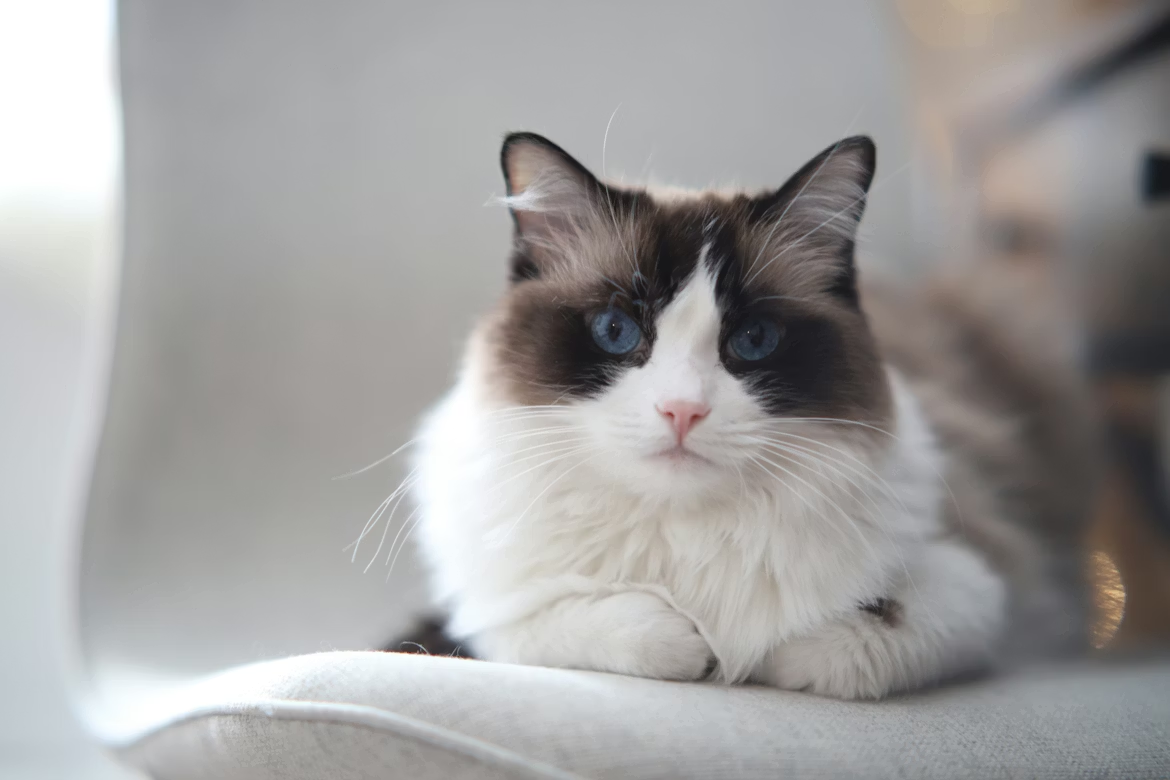
Quick Facts:
The Ragdoll is a large, semi-longhaired cat breed developed in California in the 1960s, known for its striking blue eyes, colourpoint coat, and exceptionally calm temperament. Males typically weigh 15–20 lbs; females 10–15 lbs — making them one of the largest domestic cat breeds. They are deeply people-oriented, affectionate with children and other pets, and well-suited to indoor living. Grooming is moderate (two to three times per week), and the main health considerations are hypertrophic cardiomyopathy (HCM) and polycystic kidney disease (PKD), both of which responsible breeders screen for. Life expectancy is 12–17 years.
If there’s a cat breed that genuinely lives up to its name, it’s the Ragdoll. Pick one up and they go soft in your arms — relaxed, trusting, and completely unbothered. It’s not a trick. It’s just who they are.
This Ragdoll cat breed profile covers everything you need to know: characteristics, temperament, care, health, cost, and what life with one actually looks like day to day.
Ragdolls are large, blue-eyed, semi-longhaired cats known for their exceptionally calm temperament and deep attachment to the people they live with. They don’t just tolerate human company — they seek it out. Follow-you-from-room-to-room, wait-outside-the-bathroom, greet-you-at-the-door kind of company.
Are Ragdoll cats good pets? For the right household, genuinely yes — one of the best. But they’re not right for everyone, and a few things about them tend to surprise new owners. This guide covers everything you need to know before you bring one home.
Table of Contents
Ragdoll Cat: Key Facts at a Glance
| Trait | Details |
|---|---|
| Origin | California, USA (developed in the 1960s) |
| Size | Large |
| Weight | Males 15–20 lbs; Females 10–15 lbs |
| Lifespan | 12–17 years |
| Coat length | Semi-long |
| Shedding level | Moderate |
| Grooming needs | 2–3 times per week |
| Energy level | Low to moderate |
| Vocal level | Quiet to moderate |
| Good with kids | Yes |
| Good with other pets | Yes |
| Good for apartments | Yes, with enough space |
| Good for first-time owners | Yes |
Ragdoll Cat History and Origin
The Ragdoll is a relatively young breed with an unusually well-documented origin story. It was developed in the 1960s in Riverside, California, by a breeder named Ann Baker, who began selectively breeding cats from a white longhaired female named Josephine.
Baker made some bold and controversial claims about her cats — including claims that their unusual calmness and floppy temperament were the result of genetic modification. Those claims were never substantiated, and most cat geneticists dismissed them. What is agreed on is that the breed’s calm, docile characteristics were deliberately selected for over generations of careful breeding.
The Cat Fanciers’ Association (CFA) and The International Cat Association (TICA) both officially recognised the Ragdoll breed in the 1990s, giving it the formal breed standard structure that reputable breeders work to today. From those California roots, the Ragdoll has become one of the most popular cat breeds worldwide — and the reasons aren’t hard to understand once you’ve spent time with one.
Is a Ragdoll the Right Cat for You?
Ragdolls are genuinely one of the more adaptable breeds out there, but ‘adaptable’ doesn’t mean ‘right for everyone.’ Here’s an honest look at who thrives with them.
Who will love a Ragdoll
- Families with children — Ragdolls are patient and rarely reactive, which matters when you have small humans who don’t always read the room.
- Apartment dwellers — Ragdolls adapt well to apartment living provided they have enough vertical space, enrichment, and company. They’re not a breed that needs to roam.
- People who want a social cat — if you hate cats that ignore you, a Ragdoll will be a revelation.
- Multi-pet households — they generally accept dogs and other cats with minimal drama.
- First-time cat owners — their calm nature makes them forgiving of rookie mistakes.
- Anyone who works from home — a Ragdoll will happily nap nearby all day.
Who might struggle with a Ragdoll
- Very busy households where the cat would be alone for long stretches — Ragdolls can develop anxiety if left isolated regularly.
- Owners who want a low-shedding cat — the coat is beautiful, but it does shed.
- Anyone who can’t commit to regular grooming — skipping brushing leads to mats, especially behind the ears and under the arms.
People on a tight budget — Ragdolls are among the pricier breeds to purchase, and
Ragdoll Cat Temperament and Personality
The Ragdoll temperament is the main reason people fall for this breed — and it’s also the thing that’s most often misunderstood.
Ragdoll cat behavior is best described as consistently calm and socially engaged. They are calm. Genuinely, consistently calm. Not because they’re lazy or disengaged, but because they seem to have skipped the skittish, reactive layer that most cats carry around. Loud noise, new visitors, a dog charging through the room — a Ragdoll is likely to watch with mild curiosity rather than bolt under the bed.
They’re also unusually people-focused for a cat. Most cats tolerate your presence. Ragdolls actively prefer it. They’ll follow you between rooms, settle on the sofa next to you, and meet you at the door like a dog. Some owners find this charming. A very small number find it slightly overwhelming.
Affection level
High. Are Ragdoll cats cuddly? Extremely. They’re lap cats in the truest sense — they want contact, not just proximity. They’ll curl up on you rather than next to you given the chance, and many will actively push their head into your hand for attention.
Independence
Low. This is not a breed that does well with solitude. If your household is regularly empty for eight-plus hours a day, a Ragdoll companion cat (or a different breed entirely) is worth considering seriously. Ragdoll cat socialization needs are higher than the average cat — they genuinely need interaction to stay happy.
Playfulness
Moderate. They enjoy play, especially interactive sessions, but they’re not the cat that’s going to tear through your house at 3am. Their energy tends to be measured rather than explosive.
Intelligence and trainability
Ragdolls are smarter than they look. They can learn their name reliably, respond to basic commands, and can be trained to walk on a harness with patience. Positive reinforcement works well — they’re food motivated and people-motivated, which is a useful combination.
Vocalization
They’re not a quiet breed, but they’re not loud either. You’ll get soft chirps, trills, and occasional meows — usually when they want something specific rather than as constant commentary.
The ‘floppy’ myth
Yes, many Ragdolls do go limp when held — it’s real. But it’s a tendency, not a guarantee. Some Ragdolls are floppy. Others are simply very relaxed without going full ragdoll on you. It varies between individual cats and shouldn’t be used as a breed purity test.
Ragdoll Cat Appearance
Ragdolls are a genuinely striking cat. They’re large and substantial without being heavy-looking — broad chests, strong hindquarters, and a build that suggests real size without being chunky.
Size and body
They’re one of the largest domestic cat breeds. When people search for Ragdoll cat size, they’re usually referring to both the long, substantial body frame and the heavier adult Ragdoll cat weight compared with average domestic cats. Males typically weigh 15–20 lbs at full size; females run smaller at 10–15 lbs. They’re slow to reach their full size — most Ragdolls don’t fill out completely until around three to four years of age.
Coat
Semi-long, silky, and low-mat compared to fully longhaired breeds. The coat lies close to the body rather than puffing out, which makes it somewhat easier to manage. It does have a ruff around the neck and longer fur on the tail and britches (the fur on the back legs).
Eyes
Blue — always blue. Every Ragdoll has blue eyes. It’s a breed requirement, and it’s part of what gives them their distinctive, soft expression. The depth of blue varies, from pale ice-blue to a rich, deep sapphire.
Distinguishing features
The combination of size, colourpoint coat, blue eyes, and that famously relaxed manner makes Ragdolls quite recognisable. If you see a very large, very calm, blue-eyed cat in someone’s lap looking completely at peace with the universe — there’s a good chance it’s a Ragdoll.
Ragdoll Cat Colors and Patterns Explained
Ragdolls come in six main colours and three recognised patterns. Understanding these helps when choosing a kitten and is genuinely useful for identifying whether a cat is a true Ragdoll.
The six colours
- Seal — dark brown points with a cream/fawn body; the most common and classic look
- Blue — grey-blue points with a lighter body; the second most popular
- Chocolate — warm milk-chocolate points with an ivory body
- Lilac — pale pinkish-grey points with a white body; the lightest colouring
- Red (flame) — orange-red points with a cream body
- Cream — pale cream points with a white body
The three patterns
Colourpoint: Darker colour on the face, ears, legs, and tail. The body is a lighter shade of the same colour. No white anywhere.
Mitted: Same as colourpoint but with white ‘mittens’ on the front paws, white boots on the back legs, and a white chin.
Bicolour: An inverted V of white on the face, white on the underbody, and white legs. The most distinctive and often the most striking pattern.
There is also a lynx variation across all patterns, where the points show tabby striping rather than solid colour — lynx point Ragdolls have a softer, more marbled look. And tortie points, which show a mix of colour in the points, typically in females.
Ragdoll Kittens: What to Expect
One of the most common questions from new Ragdoll owners: why is my kitten white?
Ragdoll kittens are born almost entirely white — this is normal. Their point colour begins to develop within the first few weeks of life, but it takes time. Most kittens won’t show their full colour and pattern until around two years of age, and their coat continues to fill out and deepen until they’re about three to four years old.
Kitten behaviour
Ragdoll kittens are more active than adult Ragdolls — significantly so. If you get an eight-week-old Ragdoll and wonder where the legendary calm went, don’t worry. They tend to mellow noticeably as they mature, usually settling into their classic temperament by 12–18 months.
When do Ragdolls reach full size?
Around three to four years old. This is one of the slowest-maturing cat breeds. Don’t expect your one-year-old Ragdoll to look like the cats you see in photos — they’ll still have some filling out to do.
What to ask before buying a kitten
- Have both parents been health tested for HCM and PKD?
- Can you see health testing certificates?
- Are the kittens raised underfoot with household exposure?
- At what age do kittens go to new homes? (Should be a minimum of 12 weeks)
- What food are the kittens currently eating?
Are Ragdoll Cats Good With Kids, Dogs, and Other Pets?
With children
Ragdolls are often one of the better breed choices for families with children because they tend to be calm, patient, and less reactive than many high-energy breeds. They’re not easily startled, and rarely swipe or scratch in response to clumsy handling. That said, young children should still be taught how to handle cats properly — and any cat should always have a safe space to retreat to if they’ve had enough.
With other cats
Generally excellent. Ragdolls tend to get along well with other cats, particularly other gentle or social breeds. They’re not typically dominant or territorial. Proper introductions still matter — slow and gradual works better than just putting two cats in a room together and hoping for the best.
With dogs
Surprisingly well, in most cases. A calm, cat-friendly dog and a Ragdoll can be a genuinely great pairing. The Ragdoll’s non-reactive nature means they’re less likely to trigger a dog’s chase instinct, and they won’t spend their life hiding from a dog that means them no harm.
Ragdoll Cat Care
Feeding and nutrition
Ragdolls are large cats with substantial frames, and their nutritional needs shift across life stages. Kittens need calorie-dense, protein-rich food to support their slow but steady growth — Ragdolls mature slowly and often do not reach full size until age three to four, so don’t rush them onto adult portions too early. Adult Ragdolls do best on a high-quality, protein-focused diet with wet food as a significant component for hydration. Seniors (generally from age 10 onward) benefit from food formulated for older cats, with attention to kidney and joint support.
They’re also prone to obesity if overfed — their low-energy temperament means they don’t always burn off excess calories. Avoid free-feeding once they’re adults; measured meals twice a day keeps weight in check and gives you an easy way to notice if appetite changes, which can be an early health signal. As a rough guide, most adult Ragdolls need around 250–350 calories per day, depending on their weight, age, activity level, and whether they are neutered — larger males may need more, while less active indoor cats may need less. Your vet is the best source of advice on exact portions for your individual cat.
The Ragdoll cat price of ownership is worth factoring in here too: quality wet food for a 15–20 lb cat costs noticeably more per month than feeding a smaller breed. It’s not a reason to choose cheaper food, but it is worth budgeting for properly.
Exercise and enrichment
They’re not a high-energy breed, but they still need daily play. Interactive wand toys, puzzle feeders, and regular engagement keep them mentally stimulated. A large cat tree gives them climbing options and a high vantage point they’ll actually use. Harness training is also worth considering — many Ragdolls take to it well and genuinely enjoy supervised outdoor time.
Grooming
Ragdoll cat grooming is easier than many people expect, but it still needs to be consistent. The semi-long coat is more manageable than it looks, but it’s not maintenance-free. Brush two to three times a week to prevent mats and reduce shedding. Focus especially on the areas behind the ears, under the arms, and around the collar area — these mat fastest. A stainless steel comb and a slicker brush are your best tools. They shed moderately year-round with heavier shedding in spring.
Dental care
Dental disease is common in cats generally, and Ragdolls are no exception. Daily tooth brushing is the gold standard. If that’s not realistic, dental chews and water additives help. Annual professional cleanings are worth factoring into your care budget.
Nail care
Every two to three weeks, trim the tips. Start handling paws from kittenhood so it becomes routine rather than a battle. A good scratching post (or a few of them) is essential — it keeps their nails conditioned and saves your furniture.
Indoor environment
Ragdolls are indoor cats. They don’t have the street-smart wariness that helps a cat navigate outdoor hazards, and their trusting nature makes them vulnerable. If you want to give them outdoor access, a secure catio or supervised harness walks are the right approach.
Ragdoll Cat Lifespan and Health Issues
A well-cared-for Ragdoll can live 12–17 years. That’s a reasonable lifespan for a large breed — size and longevity tend to have an inverse relationship in cats, just as they do in dogs. The main Ragdoll cat health problems to be aware of are hypertrophic cardiomyopathy, polycystic kidney disease, urinary issues, and obesity — all of which are covered in detail below.
Hypertrophic Cardiomyopathy (HCM)
HCM — a thickening of the heart muscle that reduces its efficiency — is the most significant health concern in Ragdolls. Research has identified hypertrophic cardiomyopathy as an important inherited concern in the breed, and responsible breeders screen breeding cats with echocardiograms and relevant genetic testing where appropriate.
It’s important to understand that a negative genetic test result does not guarantee a cat will never develop HCM. The condition can arise from causes beyond any single known mutation, and affected cats may show no outward symptoms in early stages. Because of this, screening decisions are best discussed with a veterinarian — especially if the cat comes from lines with known cardiac risk. [3]
Polycystic Kidney Disease (PKD)
PKD causes cysts to form in the kidneys and can lead to kidney failure over time. It’s hereditary, and a DNA test exists to screen for it. Reputable breeders test for PKD; ask to see results before purchasing a kitten.
Bladder stones and urinary issues
Ragdolls have some predisposition to urinary tract issues and bladder stones. A wet food diet and good hydration are preventive measures worth taking seriously. Signs to watch for include straining to urinate, blood in urine, or frequent trips to the litter box.
Obesity
Their low-energy temperament means Ragdolls can put on weight if meals aren’t managed. Obesity accelerates joint wear and compounds any cardiac issues. Keep them lean.
Pet insurance
Given the cardiac and kidney risk, pet insurance taken out when the cat is young and healthy is genuinely worth considering for Ragdolls. HCM treatment and monitoring costs add up.
How Much Does a Ragdoll Cat Cost?
The Ragdoll cat price varies quite a bit depending on where you’re buying and what you’re getting. Here’s a realistic breakdown.
Purchase price
From a reputable breeder, expect to pay between $800–$2,500 USD for a pet-quality kitten. Show-quality kittens from strong lines can go higher. Prices vary significantly by region, breeder reputation, and colour — seal and blue colourpoints tend to be most common; rarer colours like chocolate and lilac often cost more.
Adoption
Ragdolls do appear in rescues and breed-specific rescue organisations, though less frequently than mixed-breed cats. Adoption fees typically run $75–$300. If you’re open to an adult cat — which is often an excellent choice — rescue is worth exploring.
Setup costs
Budget for: quality cat tree (Ragdolls are large, so this matters), litter box and litter, food and water bowls, interactive toys, scratching posts, carrier, and initial vet visit with vaccinations. Initial setup typically runs $500–$1,000 depending on your choices.
Ongoing Annual Cost Estimate
The figures below are estimates based on typical US ownership costs. Actual costs vary by location, your cat’s individual health needs, and your choice of food and insurance provider.
| Expense | Estimated Annual Cost |
|---|---|
| High-quality food (wet and dry combination) | $400–$800 |
| Routine vet care (annual exam, vaccines, parasite prevention) | $300–$600 |
| Dental care (cleaning, check-ups) | $200–$400 |
| Cardiac monitoring (echo recommended for at-risk lines) | $200–$500 |
| Pet insurance (recommended for this breed) | $200–$500 |
| Toys, enrichment, and cat furniture replacements | $100–$250 |
| Litter boxes and litter | $150–$300 |
| Grooming tools (brushes, nail clippers) | $20–$60 |
How to Choose a Ragdoll Breeder or Rescue
What a reputable breeder looks like
- Tests all breeding cats for HCM (echocardiogram) and PKD (DNA test) — and can show you the paperwork
- Raises kittens in the home, not in a cattery isolated from human activity
- Welcomes questions and wants to know about your home and lifestyle
- Doesn’t have kittens available immediately at all times — ethical breeders have waitlists
- Sends kittens home at 12 weeks minimum; many reputable breeders wait until 13–16 weeks
- Is registered with TICA or CFA
Red flags to avoid
- Cannot show written HCM echocardiogram results or PKD DNA test certificates — “my cats are healthy” without paperwork is not enough
- Kittens sent home before 12 weeks
- Multiple breeds always available, kittens ready immediately with no waitlist
- Avoids questions about parent cats or health history
- Won’t let you video call or visit (even virtually) before purchase
- Price seems too good to be true — very cheap Ragdolls often come from poorly health-tested lines
Rescue
Ragdoll Rescue USA and Ragdoll Rescue UK are worth checking. Many breed-specific Facebook groups also have rehoming sections. Adult Ragdolls in rescue often make wonderful pets — their temperament holds well into adulthood, and you get the benefit of knowing exactly what you’re getting.
Ragdoll vs Similar Breeds: How They Compare
These breeds are often compared to the Ragdoll because they share a similar size, colourpoint coat, or calm reputation. The differences in personality and care demands are significant, and worth knowing before you decide.
| Ragdoll | Siamese | Maine Coon | Siberian | |
|---|---|---|---|---|
| Personality | Calm, gentle, easy-going | Vocal, intense, demanding of attention | Social, playful, follows you around | Affectionate, calm, dog-like |
| Energy level | Low–moderate; mellows with age | High — active across all life stages | Moderate — active but not frenetic | Moderate |
| Vocalisation | Quiet — soft, occasional meows | Very vocal — loud and frequent | Low–moderate; chirps and trills | Quiet to moderate |
| Size | Large — heavy and substantial | Medium — slim and lean | Very large — can exceed 20 lbs | Large — 8–17 lbs |
| Coat | Semi-long, silky — regular brushing needed | Short, fine, very low maintenance | Semi-long, shaggy, water-resistant — 3–4x/week | Semi-long, triple layer |
| Shedding | Moderate | Low to moderate | Heavy; year-round | Moderate–high |
| Grooming | 2–3x per week | Weekly brushing only | 3–4x per week; daily in spring | Moderate–high |
| Best for | Any household; great for quieter homes and families | Interactive, home-based owners who want engagement | Families, active households, first-time owners | Calm households; may suit mild allergy sufferers |
| Key health concern | HCM, PKD | Dental disease, amyloidosis | HCM, hip dysplasia | HCM (lower rate reported) |
Ragdoll Cat Pros and Cons
| ✓ Pros | ✗ Cons |
|---|---|
| Exceptionally calm, gentle temperament | Expensive to purchase from a reputable breeder |
| Deeply affectionate and people-oriented | Needs company — not a good fit for frequently empty households |
| Often one of the better breed choices for families with children | Cardiac health risk requires monitoring across their lifetime |
| Relatively quiet — not a demanding cat vocally | Coat does shed and needs regular brushing |
| Can be harness-trained | Slow to mature — you'll wait three-plus years for their full personality and size |
| Semi-long coat is more manageable than fully longhaired breeds | Not street-smart — must be kept indoors or in a secure environment |
| Good for first-time cat owners |
Ragdoll cat : Male vs Female
The size gap between male and female Ragdolls is more pronounced than in many breeds. Both make excellent pets, and the temperament differences below are tendencies rather than rules — individual personality always varies.
| Male | Female | |
|---|---|---|
| Weight | 15–20 lbs (some 20+ lbs) | 10–15 lbs |
| Size at maturity | Noticeably larger, broader chest and thicker neck | Proportionally smaller — still large by most domestic cat standards |
| Temperament | Often described as slightly more laid-back and overtly social | Often described as slightly more independent and selective with affection |
| Time to full size | 3–4 years | 3–4 years |
| HCM risk | Both sexes can develop HCM; screen regardless of sex | Both sexes can develop HCM; screen regardless of sex |
| Neutering | Neutering reduces roaming and territorial behaviour; recommended unless breeding | Spaying eliminates heat cycles and reduces certain health risks |
Final Verdict: The Ragdoll Cat
The Ragdoll’s reputation is, for the most part, completely earned. They really are as calm, gentle, and people-focused as advertised — and that consistency of temperament is genuinely rare in the cat world.
They suit busy households and quieter ones equally well. Patient with children, easy with other pets, and adaptable to most living situations — as long as they have company and stimulation. First-time owners often find them a revelation: a cat that actively seeks you out is a different experience from anything they expected.
The commitment is real, though. Cardiac health monitoring is not optional — it’s part of owning this breed responsibly. The coat needs regular attention. And they need your time, not just your space.
What the Ragdoll delivers in return is a cat of uncommon gentleness. One that greets you at the door, follows you to the sofa, and goes limp in your arms like it has nowhere better to be. Buy from someone who takes health testing seriously — that matters more than colour or pattern.
Frequently Asked Questions
Are Ragdoll cats good for apartments?
Yes, provided the apartment isn’t tiny and the cat isn’t left alone all day. Ragdolls don’t need outdoor access or large spaces to roam — they’re low-energy and content in smaller environments. What they do need is vertical space (a good cat tree), enrichment, and company. A Ragdoll in a small apartment with an attentive owner will do far better than one in a large house where they’re regularly ignored.
What are the key Ragdoll cat characteristics?
Large size, blue eyes, semi-long colourpoint coat, and a famously calm and affectionate temperament. They’re slow to mature, people-focused, non-reactive, and adaptable. Those characteristics together make them one of the more distinctive breeds — there aren’t many cats that combine that size, that look, and that personality in one package..
Are Ragdoll cats good for first-time owners?
Yes — they’re one of the more forgiving breeds for new cat owners. Their calm, non-reactive temperament makes them relatively easy to read and handle. The grooming and health monitoring are the main commitments to prepare for.
Do Ragdoll cats shed a lot?
Moderate shedding year-round, with heavier seasonal shedding in spring. Regular brushing significantly reduces what ends up on your furniture and clothes. They don’t have a dense undercoat, which helps.
Are Ragdoll cats hypoallergenic?
No. No cat is truly hypoallergenic, and Ragdolls are no exception. They do produce the Fel d 1 protein that triggers most cat allergies. Some allergy sufferers find they react less to Ragdolls than other breeds, but this varies significantly by person and shouldn’t be relied on.
Are Ragdoll cats indoor cats?
Yes. They don’t have the wariness and survival instincts that make a cat resilient outdoors. Their trusting nature makes them particularly vulnerable. Catio access or supervised harness walks are the best compromise if you want them to have outdoor exposure.
How long do Ragdoll cats live?
12–17 years is the typical range. Regular cardiac monitoring and a well-managed diet are the two biggest factors in supporting a long, healthy life.
Do Ragdoll cats like to be held?
Most do — it’s part of what makes them distinctive. The ‘going limp’ behaviour is real in many individuals. That said, every cat has their own preferences, and some Ragdolls prefer being near you over being held.
Do Ragdoll cats get along with dogs?
Generally yes, particularly with calm, cat-friendly dogs. Their non-reactive temperament is a real advantage here. A proper introduction — gradual, supervised, with escape routes for the cat — still matters.
Do Ragdoll cats get lonely?
They can. They’re a social breed that thrives on company. If you’re away for long hours regularly, a companion animal — another cat, or a cat-friendly dog — is worth considering seriously.