
Persian Cat: Temperament, Grooming, Health, Lifespan, Cost & Care Guide
Quick Facts About the Persian Cat
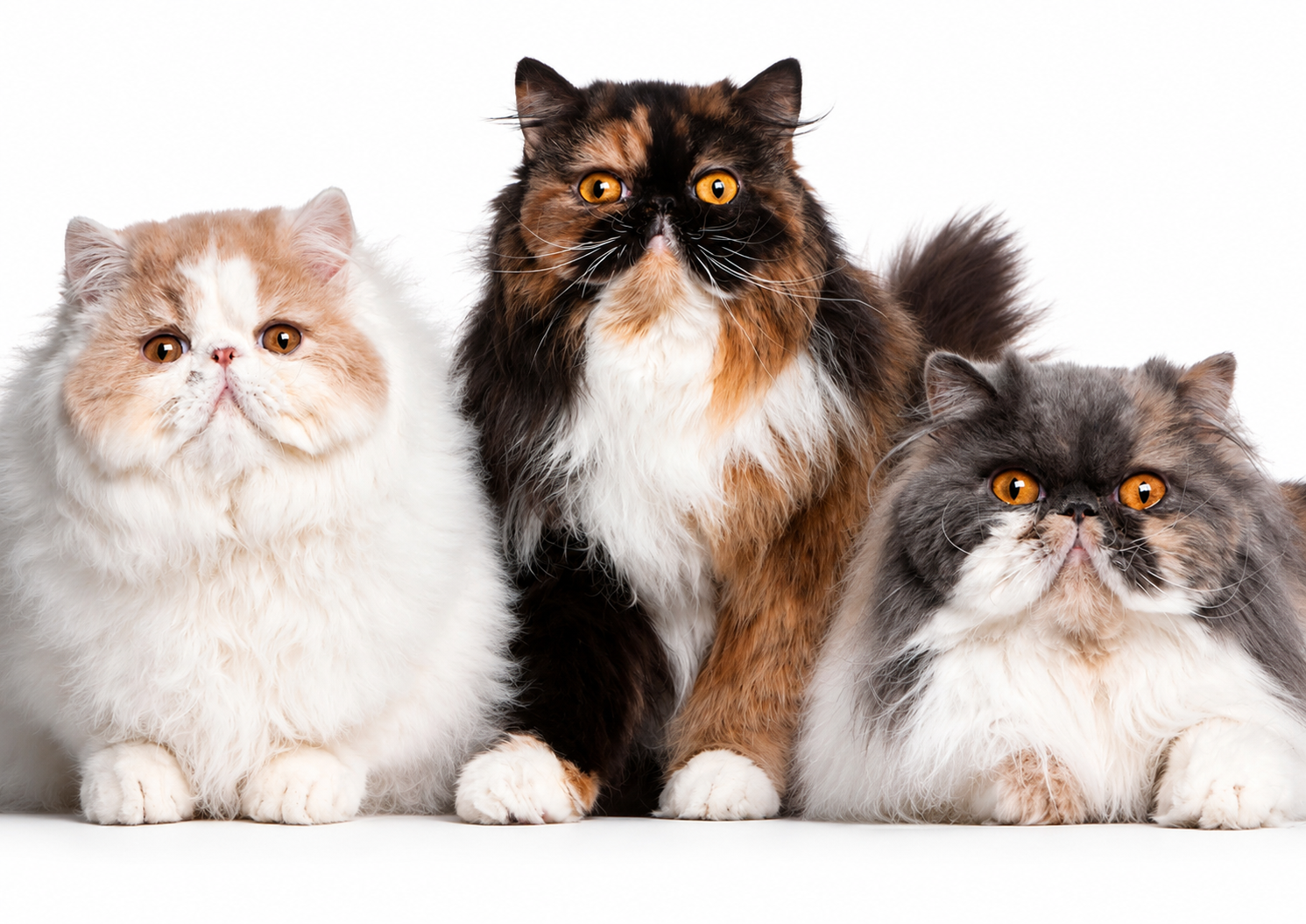
The Persian cat is one of the oldest and most recognised cat breeds in the world. They are medium to large cats with round faces, dense long coats, and a calm, affectionate temperament that makes them lovely indoor companions. Persians come in dozens of colour varieties, from solid white and black to silver chinchilla, smoke, tabby, and colourpoint Himalayan. They typically weigh between 7 and 12 pounds and live around 12 to 17 years. This is not a low-maintenance breed — but for the right owner, no other cat comes close.
There’s a reason the Persian cat has never really gone out of fashion. The coat that looks like it belongs on a cushion in a French chateau. The face that somehow manages to be both squashed and regal at the same time. The personality that’s so deeply unbothered it’s almost aspirational. Persians have been capturing hearts since the 1600s, and they show no signs of stopping.
Understanding Persian cat characteristics is the best starting point for anyone considering the breed. The calm temperament, the demanding coat, the flat face, the health trade-offs — none of these are secrets, but they’re easy to overlook when you’re staring at a photograph of a kitten that looks like a small, fluffy cloud.
This guide covers everything that matters: personality, grooming, health, lifespan, cost, and how to find one responsibly. Not to sell you on the breed, but to give you an honest picture so you can decide if this is the cat for your life, not just the cat for your Instagram.
The Persian cat is a strikingly beautiful, gentle, and deeply affectionate breed suited to quiet indoor homes. Caring for a Persian is more demanding than caring for many breeds — particularly because of the daily grooming — but for the right owner, the reward is a cat that bonds completely and asks for very little except your time, your lap, and a good brush.
Key Facts at a Glance
| Trait | Details |
|---|---|
| Origin | Persia (modern-day Iran); developed into modern show standard in the UK and USA |
| Size | Medium to large |
| Weight | 7–12 lbs (3.2–5.4 kg) |
| Lifespan | 12–17 years |
| Coat type | Long, dense, silky double coat |
| Coat colours | 60+ colours and patterns recognised by CFA and TICA |
| Eye colour | Copper, blue, green, hazel, or odd-eyed depending on coat colour |
| Temperament | Calm, gentle, affectionate, quiet, and moderately playful |
| Grooming needs | Daily brushing essential; professional grooming helpful every 4–8 weeks depending on coat condition |
| Shedding | Heavy |
| Energy level | Low to moderate |
| Good with children | Yes, with gentle older children |
| Good with dogs | Yes, with calm dogs; early introduction recommended |
| Good with other cats | Generally yes |
| Hypoallergenic | No |
| Best home type | Quiet indoor home; not suited to outdoor living |
| Registry recognition | CFA, TICA, FIFe, GCCF |
Persian Cat History and Origin
The Persian cat breed has a history that is genuinely ancient, though some of the earliest accounts are more legend than record. Long-haired cats were documented in Persia (modern-day Iran) and Turkey in the 1600s, brought back to Europe by travellers enchanted by their exotic coats. Pietro della Valle is often credited with introducing them to Italy from Persia in the early 17th century, while Nicolas-Claude Fabri de Peiresc is credited with bringing a similar cat from Ankara, Turkey, to France around the same period.[1]
By the late 1800s, Persians were among the first breeds shown at Harrison Weir’s pioneering cat show at Crystal Palace in 1871. They quickly became a favourite of the British and European fancy, and Queen Victoria herself was a noted admirer.[1]
The Persian cat most people recognise today — with its notably flat face and cobby body — was largely shaped by 20th-century selective breeding, particularly in the US and UK. The modern show Persian has a much flatter profile than the traditional “doll face” Persian, which retains a more conventional feline muzzle. Both are Persians. They just sit differently on a shelf.
The Cat Fanciers’ Association (CFA) first registered Persians in the early 1900s, and they remained the most popular registered breed in the US for decades.[2]
What Does a Persian Cat Look Like?
The Persian cat’s appearance is unmistakable. They are a cobby breed — solid, low-slung, and broad, with a large round head set on a short, thick neck. Everything about their structure says settled, not sprinting.
The face is the defining feature. The flat-faced Persian cat — also called the peke-face or ultra-type — has a very short muzzle, a broad, snub nose, and prominent round eyes that sit on a face so flat it’s almost a circle. The doll face Persian cat has a slightly longer muzzle and a more traditional feline profile, which many owners and vets prefer for its health advantages.
Their eyes are large, round, and brilliant — copper is the most common colour, but blue (usually in white Persians), green, and odd-eyed combinations also occur. The nose is short and barely there. Ears are small and set wide, half-hidden in all that fur.
As for size: Persians are medium to large cats. Most adults weigh between 7 and 12 pounds, with males typically larger than females.
Persian Cat Coat
The Persian cat coat is its most dramatic feature — and its most demanding one. It’s a double coat: a dense, cottony undercoat beneath a long, silky top coat that can reach several inches in length. Without daily brushing, it mats. Not gradually. Quickly.
The ruff around the neck and chest is particularly full, and the tail is magnificently plumed. The coat softens the lines of the body entirely — which is part of why Persians look so much larger than they are when you finally see them without it.
Persian Cat Colours and Patterns
This is one of the most colour-diverse breeds in the cat world. The CFA recognises over 60 colour varieties across seven divisions: Solid, Silver and Golden, Shaded and Smoke, Tabby, Particolour, Bicolour, and Himalayan (colourpoint).[2]
Popular colours include solid white, black, blue (grey), cream, and red. The silver Persian cat and chinchilla Persian cat are among the most striking — the chinchilla has a white base coat with black-tipped hairs that give it an almost luminescent shimmer. The golden Persian cat is a warm honey version of the same pattern.
Smoke Persians have a white undercoat beneath a deeply pigmented top coat, giving a dramatic two-tone effect in motion. Tabby Persians — classic, mackerel, and patched — add bold markings to the already substantial coat.
The Himalayan Persian cat — sometimes called colourpoint Persian — combines the Persian body type with Siamese-style point colouring: darker ears, face, legs, and tail against a lighter body, always with blue eyes. Some registries list Himalayans separately; CFA includes them as a Persian division.[2]
Eye colour is linked to coat colour in Persians. White Persians may have copper, blue, or odd eyes (one of each). Silvers and chinchillas typically have green or blue-green eyes. Most other colours carry copper.[2]
Persian Cat Personality and Temperament
If you want a cat that will race around your flat knocking things off shelves, a Persian is going to disappoint you. If you want a cat that will settle next to you on the sofa for the entire length of a film, then follow you to the kitchen with the quiet confidence of someone who knows they’re loved — that’s a Persian.
The Persian cat’s temperament is defined by gentleness and calm. They are not typically loud. They don’t demand. They’re not particularly mischievous. They exist at a frequency that most other cats simply don’t operate on.
They are genuinely affectionate — Persian cats are cuddly and lap-loving in the truest sense — and they bond deeply with their people. They tend to show preference for the people they know best and can be slightly reserved with strangers, though not anxious or aggressive. They just need a moment.
Despite the serene exterior, Persians do like to play. It’s just not the frantic, ceiling-scaling kind of play. A feather wand, a crinkle ball, a slow game of ‘I’ll watch it from here’ — all perfectly acceptable. Their energy level is low to moderate, and that’s entirely by design.
Persian Cats With Children
Persians can be excellent with children, with one significant caveat: the child needs to understand how to be gentle. A Persian who is chased, held incorrectly, or subjected to loud, sudden movements will not retaliate aggressively — they’ll just retreat, and they won’t forget. With calm, respectful older children, they can be wonderfully affectionate companions.
Persian Cats With Dogs
Persians can coexist happily with dogs, particularly calm, gentle breeds. Their laid-back nature means they’re less likely to be startled into conflict than more highly-strung cats. Early introductions, slow and supervised, make a significant difference. A boisterous dog that wants to chase will stress a Persian considerably — they are not built for that kind of excitement.
Persian Cats With Other Cats
Persians generally get along well with other cats, particularly those who share their relaxed temperament. They are rarely the instigators of feline drama. Another Persian, or a similarly gentle breed like a Ragdoll or British Shorthair, often makes an ideal companion.
Are Persian Cats Good Indoor Cats?
Yes — Persians are one of the best breeds for full indoor living. They have no strong drive to roam, no need for outdoor territory, and their coats are genuinely unsuitable for outdoor life (mats, parasites, and mud are not a good combination). They adapt well to apartment living too: are Persian cats good apartment cats? Absolutely, provided there’s a calm atmosphere, a comfortable spot to settle, and someone to come home to them. They don’t need space. They need consistency.
Persian Cat Care
Persian cat care covers more ground than most breeds. The coat, the face, the diet, the environment — all of it requires more thought and consistency than the average indoor cat. But none of it is complicated once it becomes routine. The Persians who thrive are the ones in homes where their needs have been built into the day, not treated as an afterthought.
Diet
Feed a complete and balanced cat food appropriate to your Persian’s life stage — kitten, adult, or senior. Look for a named protein source (chicken, turkey, fish) as the first ingredient. Wet food is worth including for Persians specifically: it supports hydration, which matters for kidney health in a breed predisposed to PKD, and it’s physically easier to eat for cats with dental crowding or a very flat face. Some Persians do better with a flat, shallow dish rather than a deep bowl.
For hairball management, specialised hairball-control formulas increase fibre content to help move ingested fur through the digestive system — worth considering given how much a Persian swallows during self-grooming. Daily caloric needs for an average adult Persian (8–10 lbs) typically fall between 200–280 kcal per day. Don’t guess — Persians don’t self-regulate well, and obesity is a real risk.
Exercise
Persians are not high-energy cats, but they still need daily engagement to stay mentally and physically healthy. Short play sessions — a feather wand, a crinkle ball, a toy that encourages gentle batting — are enough. The goal is to keep them moving, keep their weight in check, and prevent the boredom that even a calm cat can quietly develop. Don’t mistake their stillness for contentment without stimulation. They notice when life gets dull.
Home Environment
Persians are well-suited to full indoor living and apartment life. What they need is predictability, not space. A consistent routine, a warm spot to settle, a quiet atmosphere, and access to their owner — that covers most of it. They are sensitive to heat: their flat faces make temperature regulation harder than it is for other cats, so climate-controlled environments matter, particularly in warm seasons. Keep litter boxes clean and accessible; Persians are fastidious and will avoid a dirty box, which can cause problems quickly.
Persian Cat Grooming Needs
Persian cat grooming is the single biggest commitment you make when you bring this breed into your home. The coat does not maintain itself. It mats, it tangles, and it collects anything in its path. Daily brushing is not a suggestion — it is the cost of entry.
Persian cat shedding is heavy and year-round, with heavier seasonal peaks. Daily brushing manages the bulk of loose fur before it transfers to every surface in your home — but there will always be some. If cat fur on your clothes is a dealbreaker, this is not the breed for you.
Use a wide-toothed metal comb, not a soft brush, for the body and undercoat. Work through sections methodically, starting at the legs and working up. Never pull through a mat — work it from the ends back toward the skin, or use a mat splitter. Badly matted fur may need professional attention or, in severe cases, clipping.
How often should you bathe a Persian cat? Monthly is a reasonable starting point, more frequently if the cat is show-standard or has a white coat that shows dirt. Use a cat-safe shampoo and ensure the coat is thoroughly dried afterward — a damp undercoat can stay wet for hours and cause skin problems.
Professional grooming can be genuinely helpful for Persians — every 4 to 8 weeks works well for many owners, particularly if the coat is prone to matting, needs sanitary trims, or is simply difficult to manage fully at home. It is not a strict requirement for every Persian, but for cats with heavier coats or owners with less time, it makes a significant difference.
The Persian cat lion cut — where the body coat is clipped short while the head and tail are left fuller — is a practical option for owners who want to reduce grooming demands. Some cats take to it well; others find the experience stressful. It’s worth discussing with a professional groomer who has experience with the breed.
Persian Cat Eye Cleaning and Tear Stains
The flat face and large eyes mean that tear drainage is often impaired. Tears overflow onto the face rather than draining through the nasolacrimal ducts, leading to the distinctive reddish-brown Persian cat tear stains beneath the eyes.[3]
Persian cat eye cleaning should be part of the daily routine. Use a soft, damp cloth or cotton pad and wipe gently from the inner corner outward. Specialised tear stain removers are available for cats; avoid anything with bleach or strong chemicals near the eye area. A vet should investigate if discharge is thick, yellow-green, or accompanied by swelling — that’s no longer a cosmetic issue.
The skin folds around the nose and face should also be kept dry and clean to prevent bacteria and yeast buildup.
Diet and Grooming Connection
What your Persian eats affects their coat directly. A diet rich in omega-3 and omega-6 fatty acids supports coat condition and reduces excessive shedding. High-quality protein is essential for coat health, and adequate hydration — often easier to achieve with wet food — affects skin and fur quality.
Persian Cat Health Issues
Persian cat health problems are real, and they deserve an honest conversation. This doesn’t mean Persians are fragile — many live long, healthy lives — but there are breed-specific conditions every prospective owner should understand before committing.
Polycystic Kidney Disease (PKD)
Polycystic kidney disease in Persian cats is a hereditary condition in which fluid-filled cysts develop in the kidneys, gradually reducing kidney function. PKD was once very common in the breed — studies have found that a significant proportion of Persians historically carried the gene. [4] A DNA test now exists for the mutation responsible, and responsible breeders test all breeding cats. PKD-positive cats should never be bred. Always ask for PKD-negative test results before purchasing a kitten.
Brachycephalic Health Issues
The flat-faced Persian cat is a brachycephalic breed, meaning its shortened skull alters the anatomy of the airways, eyes, and mouth. Persian cat breathing problems can range from mild snoring to significant respiratory distress in severely brachycephalic individuals.[3]
Related concerns include: narrowed nostrils (stenotic nares), an elongated soft palate, and shallow eye sockets that leave the eyes more exposed and vulnerable to injury and chronic irritation. Dental crowding — too many teeth for too little jaw — is also common and can lead to periodontal disease without regular dental care.
The doll face Persian, with its less extreme facial structure, has a lower risk of these complications. If you want a Persian with fewer health trade-offs, seek a breeder working toward less extreme facial typing.
Hypertrophic Cardiomyopathy (HCM)
HCM, a thickening of the heart muscle, occurs across many cat breeds and Persians are not exempt. There is no breed-specific screening test equivalent to PKD, but reputable breeders may have breeding cats regularly echocardiographed.[5]
Ringworm and Skin Conditions
Persians’ dense coats create ideal conditions for dermatophyte (ringworm) infections, particularly in multi-cat environments. Regular grooming that keeps the coat clean and dry, combined with prompt veterinary attention for any skin changes, reduces risk significantly.
Obesity
Their low activity level makes Persian cat obesity a genuine risk. An overweight Persian puts additional strain on joints and organs that are already working harder due to their conformation. Measured meals, calorie-appropriate food, and regular weigh-ins are part of responsible Persian cat care.
Persian Cat Lifespan
The average Persian cat lifespan is commonly estimated at around 12 to 17 years, though well-cared-for Persians may live longer. A large UK study of Persian cats under primary veterinary care found that coat, dental, eye, and kidney-related issues were among the health concerns seen in the breed, which is why regular grooming, dental care, weight control, and routine veterinary checks matter so much.[6]
How long do Persian cats live in practice depends heavily on genetics, diet, grooming, dental care, and how proactively health issues are managed. A PKD-negative Persian from health-tested parents, fed well, kept at a healthy weight, and seen regularly by a vet who understands the breed, has every chance of reaching the higher end of that range.
Senior Persians — generally considered to be 10+ — may need more frequent vet visits, softer food if dental disease develops, and adjustments to their environment to keep everything accessible without jumping. They tend to age gracefully, which suits them.
Male vs Female Persian Cat
| Trait | Male | Female |
|---|---|---|
| Weight | 9–12 lbs (4–5.4 kg) | 7–10 lbs (3.2–4.5 kg) |
| Size | Larger, broader | Smaller, fine-boned |
| Neutered/spayed weight | Can reach 13+ lbs if overweight | Typically 8–11 lbs |
| Temperament | Slightly more laid-back | Can be slightly more independent |
| Maturity | 18–24 months | 12–18 months |
Persian Cat Price and Ownership Cost
How much does a Persian cat cost? From a reputable breeder, expect to pay between $1,200 and $3,000 for a pet-quality kitten. Show-quality kittens from champion lines can go significantly higher — $3,000 to $5,000+ is not unusual for top-line breeding.
Persian cat adoption cost through a rescue or shelter is considerably lower, typically $75 to $300, though Persian-specific rescues may charge up to $500 to cover veterinary costs.
The purchase price is the smallest part of the long-term financial picture. The real cost is ongoing
| Expense | Estimated Annual Cost |
|---|---|
| Premium cat food (wet + dry) | $400–$700 |
| Professional grooming (variable by coat needs) | $200–$600 |
| Veterinary check-ups (routine) | $200–$400 |
| Pet insurance | $300–$600 |
| Litter and litter box supplies | $150–$250 |
| Dental care (cleaning if needed) | $200–$600 |
| Toys and enrichment | $50–$100 |
| Grooming tools and supplies | $50–$150 |
| Miscellaneous / emergency buffer | $200–$500 |
| Estimated annual total | $1,850–$3,900 |
Pet insurance is particularly worth considering for Persians given the breed’s health profile. PKD, cardiac monitoring, dental cleanings, and ophthalmology visits add up. A policy that covers hereditary conditions and chronic illness (read the fine print carefully) can make a significant difference.
Persian Kitten Care
A Persian kitten is a joy and a project in equal measure. They need the same daily grooming as adults from day one — starting young means they’re used to it by the time the full adult coat comes in.
Begin with a soft brush and make sessions short and positive. If your kitten learns that being handled and groomed is safe and calm, adult grooming is far easier. If they learn it’s a battle, you will be fighting that battle for years.
The face needs cleaning from the start. Persian kitten eye cleaning should become part of the morning routine — wipe gently, check for anything unusual, reward the kitten.
Nutrition matters more in kittenhood than at any other life stage. A high-quality kitten food that supports growth without encouraging the rapid weight gain that can set a Persian up for adult obesity is the goal.[7]
Persian kittens should not leave their mothers before 12 to 14 weeks. Any breeder offering kittens at 8 weeks is not doing this responsibly — early separation impairs socialisation in ways that show up for years.
How to Choose a Persian Cat Breeder
Knowing how to choose a Persian cat breeder is one of the most important decisions you’ll make. It can be emotionally overwhelming — the kittens are beautiful, the websites are polished, and the prices vary wildly. Here is what actually matters.
What to Look For
A responsible Persian cat breeder health-tests their breeding cats. That means PKD DNA testing (negative), cardiac screening by a cardiologist, and eye exams where relevant. Ask for documentation. Good breeders will have it and will offer it without being asked. They will be registered with a recognised registry — CFA, TICA, GCCF — and will be happy to discuss their programme in detail. They will ask you questions too, because they care where their kittens go.
Kittens should not leave before 12 weeks, should be litter-trained, and should have had a veterinary check and their first vaccinations. A good breeder provides a contract, health records, and ongoing support.
Persian Cat Breeder Red Flags
Persian cat breeder red flags to watch for: cannot provide written health test documentation • offers kittens before 12 weeks • always has kittens available regardless of season • avoids or deflects questions about the parents • is priced significantly lower than market rate with no explanation. Low price in a Persian is not a bargain — it’s a signal.
Persian Cat Adoption
Persians do end up in rescue — often because an owner underestimated the grooming commitment. Persian cat rescue organisations, as well as general cat rescues, occasionally have Persians and Himalayans available for adoption. This is a genuinely good option: you get a cat that’s already assessed for temperament, and you give a home to an animal that needs one.
Persian Cat Compared With Similar Breeds
| Trait | Persian | Exotic Shorthair | Ragdoll | British Shorthair |
|---|---|---|---|---|
| Grooming | Very high — daily | Moderate — weekly brushing, regular face cleaning | Moderate | Low — weekly |
| Temperament | Calm, quiet | Calm, affectionate | Gentle, social | Calm, independent |
| Energy level | Low | Low–moderate | Moderate | Low–moderate |
| Coat length | Very long | Medium–long | Long | Short |
| Health concerns | PKD, breathing, eyes | PKD, breathing, eyes | HCM | HCM |
| Best for | Quiet homes | Quiet homes | Families, multi-pet homes | Calm homes, independent-cat lovers |
The Persian cat vs Exotic Shorthair comparison is particularly common. The Exotic Shorthair is often called the “lazy man’s Persian” — same body, same face, same temperament, but a short, plush coat that needs far less grooming. If the Persian coat is genuinely daunting but you love the Persian personality and look, an Exotic Shorthair is worth serious consideration.
The Persian cat vs Ragdoll comparison comes down to energy and sociability. Ragdolls are larger, more active, and more openly social with strangers. Persians are quieter and more selective. Both are gentle, calm breeds suited to indoor living.
Persian Cat Pros and Cons
| Pros | Cons |
|---|---|
| ✓ One of the calmest, most gentle cat breeds | X Heavy shedding — Persian cat shedding gets everywhere |
| ✓ Deeply affectionate and bonding | X Daily grooming is non-negotiable |
| ✓ Quiet — rarely disruptive | X Prone to serious health conditions (PKD, breathing, eyes) |
| ✓ Gorgeous, distinctive appearance | X Higher vet costs than average |
| ✓ Well-suited to apartment and indoor living | X Face and eyes require daily cleaning |
| ✓ Good with gentle children and calm dogs | X Can suffer in heat — needs climate control |
| ✓ Adapts well to routine and predictable homes | X Not a playful, active breed — may bore active owners |
| ✓ Long lifespan with good care (up to 17 years) | X Professional grooming costs add up significantly |
Is a Persian Cat Right for You?
A Persian is right for you if you have the time, patience, and genuine desire to groom a cat every day without resentment. Not because you should, but because you want to. Because you find something meditative in it, or because you know your cat loves it, or both. The grooming requirement is not optional and it doesn’t get easier over time — if anything, it gets more important as the coat thickens.
A Persian is right for you if you want a cat who will genuinely be with you rather than near you. They follow. They settle. They notice when you’re home. They don’t perform affection in flashy, theatrical ways — they just make it quietly clear, over and over, that you are their person.
A Persian is right for you if your home is calm. They can manage mild activity and the usual rhythms of family life, but they are not suited to chaotic environments with constantly changing people and noise. They need predictability.
A Persian is not right for you if you travel frequently without reliable cat care, if you have very young children who cannot yet understand gentle handling, or if you are drawn to the breed primarily by the looks and haven’t thought carefully about the rest. The looks are genuinely wonderful. The rest is a long-term daily commitment.
If you can offer a calm home, daily grooming, attentive vet care, and the kind of unhurried companionship this breed was made for — a Persian will be one of the most rewarding cats you’ve ever had.
Final Thoughts
The Persian cat is one of the most beautiful, gentle, and rewarding companion animals you can share a home with. They have survived centuries of changing tastes not because they are trendy, but because they genuinely deliver on the promise of calm, devoted company.
But they ask something of you in return. Daily grooming. Attentive health monitoring. A quiet home where they can be comfortable and unhurried. These are not impossible standards — they’re just honest ones.
If you’ve read this far and your enthusiasm hasn’t dimmed — if the grooming sounds like something you’d actually enjoy, if the calm temperament is exactly what you’re looking for, if you’re already thinking about which room they’d settle in first — then a Persian probably is the right cat for you.
Take your time finding one from a responsible source. Ask about PKD testing. Ask about the parents. Ask what the breeder feeds them. A breeder who finds these questions inconvenient is not the one you want.
Get the grooming tools before the cat arrives. Set the expectations. And then enjoy one of the most genuinely lovely breeds in the cat world — because when it’s right, a Persian is very, very right.
Frequently Asked Questions
Are Persian cats good pets?
Yes, for the right owner. Persians are gentle, affectionate, and deeply bonded to their people. They are ideal for calm households and owners who enjoy close, quiet companionship. Their high grooming needs make them less suitable for people with limited time or who travel frequently.
Are Persian cats high maintenance?
Yes. The coat requires daily brushing, the face needs regular cleaning, and the breed’s health profile means vet care is more involved than with many other breeds. They are not difficult in terms of behaviour, but their physical care requirements are significant.
Do Persian cats shed a lot?
Persian cat shedding is heavy and ongoing. The long, dense coat sheds continuously, with heavier periods during seasonal coat changes. Daily brushing removes much of the loose fur before it settles on furniture and clothing, but living with a Persian means living with some level of fur. A good lint roller is part of the package.
How often should you groom a Persian cat?
Daily brushing is the non-negotiable baseline. Professional grooming every 4 to 8 weeks can help significantly, especially for cats prone to matting or owners who find the full coat difficult to manage at home — but the frequency can be adjusted based on your individual cat’s coat. Persian cat eye cleaning and face wiping should happen daily. Bathing once a month is appropriate for most.
How long do Persian cats live?
The typical Persian cat life expectancy is 12 to 17 years. Cats from health-tested parents, kept at a healthy weight, with good dental and veterinary care, regularly reach the higher end of that range.
Are Persian cats good for first-time owners?
They can be, with preparation. The grooming learning curve is real and needs to be taken seriously. But Persians are not temperamentally challenging — they don’t test boundaries in the way some more active breeds do. A first-time owner who commits to understanding the breed’s needs before bringing one home will do well.
Do Persian cats have breathing problems?
Persian cat breathing problems are a genuine concern in the flat-faced (brachycephalic) type. Issues range from mild snoring to more significant respiratory difficulties, depending on the individual’s facial conformation. Doll-face Persians, with their less extreme facial structure, generally have fewer respiratory concerns. If a Persian is breathing loudly at rest, a vet assessment is worth pursuing.
Why do Persian cats get tear stains?
The flat face impairs tear drainage: tears overflow onto the face instead of draining through the nasolacrimal ducts. Daily Persian cat eye cleaning with a soft damp cloth prevents staining from becoming severe. Chronic excessive tearing should be assessed by a vet, as it can indicate eye or duct problems beyond cosmetic concerns.
How much does a Persian cat cost?
A pet-quality kitten from a reputable breeder typically costs between $1,200 and $3,000. Show-quality Persians can exceed $5,000. Ongoing annual costs — food, grooming, vet care, insurance — typically run $1,850 to $3,900 per year.
What is the difference between a doll face Persian and a flat-faced Persian?
The doll face Persian has a more traditional cat profile with a longer muzzle, while the flat-faced or peke-face Persian has the extreme brachycephalic conformation seen in show cats. Both are Persians. The doll face typically has fewer health complications related to facial structure.
Are Persian cats good with kids and dogs?
Yes, with the right temperament on both sides. Persians do well with calm, gentle older children and with dogs that are not boisterous or chase-prone. Early, careful introductions are important.
Are Persian cats good indoor cats?
Absolutely. Persian cats are one of the best breeds for full indoor living and do well in apartments provided the home is calm and consistent. They have no strong outdoor drive and their coats are genuinely unsuitable for outdoor life. What they need is not space — it’s routine, comfort, and company.
Should I adopt or buy a Persian cat?
Both are legitimate paths. Adoption is lower cost and gives a home to a cat in need — Persian rescues and general shelters occasionally have Persians available. Buying from a responsible breeder gives you more information about health history and parentage. The key in both cases is doing your homework before you commit.
Sources
[1] Cat Fanciers’ Association: Persian Cat Breed Profile
[2] Cat Fanciers’ Association: Persian Breed Standard
[3] International Cat Care: Persian Cats and Brachycephaly
[4] UC Davis Veterinary Genetics Laboratory: Feline Polycystic Kidney Disease (PKD)
[5] Cornell Feline Health Center: Hypertrophic Cardiomyopathy in Cats
[6] Royal Veterinary College / PubMed Central: Persian Cats Under First Opinion Veterinary Care in the UK
[7] AAHA/AAFP: 2021 Feline Life Stage Guidelines