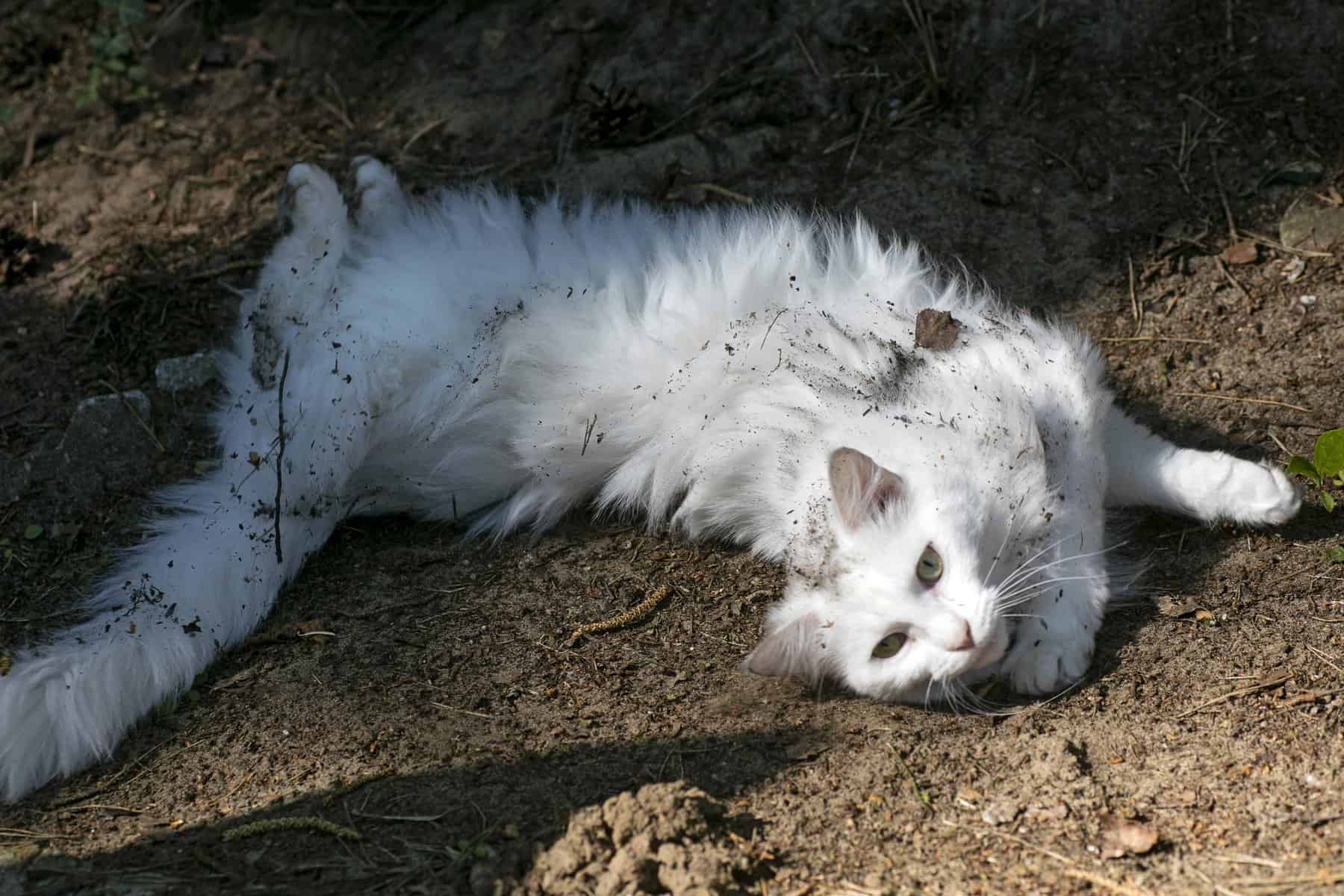
;

Why Do Cats Roll in Dirt? What This Strange Cat Behavior Really Means

Why Do Cats Roll in Dirt

Quick Answer: Why Do Cats Roll in Dirt?
Is it normal for cats to roll in dirt? Yes — almost always. Cats do it to mark their scent, cool off, relieve an itch, take a dust bath, or simply because they're in a good mood and feeling relaxed. Female cats in heat roll on the ground for hormonal reasons. In most cases, a quick roll in the dirt is the feline equivalent of a stretch — instinctive, satisfying, and over in seconds.If you're asking "why does my cat roll in dirt specifically after coming outside or after rain" — there are good answers for that too, covered below.The times it matters are when the behavior becomes compulsive, is paired with visible symptoms, or happens in soil that may have been treated with chemicals.

You let your cat outside for ten minutes. They come back coated in dust, looking entirely unbothered about it. You, meanwhile, are standing there wondering what just happened to their perfectly groomed fur.

Here’s the thing: your cat wasn’t having a bad moment. They were doing something deeply intentional.

Why cats roll in dirt is one of those questions that sounds like it should have a silly answer, but doesn’t. The behavior has roots in how cats communicate, regulate their bodies, and interact with the world around them — and outdoor cat behavior in general is far more deliberate than it looks. Most of the time it’s completely harmless, but there are situations where it’s worth paying closer attention.

So let’s get into it — what your cat is actually getting from that dirt, and when you should care.

Your Cat Is Probably Doing Several Things at Once

why do cats roll in dirtIt’s tempting to look for a single reason, but cats rarely do anything with just one purpose in mind. A roll in dry garden soil might be ticking four boxes simultaneously: scent marking, temperature regulation, a quick scratch, and a sensory hit from the earthy smell. That’s not unusual — it’s efficient.

Understanding the individual reasons helps you read what’s going on in any given moment.

Scent Marking — This Is My Territory, Thank You

Cat scent marking is often associated with spraying, but rolling is an equally deliberate form of it. Cats have scent glands concentrated around their face, flanks, paws, and the base of their tail. When your cat rolls on a surface, they’re pressing those glands into contact with the ground and leaving behind cat pheromones — a chemical signature that’s unique to them. [1]

That patch of soil is no longer just dirt. It’s been claimed.

Rolling is classified as a scent-marking behavior in feline communication research, alongside object rubbing and scratching. [2] In cats, scent-based communication is deeply rooted — rolling, rubbing, and scratching all serve to leave scent information in the environment. Today’s domestic cat may only be claiming a sunny patch of garden soil, but the instinct driving that behavior connects directly to how their ancestors communicated across much larger territories.

When Apollo — a shorthair I’ve watched do this dozens of times — bolts outside after rain and flattens himself into the garden bed, there’s nothing tentative about it. He presses in methodically, switching sides, working his flanks into the damp soil with the focus of someone finishing a job. He looks deeply satisfied afterward. That earthy post-rain smell seems to trigger something almost ancient in him.

The rolling-when-they-see-you behavior is also scent-related. If your cat rolls on the ground right as you approach them, they’re often marking the space between you two as shared territory — a social signal that sits somewhere between “hello” and “this spot is ours.” [2]

Cat Dust Bathing — It’s a Real Grooming Method

Cat dust bathing gets overlooked because we associate cats so strongly with licking. But for some cats, rolling in fine, dry soil may work almost like a waterless grooming session — the dust can help loosen debris and lift excess oil from the coat, giving them a texture they clearly enjoy, even if it looks like they’re undoing all their grooming work.

Why do cats roll in dust the way birds do? Same instinct, same substrate logic. The licking session you often see after a dirt roll is the second half of the process — your cat finishing what the dirt started.

Cooling Down — Dirt Holds Temperature

Cats regulate their body temperature partly through their skin and coat, but they have limited sweating ability compared with dogs and humans. Their sweat glands are mainly on the feet and play only a minor cooling role, while grooming helps with temperature regulation. [3] That makes cool resting surfaces especially appealing on warm days — and loose dirt or shaded soil may offer a cooler place to stretch out.

Cat rolling in dirt to cool down is practical thermoregulation. Loose, shaded soil or fine dust acts like a natural cooling pad — pressing into it conducts heat away from the body.

If you see your cat digging a small hollow before rolling on a hot afternoon, that’s exactly what’s happening. They’re accessing the cooler layer beneath, and it’s one of the more elegant things they do.

Scratching an Itch They Can’t Reach

Cat rolling on back outside, pressing flanks into the ground, wriggling with focus — this is often your cat dealing with an itch they can’t reach otherwise. The back, the area between the shoulders, the base of the tail: these are all spots that a cat’s tongue can’t reach reliably and that paws can only partially get to.

Soil gives them a surface to rub against. For a mild, occasional itch, this is entirely normal.

The problem is that cat rolling in dirt because itchy can also be the first visible sign of something more persistent — cat skin irritation from allergies, early flea activity, or contact with a plant or surface that’s causing localized irritation. One or two rolls? Normal. A cat that keeps rolling in dirt and scratching, or returns to the same patch repeatedly in a single day, is worth watching.

Happiness, Relaxation, and Showing Their Belly

Sometimes, a cat rolling in dirt is simply a happy cat enjoying the moment. It looks slightly different from the functional stuff — slower, more flopped than deliberate, no obvious target area.

When a cat feels safe rolling on their back, the movement usually looks loose, slow, and relaxed. Exposing the belly is a vulnerable position. Cats only do it when they’re genuinely comfortable with their environment. It’s easy to overlook how much information is in the body language around the roll, not just the roll itself.

If your cat rolls when they spot you coming toward them, that’s almost certainly social — a greeting, an invitation to engage, or a way of including you in their marked space.

Female Cats in Heat Roll Differently

If you have an unspayed cat and notice female cat rolling on ground behavior that seems urgent, persistent, and paired with vocalizing, rubbing against everything, and unusual restlessness — that kind of rolling is usually hormonal rather than just playful or scent-related.

Cat in heat rolling on ground is a recognized sign of estrus in cats, driven by the hormonal changes of the reproductive cycle. The rolling is partly a physical response to discomfort, partly a display behavior that signals receptivity. [4] Cat rolling and meowing together, combined with a low crouched posture and the back legs treading: these are classic heat signs.

It’s not a health concern, but it is a strong signal that spaying should be on your radar if it isn’t already. Spaying eliminates heat cycles entirely and also reduces the risk of uterine infections and certain reproductive cancers. [4]

Is It Safe for Cats to Roll in Dirt?

Most of the time, yes. But “dirt” covers a wide range of actual substances, and that’s where it gets nuanced.

Plain outdoor soil — from a garden bed, a patch of lawn, a hiking trail — is generally fine. The risks that do exist are worth knowing.

Cat rolling in treated soil is the main one. Cats are particularly sensitive to many insecticides, and because of their grooming habits, anything that reaches their coat gets ingested. [5] Even brief or repeated skin contact with pesticide residue can result in cumulative absorption. [6] If you’ve treated any outdoor area, keep your cat away for at least the manufacturer’s recommended period — and longer if in doubt. Safe outdoor time for cats means knowing what’s been applied to your garden and when.

Cat rolling in potting soil from indoor plants is another common scenario. Many commercial potting mixes contain slow-release fertilizers, fungicides, or moisture retention additives that aren’t cat-safe. If your cat is targeting your houseplant pots, it’s worth checking the ingredient label.

Cat rolling in mud isn’t a chemical concern but is a hygiene one. Mud can carry bacteria, and depending on where it came from — standing water, areas frequented by wildlife — there’s a low but real risk of environmental pathogens.

Can cats get fleas from rolling in dirt? Not from the soil itself. Fleas transfer from contact with other animals or infested environments. But keeping up with regular flea and tick prevention for cats is the practical solution, not restricting outdoor access.

Can cats get worms from rolling in dirt? Some intestinal parasites do have environmental stages in soil, particularly in areas where wildlife is present. Again, routine parasite prevention covers the meaningful risk here.

When You Should Be Concerned

This is the section worth reading carefully if something about your cat’s behavior feels off.

Normal dirt rolling is occasional, relaxed, and contextual. Your cat goes outside, rolls once or twice, then moves on with their day. That’s the baseline.

Here are the signs that shift it from quirky to worth investigating:

Cat rolling on ground excessively. If your cat is returning to the same spot repeatedly throughout the day, or rolling for longer than usual with a focused, driven quality, this isn’t enrichment behavior. It points to something causing ongoing discomfort — most commonly skin irritation, allergies, or parasites.

Rolling paired with scratching, biting, or overgrooming. Cat rolling in dirt and scratching in combination — especially if you’re also seeing hair loss, redness, or scabbing — needs a vet visit. Flea allergy dermatitis is the most common skin disease in cats, and it can be triggered by just a few flea bites in a sensitive cat — not a visible infestation. [7] A cat can remove all evidence of fleas through grooming, so the absence of fleas on the coat doesn’t rule them out. [7] Cat skin irritation that your cat is trying to self-treat through rolling isn’t going to resolve without addressing the underlying cause.

Why is my cat suddenly rolling in dirt a lot? A change in frequency matters. If your cat has rolled casually for years and suddenly the behavior ramps up significantly, something has changed — a new allergen in the environment, an early skin condition, contact with something irritating. Sudden behavioral shifts in cats always have a reason.

Rolling in one fixed spot obsessively. A cat that returns to exactly the same patch over and over, seemingly unable to stop, may be showing anxiety-driven behavior. The distinction from normal scent preference is in whether they seem unable to disengage and whether it’s happening at unusual frequency.

Signs of systemic distress. If rolling is paired with lethargy, appetite changes, vomiting, or obvious discomfort when you touch their skin, skip monitoring and go straight to the vet

Should You Stop Your Cat From Rolling in Dirt?

Probably not, as a general rule. Trying to prevent an instinctive behavior without giving your cat an outlet for it tends to create frustration rather than solving anything.

Should I stop my cat from rolling in dirt? Only in specific circumstances: treated soil, areas where parasites are a concern, or if the behavior has crossed into compulsive territory. In those cases, you’re not stopping the behavior — you’re addressing the underlying issue and redirecting.

How to keep cat from rolling in dirt if you want to redirect: set up a designated rolling area with clean, untreated soil or sand. A shallow tray in an outdoor space, or a dig box indoors, gives your cat the sensory experience without you worrying about what’s in it. A small amount of dried catnip can help make it more appealing initially.

How to clean cat after rolling in dirt: in most cases, leave it. Your cat will groom themselves. If they’ve rolled in mud or you suspect treated soil, a damp cloth wipe-down of the coat and paws is enough in most cases. Should I bathe my cat after they roll in dirt? Only if the soil contact was significant and the substance was potentially harmful — in which case, get vet guidance on the safest approach.

Flea and tick prevention for cats is, across the board, more effective than restricting outdoor behavior. A cat on consistent parasite prevention can roll in dirt freely, and you’re protected against the main vector-borne risks.

Final Thoughts

A cat that rolls in dirt is a cat that’s communicating, thermoregulating, grooming, and expressing something about how they feel — often all at the same time. It’s not a flaw in their behavior. It’s the behavior working exactly as it’s supposed to.

Most of the time, the right response is to let them get on with it.

Where it earns your attention is at the edges: the sudden increase in frequency, the compulsive return to one spot, the rolling that comes with scratching and irritated skin. Those details, in context, tell you when something has shifted from instinct into a problem worth addressing.

Pay attention to the whole picture — the body language, the frequency, the environment — and you’ll almost always know whether what you’re seeing is your cat at their most natural, or your cat asking for help.

Frequently Asked Questions

Why do cats roll in dirt?

To mark their scent, take a dust bath, cool down, relieve an itch, or express contentment. Usually several of these at once.

Is it normal for cats to roll in dirt?

Yes, completely normal in most contexts. It’s instinctive behavior with roots in how cats groom, communicate, and regulate their temperature.

Do cats roll in dirt because they are happy?

Sometimes, yes. A slow, relaxed roll with the belly exposed in a safe outdoor space often signals contentment. Watch the body language around it — a happy roll looks loose and unhurried.

Do cats roll in dirt to mark territory?

Yes. They press their scent glands into the surface, leaving pheromones. It’s a form of olfactory communication used to claim space and signal to other cats. [1]

Do cats roll in dirt because they are itchy?

They can, yes. Occasional rolling to scratch a hard-to-reach spot is normal. Frequent, focused rolling paired with scratching, hair loss, or skin changes points to fleas, mites, allergies, or a skin condition that needs veterinary attention.

Can cats get fleas from rolling in dirt?

Not from the soil itself. Fleas transfer from other animals or infested environments. Keeping cats on regular flea prevention removes this as a concern.

Can cats get sick from rolling in dirt?

Rarely from clean soil. The main risks are pesticide or fertilizer exposure from treated areas, and parasites in environments frequented by wildlife. Routine prevention and avoiding recently treated areas covers most of this.

Should I bathe my cat after they roll in dirt?

Usually no. Cats groom themselves effectively, and bathing stresses most cats unnecessarily. If they’ve contacted treated soil or mud from a questionable source, a damp cloth wipe-down of the coat and paws is a reasonable middle ground.

Should I stop my cat from rolling in dirt?

Only if the dirt is treated or the behavior has become compulsive. Normal rolling is healthy and worth allowing.

Why does my cat roll in the same dirt spot every time?

Cats develop scent preferences and return to spots they’ve already marked. This is normal. It becomes a concern only if the frequency is excessive or the behavior seems compulsive rather than casual.

Why does my cat roll in dirt after I let them outside?

A combination of factors: the transition from indoor air to outdoor smells triggers scent-marking instincts, the cooler outdoor ground is appealing, and there’s often a burst of stimulation from fresh air that expresses itself as rolling behavior. It’s a good sign — your cat is engaging with their environment.

Why does my indoor cat roll in potting soil?

Same instincts, different setting. The soil’s texture and smell are stimulating. Worth checking your potting mix for added chemicals if this is a regular habit.

SOURCES

[1] VCA Animal Hospitals — “Cat Behavior Problems: Marking and Spraying Behavior”
[2] Vitale, K.R. (2018) — “Tools for Managing Feline Problem Behaviors: Pheromone Therapy.” Journal of Feline Medicine and Surgery. Published via PubMed Central.
[3] Merck Veterinary Manual — “Structure of the Skin in Cats”
[4] VCA Animal Hospitals — “Estrous Cycles in Cats”
[5] VCA Animal Hositals — “Household Hazards: Toxic Hazards for Cats”
[6] Merck Veterinary Manual — “Overview of Insecticide and Acaricide Toxicosis in Animals”
[7] Cornell University College of Veterinary Medicine — “Flea Allergy”