
Why Do Cats Cover Their Food? The Real Reasons Behind This Quirky Habit
Quick Answer:
Cats cover their food because of a deeply wired survival instinct inherited from wild ancestors who cached uneaten prey to hide the scent from predators and save food for later. In domestic cats, this instinct plays out as pawing or scratching around the food bowl — even when there’s no actual threat and nothing gets physically buried. It’s called food caching, and it’s almost always normal. The behavior can also be triggered by food they dislike, portions that are too large, strong food odors, stress, or competition from other pets in the home.
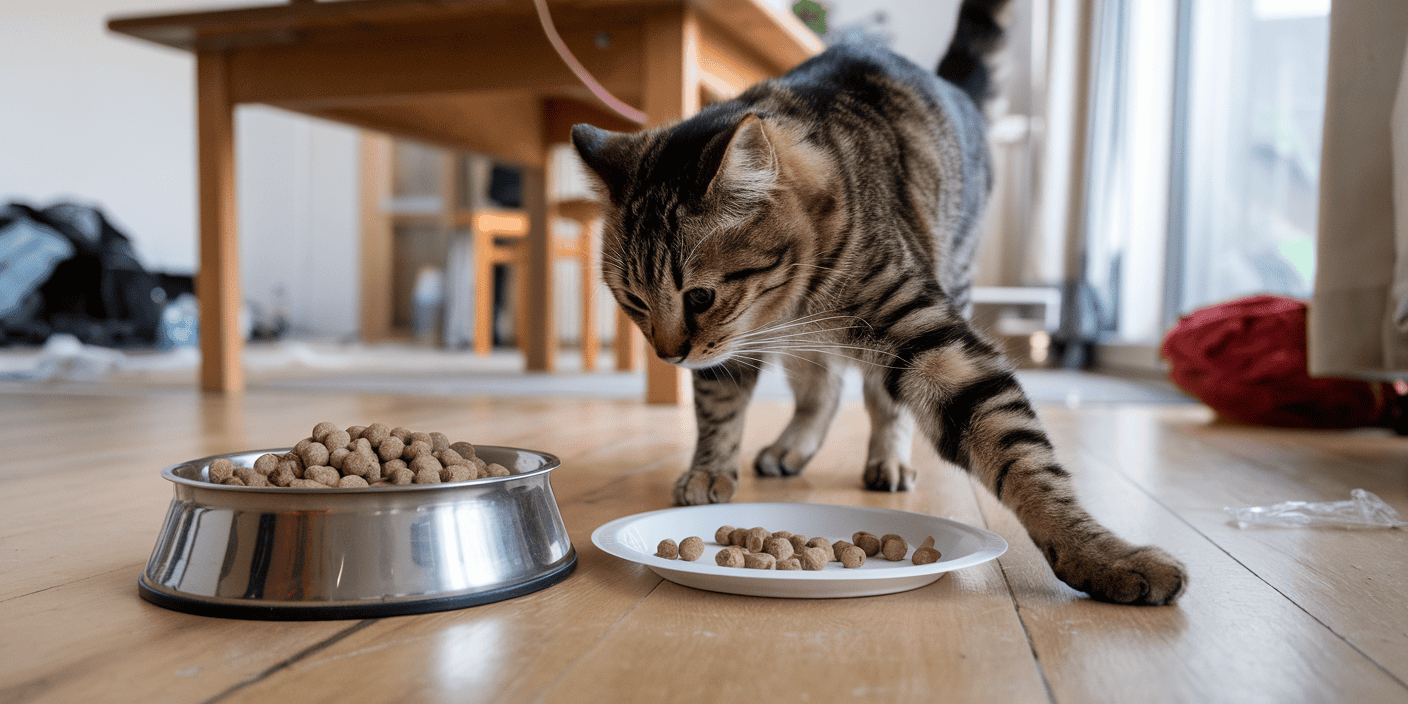
You set down your cat’s bowl, they sniff it, take a few bites — and then spend the next thirty seconds pawing at the floor around it like they’re trying to bury it alive.
Nothing happened. The food is fine. You watched them eat it two days ago without complaint.
And yet here they are, scraping invisible dirt over a perfectly good meal.
If you’ve ever stood there genuinely puzzled, you’re not alone. Cat food-covering behavior — sometimes called “caching” — is one of those things that looks bizarre until you understand what’s actually driving it. Once you do, it makes complete sense. Because cats are not random. Every quirky thing they do has a reason behind it, even when that reason is thousands of years old.
Here’s what’s really going on.
What Is Food Caching, Exactly?
“Caching” is the technical term for when an animal stores food for later. Birds do it with seeds. Dogs do it by burying bones. Cats do it by scratching around or over their food — and while your indoor cat can’t literally bury anything under your hardwood floor, their paws go through the motions anyway.
This is called a fixed action pattern — a behavior so deeply wired into the nervous system that it plays out automatically, even when the original context no longer applies. Think of it like a reflex that never got the memo that the situation changed. Your cat doesn’t need to hide food from predators. They don’t need to save it from scavengers. But the instinct fires anyway, because instincts don’t retire just because the environment changed.
Understanding this is the key to understanding almost everything about why cats cover their food.
Why Do Cats Cover Their Food? 8 Real Reasons
1. They’re Following Instincts Their Wild Ancestors Built
Wild felids — from lions to small African wildcats, the closest ancestor to domestic cats — routinely cache uneaten prey. The behavior served two clear purposes: concealing the scent of a carcass from larger predators, and preserving food for a future meal when hunting didn’t go as planned.
Your cat’s wild counterpart would scrape dirt, leaves, or debris over a kill. Your cat does the same thing with their paws on your kitchen floor — scraping air over a bowl of chicken pâté. The motion is identical. The context is completely different. The instinct doesn’t care.
This is the foundational explanation for nearly all food-covering behavior. Everything else builds on top of it.
2. They Don’t Actually Like the Food
Here’s the one that stings a little: sometimes covering is a rejection.
Cats are famously particular about what they eat — texture, temperature, smell, freshness. If something doesn’t meet their standards, they’ll paw around the bowl in a gesture that reads a lot like, “I’d rather this weren’t here.”
Watch for the accompanying signals. Did they sniff it and walk away without eating much? Did they eat around certain pieces? Did they go back to the bowl later and cover it again? That’s your cat filing a complaint.
Common culprits: food served cold straight from the refrigerator (cats prefer food at roughly room temperature — closer to fresh prey), formula changes in a familiar brand, or a switch to a texture they find objectionable. Wet food that’s been sitting out too long will also get the burial treatment.
3. The Smell Is Too Intense for Them
Cats rely heavily on scent when deciding what to eat, so a food smell that seems mild to us can be genuinely overwhelming to them.
Strong-smelling foods — particularly rich wet foods, fish-based recipes, or anything that’s been sitting at room temperature for a while — can trigger the covering response as a way of containing the smell. It’s the same instinct as masking the scent of a kill in the wild, applied here to a bowl of salmon terrine that’s been sitting out for two hours. Some cats take it a step further and drag a nearby towel, placemat, or blanket over the bowl — same “cover it up” instinct, just with better materials to hand.
If your cat consistently covers wet food but eats dry food without ceremony, smell intensity is likely a factor. Try serving smaller portions, refreshing the bowl more frequently, and cleaning the feeding area after meals.
4. They’re Saving It for Later
Not every cat is a meal-finisher. Some cats graze — taking a few bites, wandering off, coming back an hour later. For these cats, covering food isn’t rejection. It’s reservation.
The instinct to cache uneaten prey for a return visit is strong in natural grazers. If your cat eats part of their meal, covers the bowl, and then comes back to it later, that’s exactly what’s happening. They’re “marking” it as theirs and protecting it in the only way their instincts know how.
This is especially common in cats who were fed inconsistently before adoption, or in multi-cat homes where competition for resources runs high. The perceived need to save food runs deeper in cats who have ever experienced scarcity.
5. They Feel Competition — Even If It’s Not Real
In multi-pet households, food-covering behavior often intensifies — even when the other animals show zero interest in anyone else’s bowl.
Cats don’t necessarily respond to the actual behavior of their housemates. They respond to the perceived risk. If another cat, dog, or even a highly confident rabbit exists in the space, some cats will cover their food proactively, as if to pre-empt a theft that was never coming.
The fix here is practical: separate feeding stations, some distance between them, ideally in spots where each cat can eat without sightline to the others. Reducing the sense of competition reduces the covering behavior, even if the “competition” was entirely in your cat’s head.
6. Stress Is Showing Up at the Food Bowl
Cats express stress in some unexpected places, and eating habits are one of them.
A new pet, a new baby, construction noise, a recent move, a change in your schedule — any of these can make a cat feel unsettled enough to become more compulsive about protecting their resources. Food covering is one of the ways that anxiety manifests.
If the behavior started suddenly and nothing about the food changed, look at what changed in the environment. Stress-related covering often comes with other signs: hiding more than usual, changes in litter box behavior, increased grooming, or reduced appetite overall. If you’re seeing a cluster of changes, the root is almost certainly environmental stress rather than anything to do with the food itself.
7. They’re Just Tidying Up
This one is less dramatic but very real: some cats cover their food because they’re clean. Full stop.
Cats are meticulous animals. The same instinct that drives them to groom for twenty minutes after being touched by a stranger also drives them to “clean up” after eating. Pawing around the bowl is their version of wiping down the counter. Ineffective, yes. But very on-brand.
These cats tend to be consistent about it regardless of what they’re eating or how hungry they are. It’s more ritual than reaction. If your cat covers the bowl, looks satisfied, and walks away — this is probably just who they are.
8. You’re Giving Them More Than They Can Eat
Portion size matters here more than people realize. When a cat is presented with more food than they can comfortably eat in one sitting, the instinct to cache the remainder kicks in automatically.
Cats are built for small, frequent meals rather than large ones — hunting behavior in the wild involved multiple small catches throughout the day, not one large sitting. [4] A bowl that’s overfull triggers the “I can’t eat all of this, I should save some” response, which expresses itself as covering behavior.
The practical adjustment: feed smaller amounts more frequently. If you’re free-feeding, consider whether the amount always available is more than your cat can realistically graze through. Removing uneaten wet food after 20–30 minutes both prevents the covering behavior and keeps the feeding area cleaner.
What Your Cat's Covering Behavior Is Probably Telling You
Different situations call for different reads. Here’s a quick reference:
| What You're Seeing | Most Likely Meaning |
|---|---|
| Cat pawing around food bowl but eating normally | Instinct or habit — completely normal |
| Cat trying to bury food, then walks away and doesn't return | Food rejection: wrong temperature, texture, or smell |
| Cat covering food after eating part of it, returns later | Saving food for later (grazing behavior) |
| Cat scratching around food bowl in a multi-pet home | Resource competition — try separate feeding stations |
| Cat covering food but not eating, recent onset | Possible stress trigger — check for environmental changes |
| Cat covering wet food only, not dry | Strong food odor is likely the trigger |
| Cat covering food while also losing weight or seeming lethargic | Vet visit recommended — could be a health issue |
Indoor Cats vs. Outdoor Cats: Does It Play Out Differently?
Yes — though the underlying instinct is the same.
Indoor cats go through the motions without the physical means. They paw at tile or hardwood, scrape the air, and accomplish nothing literally. But the behavior is complete in their nervous system regardless of whether anything actually gets covered.
Outdoor cats can actually execute the behavior — using dirt, leaves, or grass to physically conceal food. Semi-outdoor cats who have access to gardens or outdoor areas may do this with real prey they’ve caught, which is a slightly different (and more visceral) version of the same instinct.
In feral colonies, caching behavior is more pronounced and practical. Resources are genuinely limited, competition is real, and the instinct to preserve and hide food serves an actual survival function. Indoor pet cats are running the same programming in a context where it’s no longer necessary — which is why it can look so absurdly earnest when they do it.
When Should You Actually Be Concerned?
Food covering on its own is almost always harmless. It becomes worth paying attention to when it’s paired with other changes. Veterinarians note that any significant, unexplained change in eating behavior warrants attention — especially when accompanied by physical symptoms. [1][2]
Loss of appetite. If your cat is covering their food and consistently eating very little, that’s not quirky behavior — that’s a symptom. Dental pain, nausea, gastrointestinal issues, and kidney disease can all cause a cat to approach food and then back away from it. [1]
Sudden weight loss. A cat that’s covering food and losing weight is not saving their meals for later. Something is preventing them from eating normally, and it needs a vet visit. [2]
Lethargy alongside food avoidance. A cat who’s both not eating and noticeably less energetic than usual should be seen by a vet. The combination matters more than either symptom alone.
Vomiting or diarrhea. When digestive symptoms accompany food-covering behavior, a food sensitivity or gastrointestinal issue is possible. Worth ruling out with your vet. [1]
A sudden onset with no environmental explanation. If your cat has never covered their food before and suddenly starts doing it consistently, that shift is worth noting — especially if nothing changed in their food or environment.
A cat who has always covered their food is almost certainly just wired that way. A cat who just started is telling you something changed. As a general rule, cats who go without eating for more than 24 hours — particularly if they’re also lethargic or vomiting — should be evaluated by a veterinarian. [2]
What You Can Do About It
If the behavior is benign but messy, or you’d simply like to reduce it:
Serve smaller portions. Give them what they’ll realistically eat in one sitting. No leftovers means no need to cache anything.
Refresh wet food more frequently. Covering is common with food that’s been sitting out and smells stronger than your cat prefers. Fresher food, more often, reduces the trigger.
Move the feeding area. If your cat eats near a litter box, a high-traffic hallway, or in a spot where other pets can approach, they may be covering out of stress. A quieter, more private spot can change everything.
Clean the feeding area regularly. Residual food smells can trigger the covering response even after the bowl is clean. Wiping down the feeding mat and surrounding floor helps.
Try a puzzle feeder. For cats who cover out of habit or boredom, a puzzle feeder redirects the energy. They spend it hunting for their food instead of burying it.
What you don’t need to do: stress about it. In most cats, most of the time, covering food is simply what they do.
The Bottom Line
Your cat covering their food isn’t a malfunction or a mystery. It’s a behavior with real evolutionary roots — one that hasn’t been bred out of domestic cats because there’s been no particular reason to breed it out. The same cat who sleeps in a patch of sunlight for six hours and expects dinner at exactly 5:47pm is still, on some level, a small predator managing resources in an uncertain world.
Most of the time, cat food-covering behavior is just your cat being your cat: instinct-driven, particular, and entirely logical once you understand where the logic comes from. It connects them to something much older than your kitchen floor — and that’s worth appreciating, even when you’re wiping paw prints off the tile for the third time this week.
When the behavior changes suddenly, or comes paired with appetite loss and physical symptoms, that’s when it stops being charming and starts being a signal. But for the cat who has always done this? They’re not weird. They’re just honest about what they are.
Frequently Asked Questions
Why does my cat scratch around the food bowl but nothing gets covered?
Because the behavior is instinctive, not mechanical. When your cat is pawing around the food bowl, their paws are going through the motions of caching — a motion pattern inherited from wild ancestors who would scrape dirt or leaves over uneaten prey. On a hard floor, nothing actually gets covered, but the instinct completes itself regardless. It’s a deeply wired reflex: the behavior plays out whether or not it achieves anything in the real world.
Does covering food mean my cat doesn’t like it?
Not necessarily — though it can. Food rejection is one possible reason, but so are instinct, stress, portion size, smell intensity, and simple habit. The key is context: if your cat covers the food but eats most of it across the day, they probably like it fine. If they cover it, eat very little, and show no interest later, that looks more like rejection (or a health issue worth monitoring).
Why is my cat covering food but not eating it?
This is the version worth paying closer attention to. A cat trying to bury food without eating any of it is usually signaling one of three things: the food smells wrong or unappealing, they’re stressed and their appetite is suppressed, or something physical is making eating uncomfortable — dental pain being a common culprit. If your cat is covering food and not eating for more than 24 hours, contact your vet. [2]
Why does my cat cover food after eating?
Post-meal covering is classic caching behavior — your cat is “saving” what’s left for later. It’s most common in cats who are natural grazers, cats who were food-insecure before adoption, and cats in multi-pet households who feel some level of resource competition. It’s also common in cats who were simply born this way.
Should I be worried if my cat is trying to bury their food?
In most cases, no. A cat trying to bury their food is acting on a normal feline instinct. It only becomes a concern when it’s paired with not eating, weight loss, lethargy, vomiting, or a sudden behavioral change with no clear cause. Covering food alone, in a cat who is otherwise eating well and acting normally, is benign.
Why does my cat only cover wet food, not dry?
Almost certainly scent. Wet food has a much stronger smell than kibble, and cats with a sensitive response to food odors are more likely to cover it. Wet food also changes smell as it sits and begins to oxidize, which may trigger the covering response more strongly as time passes. Serving smaller portions and refreshing it more frequently usually reduces this.
Can a cat covering their food be a sign of stress?
Yes. Stress-related food covering typically has a sudden onset — your cat didn’t do it before, and now they do, and something in the environment changed around the same time. It often comes paired with other behavioral shifts: more hiding, changes in litter box use, reduced interest in play or affection. Addressing the environmental stressor usually brings the behavior back down.
How do I stop my cat from scratching around the food bowl?
You likely can’t eliminate it entirely — the instinct runs deep — but you can reduce it. Serve smaller portions so there’s nothing to “save.” Refresh wet food before it sits long enough to smell strong. Move the feeding station to a quieter, low-traffic area. If the behavior is stress-driven, address what changed in the environment. A silicone feeding mat is also a practical option for keeping the area clean if the
Sources
- Cornell Feline Health Center. “Feeding Your Cat.” Cornell University College of Veterinary Medicine.
- International Cat Care. “Inappetence in Cats.”
- Ellis, S.L.H., et al. “AAFP and ISFM Feline Environmental Needs Guidelines.” *Journal of Feline Medicine and Surgery*, 2013.
- American Association of Feline Practitioners. “Feline Feeding Programs: Addressing Behavioral Needs to Improve Feline Health and Wellbeing.”
- Bradshaw, J.W.S. “The Evolutionary Basis for the Feeding Behavior of Domestic Dogs (Canis familiaris) and Cats (Felis catus).” *Journal of Nutrition*, 2006.
Related articles:
Why Do Cats Bring You ‘Gifts’? Unraveling the Mystery of Cat “Gift-Giving” Behavior
Why Do Cats Knock Things Over? – The Truth Behind This Mischievous Act
Why is my cat licking the floor? Bizarre or Normal?
Why Cats Chew on Plastic: Unraveling This Bizarre Behavior
Cats and Boxes: Unlocking the Secrets Behind This Irresistible Obsession
Cat Zoomies Explained: Why Do Cats Suddenly Turn Into Cheetahs?