
Cat petting aggression is a sudden, seemingly unprovoked change in behavior in which a cat being petted turns aggressive, often biting or scratching the person petting it.
This can happen quickly, catching many cat owners by surprise.
 Signs of Impending Petting Aggression:
- Tail Flicking or Lashing
- Ears Flattening or Rotating Backward
- Tense Body
- Dilated Pupils
- Growling or Hissing
- Sudden Biting or Scratching
Understanding the causes of petting aggression is the first step.
The next crucial step is learning to manage and prevent these aggressive behaviors to ensure a harmonious relationship with your feline friend.
1. Assess Your Cat’s Mood
First and foremost, observe your cat’s body language and behavior to assess if it is the right time before initiating any petting session.
A relaxed cat seeking interaction is more likely to enjoy petting. Avoid approaching your cat when they’re actively playing, deeply asleep, or showing signs of stress or agitation.
2. Recognizing Early Warning Signs
 While petting your cat, pay close attention to its body language. Recognizing the early signs of petting aggression can help you stop before things escalate.
Look for indicators such as tail flicking, ears flattening, tense body, dilated pupils, or growling.
Dr. Sophia Yin, a renowned veterinary behaviorist, emphasized the importance of understanding feline body language and setting appropriate boundaries.
Her Low-Stress Handling® techniques have set new standards in animal care by reducing stress during handling and improving overall feline well-being.
3. Setting Boundaries
Respecting your cat’s personal space is essential. Each cat has its tolerance level for petting, and it’s crucial to find and respect these boundaries.
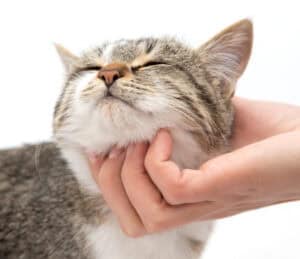 Tips for Setting Boundaries:
-
-
-
- Keep petting sessions brief, starting with a few strokes and gradually increasing as your cat becomes more comfortable.
- Focus on areas your cat enjoys being petted, such as the head, chin, and cheeks. Avoid sensitive areas like the belly, paws, and tail unless your cat enjoys it.
- Observe your cat’s reactions to determine how much and where they like to be petted, and tailor your interactions to match their comfort level.
-
-
4. Creating Positive Associations
Building positive experiences with petting can help your cat associate touch with pleasant outcomes.
Techniques for Creating Positive Associations:
-
-
-
- Use treats to reward your cat during and after petting sessions.
- Always pet gently and slowly. Rapid or rough petting can overstimulate your cat and lead to aggression.
- If your cat is very sensitive, begin with short, gentle touches and progressively extend the length of each session as they become more comfortable, pairing each petting session with a treat or a favorite toy.
-
-
5. Environmental Enrichment
 Providing an enriching environment can help reduce overall stress and improve your cat’s tolerance for petting.
Ways to Enrich Your Cat’s Environment:
-
-
-
- Provide a variety of toys and puzzle feeders to ensure your cat remains mentally and physically engaged.
- Create vertical spaces with cat trees or shelves to give your cat more territory to explore.
- Engage in regular play sessions using interactive toys like feather wands or laser pointers to help burn off excess energy and reduce stress.
-
-
6. Avoiding Punishment
Punishing your cat for petting aggression is generally ineffective and can worsen the problem.
Cats do not respond well to punishment, especially when it comes to aggressive behavior related to fear or discomfort.
Punishment can increase their anxiety and stress, leading to more aggression.
Instead, focus on understanding the underlying causes of the aggression and addressing those issues with positive reinforcement and patience.
7. Avoid Using Hands as Toys
Never use your hands or feet as play objects for your cat.
This can lead to confusion, causing your cat to treat hands roughly, even during gentle petting sessions. Always use appropriate toys for play.
8. Proper Response to Aggression
If your cat becomes aggressive during petting, try relaxing your hand and moving it slightly toward the cat rather than pulling away quickly.
This unexpected reaction can often cause the cat to release its grip.
Once free, calmly end the interaction and give your cat space.
9. Desensitization and Counterconditioning
Desensitization can be a valuable technique for cats susceptible to petting or who have developed a negative association with touch.
Pam Johnson-Bennett, a certified cat behavior consultant and author of “Think Like a Cat,” advocates for gradual desensitization and positive reinforcement techniques to help cats become more comfortable with petting.
This process involves gradually exposing your cat to petting in a way that doesn’t trigger aggression while simultaneously creating positive associations
Steps for Desensitization:
-
- Start with very brief, gentle touches in areas your cat typically enjoys. This might be just a single stroke.
- Immediately follow this touch with a high-value treat or another reward your cat loves.
- Repeat this process, slowly increasing the duration of petting over many sessions and days or weeks.
- Always stay below the threshold that triggers aggression. If your cat shows any discomfort, reduce the intensity or duration of petting in the next session.
- Gradually expand to different areas of the body, always progressing slowly and rewarding generously.
This technique helps your cat learn that petting predicts good things, potentially increasing their tolerance over time. Remember, patience is key – this process can take weeks or even months, depending on your cat’s needs and history.
10. When to Seek Professional Help
If your cat’s petting aggression is severe or persists despite your efforts, it may be time to seek professional help.
A visit to your vet is essential to rule out any medical issues like arthritis or dental problems that may cause pain and need to be treated.
If there are no underlying medical problems, seeking the help of a behavioral specialist may be your next option.
A certified cat behaviorist can provide personalized strategies and training to address petting aggression. They can help identify specific triggers and create a tailored plan to manage your cat’s behavior.