
Siamese Cat: Temperament, Size, Care, Cost, Lifespan & More
Quick facts:
The Siamese cat is an affectionate, vocal, and highly intelligent breed known for its striking blue eyes, short pointed coat, and intense bond with people. They are active, social, and do best in homes where someone is around often. Their coat is one of the easiest to maintain of any breed — short, fine, and low-shedding — but they are emotionally demanding in a way that surprises people who aren't expecting it. If you want a quiet, independent cat, this is not the right breed. If you want a highly communicative companion that bonds deeply and stays engaged with your daily life, a Siamese can be exceptional.
There are cats you share a house with, and there are cats you share your life with. The Siamese is firmly in the second camp.
This is a breed that wants to be in the room with you, preferably talking. And talking. And talking some more. Their voice is unmistakable — a low, insistent sound somewhere between a request and a complaint — and once you’ve lived with it, silence feels a little empty.
But the Siamese is so much more than the noise. They’re one of the oldest domesticated cat breeds in the world, with a history stretching back to royal palaces in Thailand. Today, they remain one of the most recognisable cats you’ll find — those brilliant blue eyes, that sleek pointed coat, that utterly unsubtle personality.
This guide covers the Siamese in real life — not just where the breed comes from or what it looks like, but what it actually feels like to live with one, care for one, and decide whether this intensely social cat is the right fit for your home.
Siamese Cat: Quick Facts at a Glance
← Scroll to see full table →
| Origin | Thailand (formerly Siam) |
| Size | Medium |
| Weight | Male: 10–15 lbs | Female: 8–12 lbs |
| Lifespan | 15–20 years (some reach their 20s) |
| Coat type | Short, fine, glossy — no undercoat |
| Colours | Seal, chocolate, blue, lilac point (and more) |
| Temperament | Vocal, affectionate, curious |
| Good for | Families, singles, anyone who's home often |
| Shedding level | Low to moderate |
| Grooming needs | Low — weekly brushing is sufficient |
| Energy level | High |
| Hypoallergenic? | No — Siamese cats are not hypoallergenic, though their short coat can be easier to manage than that of many heavier-shedding breeds. |
Source: Cat Fanciers' Association — Siamese Breed Standard | GCCF Siamese Breed Profile
History and Origin
The Siamese has one of the longest pedigrees in the cat world. They originated in what is now Thailand — then called Siam — where they lived in royal palaces and Buddhist temples. This isn’t just a colourful legend. Manuscripts from the Ayutthaya Kingdom (1351–1767 AD), known as the Tamra Maew or ‘The Cat-Book Poems’, depict colourpointed cats that closely resemble the Siamese we know today.[3]
Western exposure came gradually. In 1878, US President Rutherford B. Hayes received a Siamese named ‘Siam’ as a gift from the US Consul in Bangkok — the first documented Siamese in America. In Britain, the breed debuted at London’s Crystal Palace Show in 1885. The Cat Fanciers’ Association recognised the Siamese as a founding breed in 1906, and a Siamese cat won Best-in-Show just a year later.[1]
Today there are two distinct types. The traditional Applehead Siamese — rounder, more moderate in build — resembles the original cats from Thailand. The modern Wedgehead Siamese, which became popular in the 1950s, has the angular, elongated features most people picture. Both are the same breed, just different expressions of it.
Physical Appearance
The Siamese look is hard to mistake. Long, lean, and almost sculptural — they carry themselves like they know exactly how good they look.
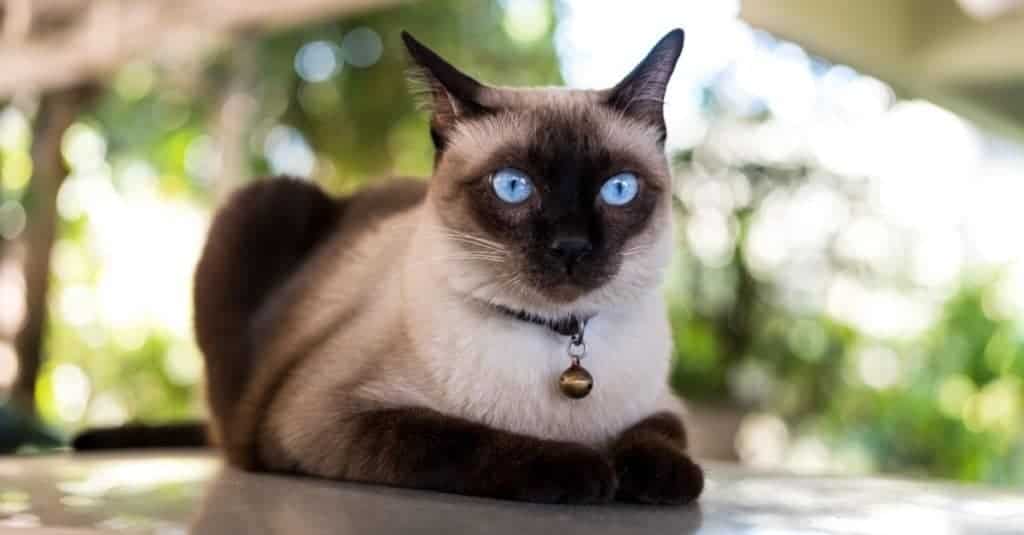
The most distinctive feature is their colourpoint coat: a pale, creamy base with darker colouring on the ‘points’ — ears, face, paws, and tail. The GCCF describes this as the Himalayan gene — a mutation affecting the enzymes that control fur pigmentation. Cooler areas of the body develop colour while the warmer core stays light. Kittens are born white or cream and develop their points over the first few weeks of life.[2]
Siamese Cat Colours
The best-known Siamese cat colours are seal point (deep dark brown), blue point (cool grey), chocolate point (warm milk-chocolate), and lilac point (pale pinkish-grey). The CFA recognises these four classic colours as the breed standard.[4] The GCCF recognises a wider range — up to 32 colours and pattern combinations, including tabby and tortie points.[2]
The eyes are always blue — vivid, almond-shaped, set wide — and the large ears follow the line of the wedge-shaped head. It’s a face that’s immediately recognisable from across a room.
Personality and Temperament
Here’s the honest version: a Siamese is not a cat you get if you want something quiet and self-contained. They are fully present, all the time.
So, why are Siamese cats so vocal? It’s simply how they’re wired. This is one of the most talkative cat breeds, and their sounds often feel less like random meows and more like an ongoing conversation. The CFA describes them as having a large repertoire of vocalisations and being unsurpassed by any other breed in their ability to communicate with humans.[1] You’ll learn to tell the difference between hungry, bored, happy to see you, and deeply offended you closed the bathroom door. It genuinely becomes a language.
They’re also intensely people-oriented. Siamese cats tend to bond closely — often with one particular person — but aren’t cold with others. They’ll follow you from room to room, greet you at the door, and try to insert themselves into whatever you’re doing.
They notice things. They’re aware of your mood, your routine, any changes to either. Mess with the schedule and they’ll let you know. A Siamese left alone too much can become anxious or develop destructive habits.
What they give back is proportional. A Siamese that’s bonded with you is genuinely, consistently affectionate — not just tolerating your presence, but actively wanting it. For the right person, that’s the whole point.
Are Siamese Cats Good Pets?
Yes — for the right person, they are exceptional pets. Siamese cats are affectionate, intelligent, entertaining, and capable of forming bonds that most breeds simply don’t match. They communicate, they engage, they have opinions. Life with a Siamese is rarely boring.
They are not, however, the right cat for everyone. The Siamese is a high-engagement breed. They are not content to be decorative. They want to be part of your life — your actual daily life — and they will make this known. Owners who want a quiet, self-sufficient companion who asks little and takes up little space are going to find the Siamese a difficult fit.
Owners who genuinely enjoy an interactive, expressive, communicative companion — and are home enough to provide it — tend to find Siamese cats deeply rewarding. That category is specific, and if it describes you, this may be exactly the right breed.
Are Siamese Cats High Maintenance?
That depends on what kind of maintenance you mean. On the practical side — grooming, feeding, coat care — the Siamese is one of the lower-maintenance breeds available. Their short coat needs only a weekly brush. They don’t mat, don’t shed heavily, and don’t need professional grooming.
Socially and emotionally, however, the Siamese is genuinely high maintenance. They need daily attention and interaction. They need play. They need stimulation. They need a home where someone is around for a meaningful part of the day. A Siamese left alone in an empty flat for eight-plus hours on a regular basis will let you know how it feels — usually through excessive vocalisation, destructive behaviour, or signs of anxiety.
So: low maintenance coat, high maintenance heart. If you have the time and presence to meet their social needs, the practical side of Siamese cat care is straightforward. If your lifestyle means long absences and a preference for independence, another breed will suit you better.
Are Siamese Cats Good With…?
With Siamese cats, compatibility is not just about whether they can live with certain people or pets. It is also about whether the home gives them enough attention, interaction, and daily engagement to feel settled.
Children
Generally yes. Siamese cats like people, including children — but they do best with kids old enough to understand that a cat isn’t a toy. They’re active and interactive, which makes them great playmates, but they can get overstimulated when things get chaotic. Teach children to read the cat’s signals and this pairing works well.
Dogs
Siamese can live comfortably with dogs, particularly when introduced young. They’re confident enough not to be easily intimidated. A calm, cat-friendly dog is a better match than a high-energy breed that will treat the Siamese as something to chase.
Other Cats — Do Siamese Cats Need Another Cat?
This is arguably the most important compatibility question. Siamese cats don’t do well alone. The CFA specifically notes that the best companion for a Siamese is often another Siamese.[1] Many breeders recommend getting two. They need somewhere to direct that social energy when you’re not around — and another cat is often the most practical answer. If you are away for significant portions of the day, a feline companion is less optional and more essential.
Strangers
More open than most breeds. A Siamese won’t typically hide when guests arrive. Don’t be surprised if yours gravitates toward the one person in the room who claims not to like cats.
Intelligence and Trainability
Siamese cats are genuinely smart. They notice patterns, open things they shouldn’t, figure out how to get what they want, and get bored quickly when nothing mentally interesting is happening.
Training is possible — they respond well to clicker training and positive reinforcement, and some learn commands like ‘sit’ or even walk on a leash. But don’t expect obedience for its own sake. A Siamese learns a trick because it’s interesting, not because you want them to.
Puzzle feeders and interactive toys are well-suited to this breed. Cornell Feline Health Center notes that boredom is a significant driver of destructive behaviour in cats, particularly in intelligent, active breeds.[6]
Exercise and Activity Needs
These are not lap cats who nap away the afternoon. Siamese cats are active, athletic, and easily bored — a combination that requires some management.
Plan for at least 20–30 minutes of active play per day. Wand toys, feather teasers, and anything that mimics prey movement hold their attention far longer than a ball on the floor. They love to climb, so a cat tree or wall shelving gives them somewhere purposeful to be.
Rotate toys. Leave the same one out for a week and they’ll ignore it. Bring it back two weeks later and it’s suddenly fascinating again. Annoying and endearing in equal measure.
Grooming and Coat Care
Do Siamese Cats Shed a Lot?
No. Siamese cats do not shed heavily. They have a low to moderate shedding level and no undercoat, which means loose hair doesn’t accumulate the way it does with longer-coated or double-coated breeds. Weekly brushing is all that’s needed to keep the coat clean and manage what little shedding there is.
Beyond the coat: trim nails every couple of weeks, check ears regularly for wax or debris, and take dental care seriously. Siamese are prone to dental disease, so brushing from kittenhood — or using dental treats as a supplement — is worthwhile. The CFA recommends stroking the coat with damp hands to remove loose hair, with no special equipment required.[1]
Health and Lifespan
How Long Do Siamese Cats Live?
Most Siamese cats live around 15 to 20 years, and some live even longer with consistent veterinary care and an indoor lifestyle. They are among the longer-lived of all domestic cat breeds.
The breed does have some known health predispositions to be aware of:
- Respiratory issues and asthma: Particularly in the wedge-head type. Watch for persistent coughing or wheezing, and avoid heavy perfumes, candles, or indoor smoking.[5]
- Progressive retinal atrophy (PRA): A genetic condition that can progress to vision loss. Siamese also have a known reduction in depth perception due to a genetic optic nerve trait.[5]
- Amyloidosis: Abnormal protein buildup in organs, primarily the liver. Symptoms often appear between 1 and 7 years of age. Ask breeders for family health history.[7]
- Digestive issues: If your Siamese shows unexplained weight loss, vomiting, reduced appetite, or persistent digestive changes, speak to your vet promptly. As with all cats, early investigation is better than watching and waiting.
- Hyperesthesia syndrome: Oversensitivity of the skin, linked to stress or possible seizure-type activity. Cornell Feline Health Center notes a genetic predisposition in Siamese cats.[5]
- Dental disease: Common in the breed. Daily or weekly tooth brushing and regular vet exams help catch problems early.
Annual vet visits matter. Siamese reaching senior age (around 12) benefit from more frequent check-ups, as susceptibility to kidney disease, hyperthyroidism, and arthritis increases with age.
Feeding and Nutrition
Siamese cats have lean, athletic builds — and that build shows weight gain quickly. A pot belly after a few days of overfeeding isn’t unusual, so portion control genuinely matters here.
A high-protein, meat-based diet is the best foundation. Wet food is especially useful because it supports hydration, which helps protect kidney and urinary tract health over the long term. Feeding two smaller meals a day rather than free-feeding helps keep their weight in check.
Puzzle feeders and lick mats serve double duty: they slow eating and provide the mental stimulation this breed needs. Discuss specific food choices with your vet based on your cat’s age, weight, and any health considerations.
How Much Does a Siamese Cat Cost?
A Siamese kitten from a reputable breeder typically costs between $600 and $1,200 in the US. Show-quality lines or cats from breeders with strong health documentation will sit toward the top of that range. The Siamese is generally more accessible in price than some larger or rarer breeds, but the price reflects early socialisation, vaccinations, health checks, and the work of responsible breeding.
Be cautious of kittens advertised well below this range with no health documentation or vague answers about parentage. Adoption through a Siamese rescue organisation is a genuine and often underrated option — costs are typically $75–$200 and usually include basic vet care. Adult Siamese from rescue are a strong choice: their personality is established, the kitten phase is behind them, and you can assess compatibility before committing.
Ongoing Annual Cost Estimate
The figures below are estimates based on typical US ownership costs. Actual costs vary by location, your cat’s individual health needs, and your choice of food and insurance provider.
Pet insurance is worth considering seriously for this breed given the potential for dental disease, respiratory issues, and other breed-specific conditions. Insure the cat young, before any conditions are diagnosed, and read the exclusions carefully.
← Scroll to see full table →
Finding a Reputable Siamese Breeder
The Siamese is a popular breed, which makes it a target for low-quality breeding operations. The markers of a responsible breeder are consistent and worth knowing before you start looking.
What to Look For
- Registered with CFA or TICA — a baseline rather than a guarantee, but it means the breeder is accountable to a registry.[1]
- Kittens raised in the home with regular human contact from birth — critical for a breed this people-oriented.
- Willingness to provide health history and answer detailed questions about specific breeding decisions.
- A written contract including a health guarantee and a return or rehome clause if you can no longer keep the cat.
- References from previous buyers available on request.
- The ability to meet the kitten and, ideally, at least one parent before committing.
Breeder Red Flags
- Multiple breeds available — especially combined with dogs.
- Kittens available before 12 weeks.
- Vague or evasive answers when asked about health history.
- No contract or health guarantee.
- Always have kittens available — responsible breeders have waiting lists.
- Pressure to pay or reserve before you have had a chance to ask questions or see the kitten.
Adoption
Siamese cats and Siamese mixes do appear in breed-specific rescues and general shelters. If you’re open to an adult cat, this is a route worth exploring. An adult Siamese has an established personality — you’ll know what you’re getting — and the attachment these cats form with their people is not diminished by rehoming. Many rescue Siamese bond deeply and quickly with new owners.
Siamese Cat vs Ragdoll: How They Compare
These two breeds get compared often — they share blue eyes and colourpoint coats and can look similar at first glance. But their personalities are about as different as two cat breeds can be.
← Scroll to see full table →
| Siamese | Ragdoll | |
|---|---|---|
| Personality | Vocal, intense, demanding of attention | Calm, gentle, easy-going |
| Energy level | High — active all life stages | Moderate — mellows with age |
| Vocalisation | Very vocal — loud and frequent | Quiet — soft, occasional meows |
| Size | Medium — slim and lean | Large — heavy and substantial |
| Coat | Short, fine, very low maintenance | Semi-long, silky — regular brushing needed |
| Shedding | Low to moderate | Moderate to high |
| With dogs | Generally confident with dogs | Can be more passive — prefers calm homes |
| Best for | Interactive, home-based owners who want engagement | Any household; great for quieter homes and families |
In plain terms: this is a lifestyle decision more than an aesthetic one. If you want a cat that talks back, stays involved in whatever you're doing, and forms an intense bond, the Siamese makes more sense. If you want softer, calmer companionship with less intensity, the Ragdoll is usually the easier fit.
Siamese Cat: Pros and Cons
← Scroll to see full table →
Is a Siamese Cat Right for You?
A Siamese suits someone who actually wants a cat that’s involved. If the appeal is a mostly independent pet that does its own thing — a Siamese will frustrate you. If you want something that greets you at the door, follows you around the flat, and seems genuinely interested in what you’re up to — a Siamese might be exactly what you’re looking for.
They do best in homes where someone is around for a meaningful part of the day. They are not well-suited to households where they’d be alone for eight-plus hours with no other animal for company. That’s not a deal-breaker — but it does mean seriously considering a second cat.
And they’re a long-term commitment. A Siamese can easily live 15 to 20 years with you. That’s one of the best things about them — but it’s worth going in with clear eyes.
Great for: people who work from home, active households, anyone who finds genuine joy in a cat that communicates back, experienced owners and prepared first-timers alike.
Think twice if: you travel frequently, want a quiet and low-key pet, or aren’t prepared for a breed this vocal and emotionally present.
Final Verdict
The Siamese is not a subtle cat. They have opinions and they share them. They want to be near you, preferably talking. They’ll outlive most pets you’ve owned and probably outlive some of your furniture, too.
But there’s a reason this breed has been loved for centuries — in royal palaces, family homes, and everywhere in between. When a Siamese decides you are their person, you feel it. It is not passive affection or quiet background companionship. It is active, insistent, unmistakable attachment.
A Siamese does not just live in your home. It lives in your routine, your conversations, your quiet moments, and eventually your idea of what a cat can be.
Frequently Asked Questions
What is a Siamese cat's personality like?
Vocal, affectionate, intelligent, and intensely people-oriented. A Siamese wants to be involved in everything you do, communicates constantly, and bonds deeply — often with one person in particular. They are one of the most interactive cat breeds in the world.
Are Siamese cats good for first-time owners?
Yes, if you want an engaged, communicative companion and are prepared for a vocal, attention-seeking breed. The question is less about experience and more about personality match. First-time owners who enjoy interactive pets tend to love them; those expecting an independent cat often find the Siamese overwhelming.
How do I stop my Siamese cat from being lonely?
The most effective approach is a feline companion — ideally another sociable cat. Daily interactive play of 20–30 minutes, puzzle feeders, cat trees, and window perches all help. If you are regularly away for long periods with no other animals at home, a companion cat is essential rather than optional.
What colours do Siamese cats come in?
The four classic colours recognised by the CFA are seal point, blue point, chocolate point, and lilac point.[4] The GCCF recognises a wider range of up to 32 colours and patterns, including tabby and tortie points.[2] All Siamese are born white or cream and develop their colour points within the first few weeks of life.
Are Siamese cats hypoallergenic?
No. Siamese cats are not hypoallergenic. No cat breed truly is. However, their short coat and lower shedding level may make them easier for some allergy sufferers to manage than heavier-shedding breeds. If you have cat allergies, spend time with the breed before committing.
Do Siamese cats get along with dogs?
Generally yes. Siamese are confident and sociable enough to hold their own around dogs, particularly when introductions are managed carefully and the dog is cat-friendly. They tend to do better with dogs than many other breeds, though a calm, non-chasing dog is always the better match.
How long do Siamese cats live?
Most Siamese cats live around 15 to 20 years, with some individuals living into their early 20s.[1] They are among the longer-lived domestic cat breeds. Indoor living, consistent vet care, and a good diet are the main factors in longevity.
Do Siamese cats shed a lot?
No. Siamese cats shed a low to moderate amount and have no undercoat, which makes them one of the lower-maintenance breeds for coat care.[1] Weekly brushing is sufficient to manage shedding and keep the coat healthy.
Are Siamese cats high maintenance?
Socially and emotionally, yes. Practically, no. Their short coat is easy to care for, but they need daily attention, interaction, and play. A Siamese in a home that can’t meet those social needs will let you know about it.
Why are Siamese cats so vocal?
It’s a breed characteristic, not a sign of distress. Siamese cats have been selectively bred for centuries as highly communicative companions. Their vocalisations are a core part of how they interact with people — and for most Siamese owners, it becomes one of the things they love most about the breed.
What is the difference between a traditional and modern Siamese cat?
The traditional Applehead Siamese has a rounder head, more moderate build, and resembles the original cats from Thailand. The modern Wedgehead Siamese has an angular, elongated head and a more extreme body type that became popular in the show circuit from the 1950s onward. Both are the same breed, just different type expressions — the personality characteristics are shared.
Sources
- Cat Fanciers’ Association — Siamese Breed Profile & Standard
- Governing Council of the Cat Fancy (GCCF) — Siamese Breed Profile
- CFA — Historical Siamese Article (Tamra Maew, origin, Crystal Palace 1885)
- CFA — Siamese Breed Standard PDF (point colours, physical standard)
- Cornell University Feline Health Center — Hyperesthesia Syndrome in Cats
- Cornell University Feline Health Center — Destructive Behaviour in Cats
- Merck Veterinary Manual — Amyloidosis in Cats